Given a binary tree, find its minimum depth.
The minimum depth is the number of nodes along the shortest path from the root node down to the nearest leaf node.
Note: A leaf is a node with no children.
Example 1:
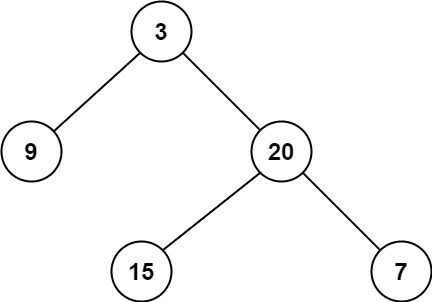
Input: root = [3,9,20,null,null,15,7]
Output: 2
Example 2:
Input: root = [2,null,3,null,4,null,5,null,6]
Output: 5
Constraints:
- The number of nodes in the tree is in the range
[0, 105]. -1000 <= Node.val <= 1000
/**
 * Definition for a binary tree node.
 * public class TreeNode {
 *     int val;
 *     TreeNode left;
 *     TreeNode right;
 *     TreeNode() {}
 *     TreeNode(int val) { this.val = val; }
 *     TreeNode(int val, TreeNode left, TreeNode right) {
 *         this.val = val;
 *         this.left = left;
 *         this.right = right;
 *     }
 * }
 */
class Solution {
    public int minDepth(TreeNode root) {
        if(root == null)
            return 0;
        if(root.left == null && root.right != null)
            return 1 + minDepth(root.right);
        if(root.right == null && root.left != null)
            return 1 + minDepth(root.left);
        return 1 + Math.min(minDepth(root.left), minDepth(root.right));
    }
}

// Different return
class Solution {
    public int minDepth(TreeNode root) {
        if(root == null)
            return 0;

        int left = minDepth(root.left);
        int right = minDepth(root.right);

        return (left != 0 && right != 0) ? 1 + Math.min(left, right) : 1 + left + right;
    }
}/**
* Definition for a binary tree node.
* struct TreeNode {
* int val;
* struct TreeNode *left;
* struct TreeNode *right;
* };
*/
int minDepth(struct TreeNode* root){
if(root == NULL)
return 0;
int right = minDepth(root -> right);
int left = minDepth(root -> left);
return (right && left) ? 1 + fmin(right, left) : 1 + right + left;
}/**
* Definition for a binary tree node.
* struct TreeNode {
* int val;
* TreeNode *left;
* TreeNode *right;
* TreeNode() : val(0), left(nullptr), right(nullptr) {}
* TreeNode(int x) : val(x), left(nullptr), right(nullptr) {}
* TreeNode(int x, TreeNode *left, TreeNode *right) : val(x), left(left), right(right) {}
* };
*/
class Solution {
public:
int minDepth(TreeNode* root) {
if(root == nullptr)
return 0;
int left = minDepth(root -> left);
int right = minDepth(root -> right);
return (left && right) ? 1 + min(left, right) : 1 + left + right;
}
};# Definition for a binary tree node.
# class TreeNode:
# def __init__(self, val=0, left=None, right=None):
# self.val = val
# self.left = left
# self.right = right
class Solution:
def minDepth(self, root: TreeNode) -> int:
if not root:
return 0
if not root.left and root.right: # 左子树空,右子树非空
return 1 + self.minDepth(root.right)
if not root.right and root.left:
return 1 + self.minDepth(root.left)
return 1 + min(self.minDepth(root.left), self.minDepth(root.right))/**
* Example:
* var ti = TreeNode(5)
* var v = ti.`val`
* Definition for a binary tree node.
* class TreeNode(var `val`: Int) {
* var left: TreeNode? = null
* var right: TreeNode? = null
* }
*/
class Solution {
fun minDepth(root: TreeNode?): Int {
if(root == null)
return 0
val left = minDepth(root.left)
var right = minDepth(root.right)
return if(left != 0 && right != 0) 1 + Math.min(left, right) else 1 + right + left
}
}