You signed in with another tab or window. Reload to refresh your session.You signed out in another tab or window. Reload to refresh your session.You switched accounts on another tab or window. Reload to refresh your session.Dismiss alert
Play-to-Earn needs support to overcome some major obstacles before it can become truly sustainable as a web3 business model that helps players generate income.
In cloud computing, cloud scalability refers to the ability of increasing or decreasing the IT resources to meet changing needs. Scalability is an element of the cloud and is the main driver of its popularity in the business sector.
A look at how small businesses can scale quickly and relatively cheaply by using digital methods for marketing and other such technologies to their advantage.
Today’s world of machine learning (ML) and artificial intelligence (AI) presents a variety of challenges to organizations, particularly when it comes to product
By taking advantage of the parallel computing capabilities of GPUs, a significant decrease in computational time can be achieved relative to traditional CPU
As we move into the cloud computing era, we've seen the floodgates open and waves of new development frameworks taking advantage of every opportunity that cloud computing technologies offer.
innovations at the ECC show not only that Privacy and Scalability are correlated but also that Governance and Development is more fruitful when rewarded.
The issue of scalability first became apparent in 2017 or so when Bitcoin started to be very actively transacted through the blockchain as it was getting much more traction due to the sudden uptick in price.
In this article I have mentioned what auto-scaling is all about and what benefits it holds in a cloud computing environment, especially with respect to Amazon.
Over the past few years, companies have been provided various web hosting solutions for their business, leaving them with the question of what to choose.
Reveal why there is hype around Golang and describe the best application variants for this programming language as well as cases when Go is not the best choice.
When using Amazon DynamoDB, you need to know how to effectively partition the tenant data in order to prevent performance bottlenecks as the application scales.
Want your tech company to be recession-proof? Diversifying your client base and offering exceptional service can build antifragility into your organization.
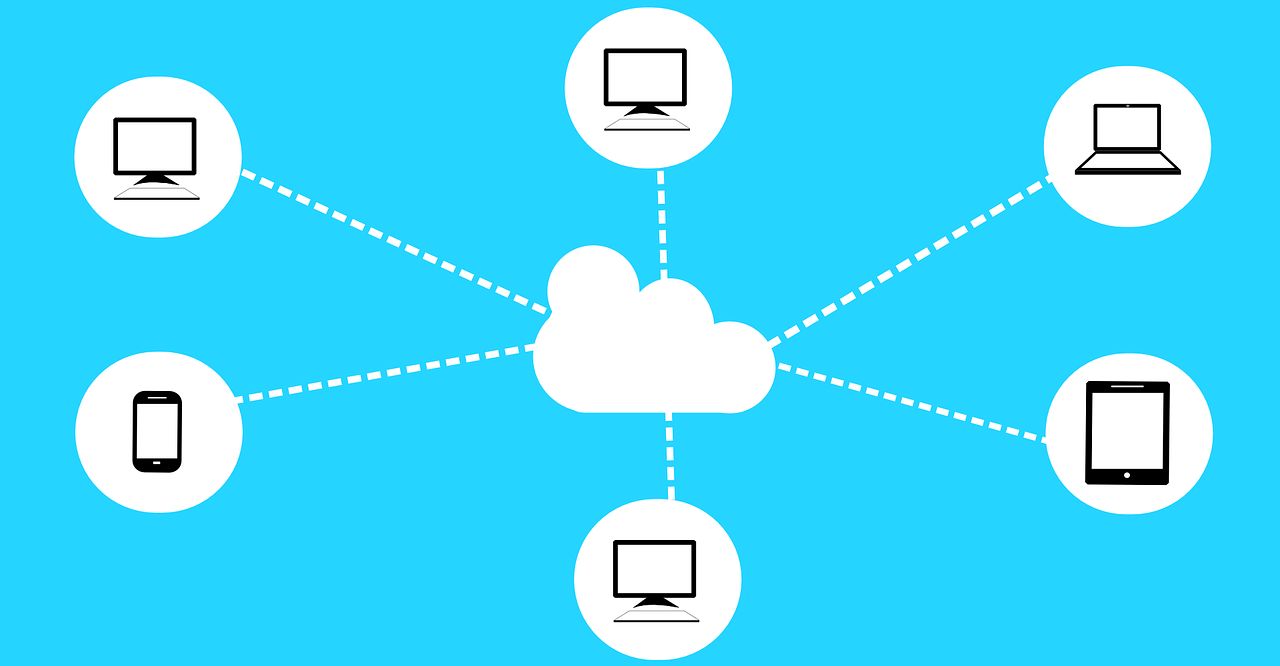
SaaS is not a buzzword in 2019! It's a proven, efficient and most widely used model to deliver software to customers. SaaS stands for software as a service, which means the software is delivered as a continuous service over the web/internet where the customer doesn't have to download and install the product on his system. Examples of popular SaaS products include Zoho, Salesforce, Mailchimp, Twilio, etc.
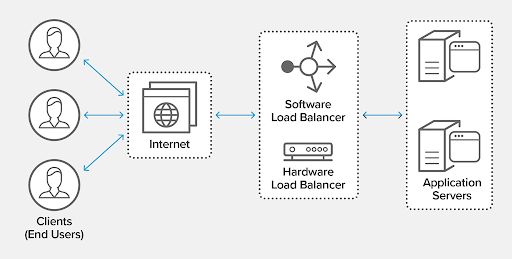
We recently wrote about whether API Gateway can act as a Load Balancer. The answer is yes and, in many cases, they are substitutes for each other. But how should we choose which one to use?
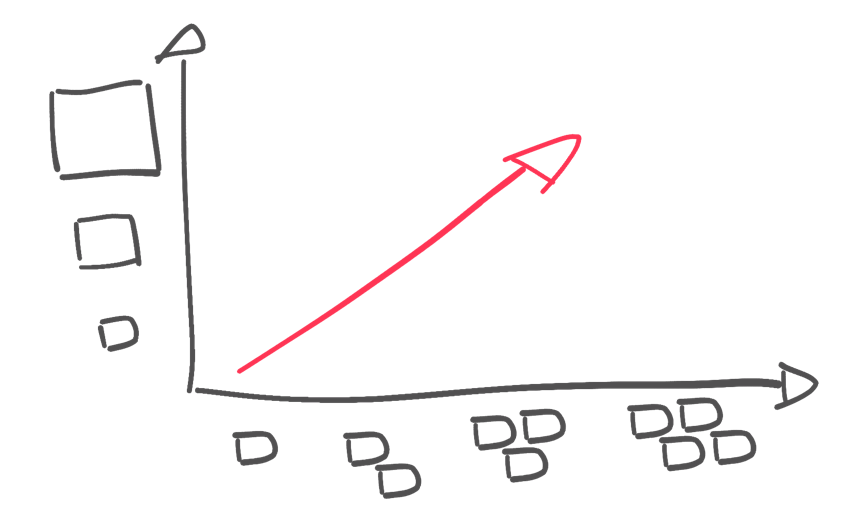
Build scalable, reliable, and maintainable applications. Understand basics of scalability with focus on performance and load, vertical and horizontal scaling!
Growing a company is tough, and it can become even more difficult if entrepreneurs don’t ask the right questions.
[36. Scaling Ethereum Blockchain Applications via Altcoins
and Chain Solutions](https://hackernoon.com/scaling-ethereum-blockchain-applications-via-altcoins-and-chain-solutions-cv1k34jl)
As you may know, there are differences between horizontal and vertical scaling in distributed systems which we have covered in another article (Horizontal Scaling versus Vertical Scaling in Distributed Systems). So in this article, we take a next step by learning how to scale up Ethereum blockchain applications. We will also review different scaling solutions for Ethereum blockchain applications. To follow and understand concepts discussed in this article, we are assuming you’ve a basic understanding of blockchain technology and Ethereum.
How to build scalable products by coding for future feature expansion & code deprecation while maintaining a simplified user interface for complex functionality
One of the benefits of Serverless architectures is the possibility of scaling applications without worrying about load balancers and clusters of servers. While services like AWS Lambda hold their promises on this area, there are usually misconceptions about how they work.
The circuit breaker is a design pattern, used extensively in distributed systems to prevent cascading failures. In this post, we’ll go through the problem of cascading failures and go over how the circuit breaker pattern is used.
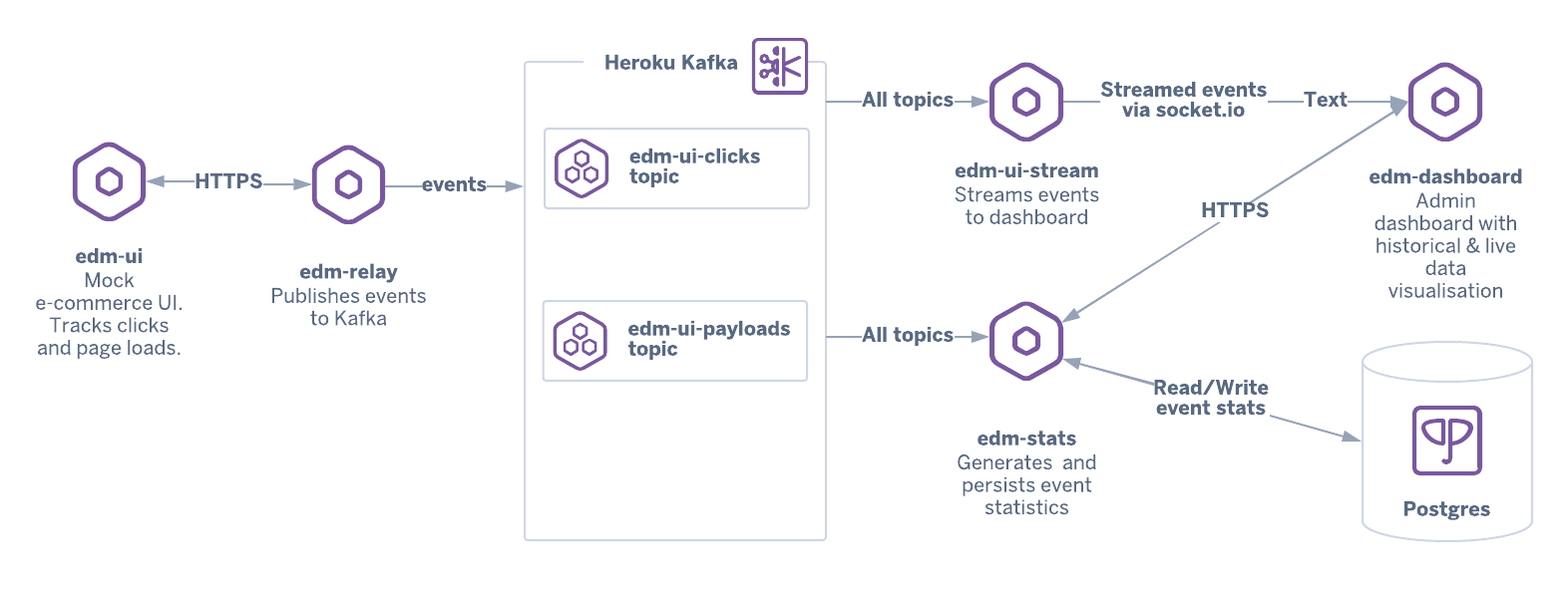
If you’re an architect or developer looking at event-driven architectures, stream processing might be just what you need to make your app faster, more scalable, and more decoupled.
The lack of scalability is known to be the foremost obstacle standing in the way of mass adoption of blockchain technology. All existing blockchain projects look for solutions that could improve the performance of their network.
Following our hiring survey for Taiwan startups, this story discusses how local companies find talent, and the importance of employer branding for scalability.
If you’re a microservices developer considering communication protocols, choosing an event-driven architecture might just help you rest a little easier at night. With the right design, event-driven architecture can help you to create apps that are decoupled and asynchronous, giving you the major benefits of your app being both performant and easily scalable.
In my previous article I interviewed Michael to discover just how a decentralized virtual private network might work. This time around, I wanted to learn what the cloud meant for IT professionals like himself: what their work was like before it became an everyday tool, and how they could describe its impact.
The year 2019 is coming to an end, and the blockchain hype seems to be slowly dying as well as the crypto bubble. But is it really dead or maybe now it has to offer even more than it had in 2017 when the total market capitalization of crypto was near $800 billion? In reality, it was something like a great purge for many unprofessional projects. Without investors throwing money at them, they died, like dotcom bubble projects before them. The general audience begins to understand that the blockchain technology isn't something that makes everything it's applied to revolutionary. It has its own applications, where it can shine, such as finances and supply chains, but also there can be many occasions where blockchain is totally unnecessary. For example, maybe creating a decentralized network for dentists isn’t such a good idea?
In today’s IT world, there is a vast array of programming languages fighting for mind share and market share. Of course, there are the mainstays like Python, JavaScript, Java, C#, and C++. But nipping at their heels are many recent entries in the programming language Hunger Games such as Clojure, Crystal, Dart, Elixir, F#, Haxe, Julia, Kotlin, Nim, Pharo, Rust, TypeScript, etc. There are even a few not-so-new languages like Haskell (1990), Lua (1993), OCaml (1996), and Racket (1994). And they all want to grab your attention and convince you that they’re the road to programming bliss.
This project serves as a guide/template for a 3-tier architecture. If you are entirely new to Web Development. I highly suggest you watch this video first.
As crypto-mania approached its peak in 2017, it seemed like every project was striving to build the latest, greatest blockchain platform, resulting in rafts of mainnet launches in 2018. The reality is that many of those projects have struggled to survive. They’re competing for a limited pool of developers and see little activity beyond a few underused dApps.
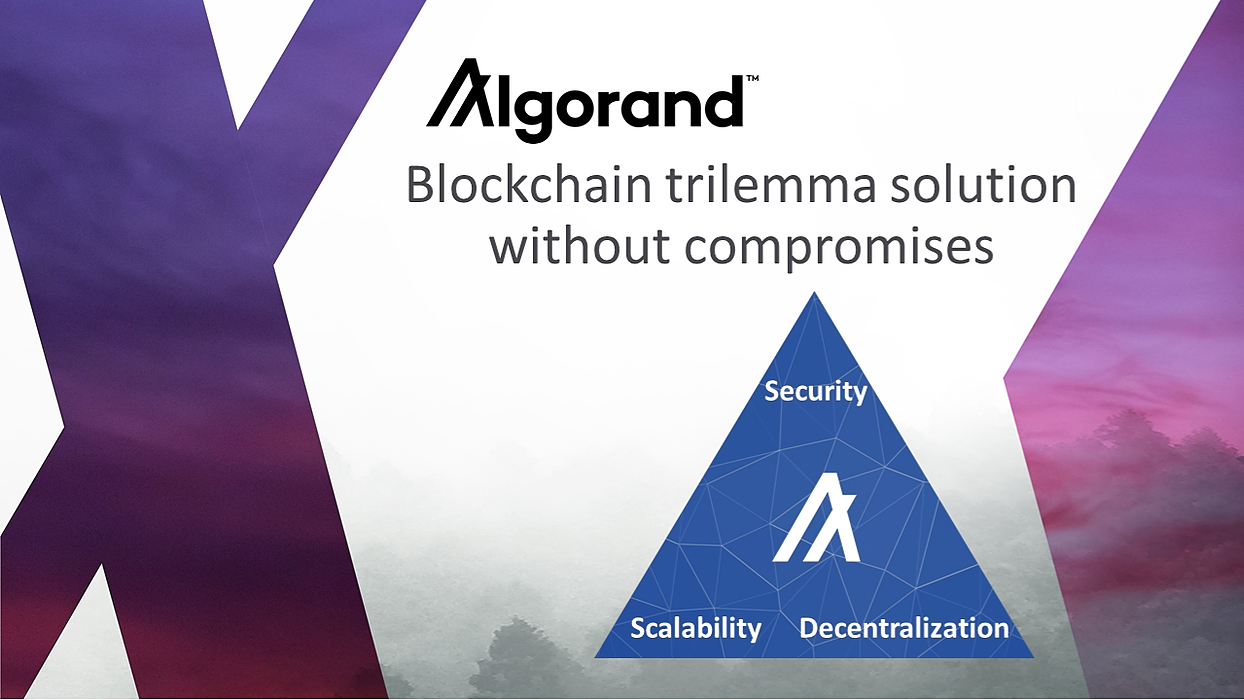
In the interview I made last year, I asked a leading cryptocurrency expert Andreas M. Antonopoulos, about whether someone could solve the so-called Blockchain Trilemma – scalability and security without sacrificing
decentralization in the future.
Blockchain (decentralized ledger) is an innovative technology that promises to improve many diverse areas of human life. It transfers real-life processes and products into the digital space, ensures the speed and reliability of financial operations and reduces their cost, and allows for the creation of advanced DAPP applications by using smart contracts in decentralized networks.



























 SaaS is not a buzzword in 2019! It's a proven, efficient and most widely used model to deliver software to customers. SaaS stands for software as a service, which means the software is delivered as a continuous service over the web/internet where the customer doesn't have to download and install the product on his system. Examples of popular SaaS products include Zoho, Salesforce, Mailchimp, Twilio, etc.