You signed in with another tab or window. Reload to refresh your session.You signed out in another tab or window. Reload to refresh your session.You switched accounts on another tab or window. Reload to refresh your session.Dismiss alert
Let's learn about Encryption via these 151 free blog posts. They are ordered by HackerNoon reader engagement data. Visit the /Learn or LearnRepo.com to find the most read blog posts about any technology.
The process of converting information into a code to prevent unauthorized access, ensuring data privacy and security in communication and storage.
Explaining crypto is hard, explaining crypto in simple words is harder. Explaining Zero Knowledge Proof to a child? Easy! So here you go — ZKP explained with some Halloween candy.
As a software engineer and long time LastPass user, I’ve always been an advocate of password managers. With data breaches becoming more and more common these days, it’s critical that we take steps to protect ourselves online. However, over the past year LastPass has made some decisions that have made me question their motives and ultimately has recently caused them to lose my business.
On April 23, 2018, my brother asked my help on something. I knew a classmate perfectly placed to advise him. The problem was I had no idea of how to get in touch with him. I know that’s improbable in this era but there were ‘extenuating circumstances.’
Don't know what a CA bundle is? Discover how to use its powerful SSL encryption for secure web server-browser communication, why it's important, and more!
It is essential for every internet user to comprehend the importance of browser security capabilities to assure they browse the internet safely. Protecting your browser might mean limited functionality of some web sites, but it’ll shield your most sensitive information as well.
Ever wondered what a zero-knowledge proof (zk-proof) was? If you really want to know, dig deep into this article, which explains everything you need to know.
Bitcoin improvement proposal 32 is, in my opinion, one of the most important BIPs we have. (Thanks Peter Wuille!) BIP 32 gave us Hierarchical Deterministic Wallets. That is, the ability to create a tree of keys from a single seed.
A brief guide on how to create encrypted containers in Linux using Cryptsetup, giving you tools for keeping your most important files and data protected.
There are a lot of cloud services that tout encryption strength as a measure of how well they guard your data. It is quoted in bits, which is the
size of the key. So you see services quoting 128 bit, 256 bit or even
2048 bit.
Being concerned with the security of online communication and information exchange is absolutely OK. It is a reflection of the fact that you
are aware of global surveillance happening every second of our presence online. Our online activities are monitored, intercepted, collected, and stored. And now imagine that what you know is only the small fraction of what is really happening with our information.
Imagine, you are messaging your business partner about a super secret idea, it is worth $ 1m, will you trust the messaging application not to read your super secret conversation? No, right. No one will, still people across the world use whatsapp for such sensitive messaging (although I prefer telegram for my secret conversations). Well, turns out, it is because most messaging apps(including whatsapp) use a technique called End to End Encryption, which doesn’t allow these messaging services or their employees to read your conversations with your contacts. But how does this works, well, that is what we will try to understand here.
Organizations nowadays are storing and performing computation of the data on the cloud instead of handling themselves. Cloud Service Providers (CSPs) provide these services at an affordable cost and low maintenance. But to ensure compliance and retain privacy, organizations need to transfer the data in an encrypted format, which does ensure the confidentiality of the data. However, once the data reaches the cloud, the CSP has to decrypt the data to perform operation or computation.
In 2019 our devices know us better than close friends and relatives. Browsers, messengers, social media trackers analyse the actions you do online and your interactions with content to expand their manipulation. The history of browsing is used to target ads and create more triggering banners for you exclusively. These technological advancements might look smart and comfortable, but the invasion of privacy has gone too far.
Is quantum cryptography the next best thing to AES Symmetric Encryption? Let’s find out. Read through a detailed excerpt of how quantum is used in cryptography
Keeping information secured and protecting the integrity of data over the internet is now becoming a huge and complex task, due to the increasing number of threats to the information security.
You hear the sound of an alarm clock. The first thing you see after you wake up is a notification. The entire user base of your WordPress* app has leaked into Darknet. According to GDPR, you’re both data controller and processor so now you’re facing a number of fines and court hearings. Not fun at all.
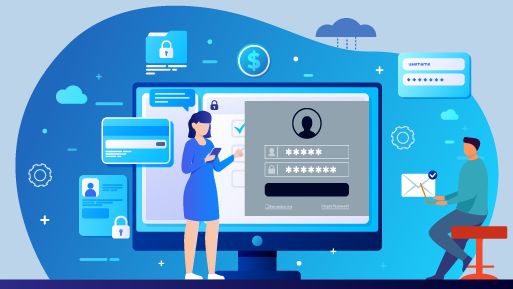
We use passwords to access personal information and user accounts. With so many applications requiring passwords (e.g. online banking, shopping and social media just to name a few), it can be hard to track and at worst remember. Some applications require users to change their passwords every so often, and that can lead to users forgetting them or getting careless by writing down their password on a piece of paper. That piece of paper can later be misplaced which can lead to worse things. The problem with requiring frequent password changes and applying complexity to passwords is that it can become more complicated for users.
The 21st century is the age of technology and the Internet. Today, the whole world is online. We are increasingly moving all our business to the Internet space. It is the place where we work, communicate, order food, pay for purchases, watch movies and listen to music.
In case you missed the previous article (Part 1), I gave a very brief introduction on Homomorphic Encryption (HE), talked about Microsoft SEAL’s library, and outlined some of the pain points of learning to use it.
One of the most common questions users have when it comes to privacy is about messaging services. It seems almost all of them mention some level of privacy or encryption to entice the user to sign up for their service, but how can you be sure you’re using the most secure, privacy respecting platform?
This article was first published on our open-source platform, SimpleAsWater.com. If you are interested in IPFS, Libp2p, Ethereum, Zero-knowledge Proofs, DeFi, CryptoEconomics, IPLD, Multiformats, and other Web 3.0 projects, concepts and interactive tutorials, then be sure to check out SimpleAsWater.
In a world where illegal activities increasingly take place through digital means, cyber perpetrators often remain steps ahead in sophistication compared to those who are chasing after them.
How Edgar Allan Poe introduced early cryptography to the masses as a master cipher solver — engaging tech, literary, and crypto communities to this day.
This article will be of particular interest to people who are curious about how powerful encryption can be implemented in high performance systems. It is also for people who just want to know a bit more about how strong encryption works and how all the pieces fit together.
In this discussion with Guy Itzhaki, CEO of Fhenix, we explore the evolution of blockchain technology through the lens of Fully Homomorphic Encryption (FHE).
Earlier, we lived in industrial and post-industrial societies, and gas and oil were the only things of value. Now, it’s the age of information society and data has replaced petrol as the economy’s driving force. The reason is that with the help of Big Data, people significantly improve production efficiency and business economics. That’s true.
With two recent vulnerabilities making headlines this month, notably CVE-2019-14899, impacting VPNs running on Linux distros and Atlassian’s zero-day flaw reported by SwiftOnSecurity concerning leak of private keys, it should be no surprise anymore as to why encryption merely breeds a feeling of security rather than guaranteeing it.
The Second World War brought to the front burner the world of espionage, which is the precursor of cybersecurity, as is seen in the modern world. Technological advancements such as the quantum computer necessitate that we take the war against cybercrimes to another level.
Encryption makes the digital world work. It consists of a few elegant math equations that scramble data before being sent over the internet where prying eyes could otherwise intercept it, read it, and manipulate it. Encryption is the reason everything from financial transactions to state secrets get passed around the internet nearly instantaneously, unlocking massive amounts of innovation, wealth, and prosperity as a result.
Complacency with privacy invasion has become our 6th sense. Handing over the intimate details of our lives to corporate and government stooges has become a virtue and civic duty. It should come as no surprise that, even for a society dripping with tech-savviness, the average person would rather their government act than to take action themselves. According to Pew Research:
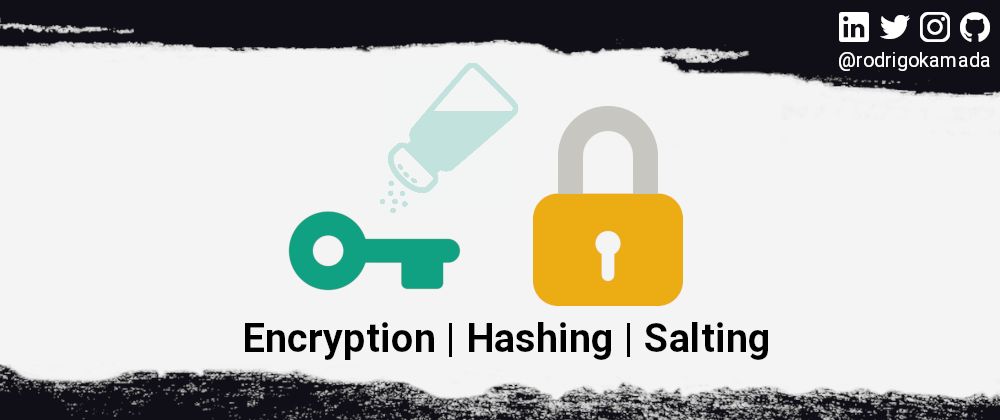
Encryption and hashing are different in terms of web security, purpose, length, and direction. Read on to know more about hashing vs encryption in detail.
Governments' demands for encryption backdoors pose significant cybersecurity risks. Learn about recent cases, expert warnings, and how to protect your privacy.
Hardcoded encryption keys are a common security blunder in Spring applications. Learn why this practice is dangerous and how to implement a more secure solution
Chris Hickman and Jon Christensen of Kelsus and Rich Staats of Secret Stache continue their series on encryption to discuss transport layer security (TLS) in practice.
This year has been big for the VPN market. Some buyers still remember last year’s Facebook data leaks; others have had enough with geo-blocks. And some, sadly, are threatened by governmental internet restrictions and turn to VPNs for help.
In Part 3 of their series on encryption, Chris Hickman and Jon Christensen of Kelsus and Rich Staats of Secret Stache discuss end-to-end encryption in practice.
With secure messaging apps willing to cease operations, UK's attempt to fight cybercrime with its Online Safety Bill has sparked the encryption debate again.
On July 16, 2020, the European Court of Justice invalidated the EU-US Privacy Shield Framework, erasing the data protection measures that had previously allowed a United States business to hold the data of European Union citizens in servers that reside in the US.
Why ephemerality beats encryption alone for privacy: a technical deep dive into data lifecycles, threat models, and modern privacy-preserving architectures.
A few companies I've worked for have an IT policy on their secure computers designed to stop movement of sensitive data outside the enterprise. This policy encrypts all file data being written to removable media (USB drives, external hard drives, etc.) such that only a computer within the same enterprise can decrypt and read the data.
How to use a Synology Active Backup to protect your SharePoint Data by using the Active Backup feature from Microsoft 365 alongside DiskStation Manager 7
If you find understanding or explaining the differences between asymmetric and symmetric encryption daunting, then take a relaxing breath — we’ll break it all down into layman’s terms
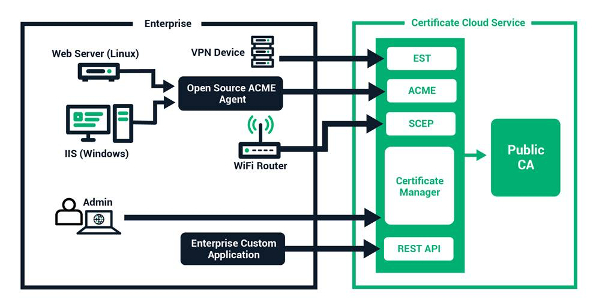
Web certificates are a foundational element of website security, enabling organizations to verify that the web address in question really does belong to them, as well as to keep users secure by encrypting their information. These certificates have become ubiquitous, and most savvy web users now know to look for the telltale indicators of a valid web certificate, which may include a closed padlock or green address bar, depending on the browser used.
End-to-end encryption is getting traction for secure communications. But how is it different from all other types of encryption? Here is a basic guide to it.
Quantum hackers could break RSA-2048 by 2030. Learn what post-quantum cryptography is, how to prepare, and why “harvest now, decrypt later” is a real threat.
In a world where encryption of our messaging apps is at stake, is there a solution that works? Aside from the traditional WhatsApp and Signal, there's Usecrypt.
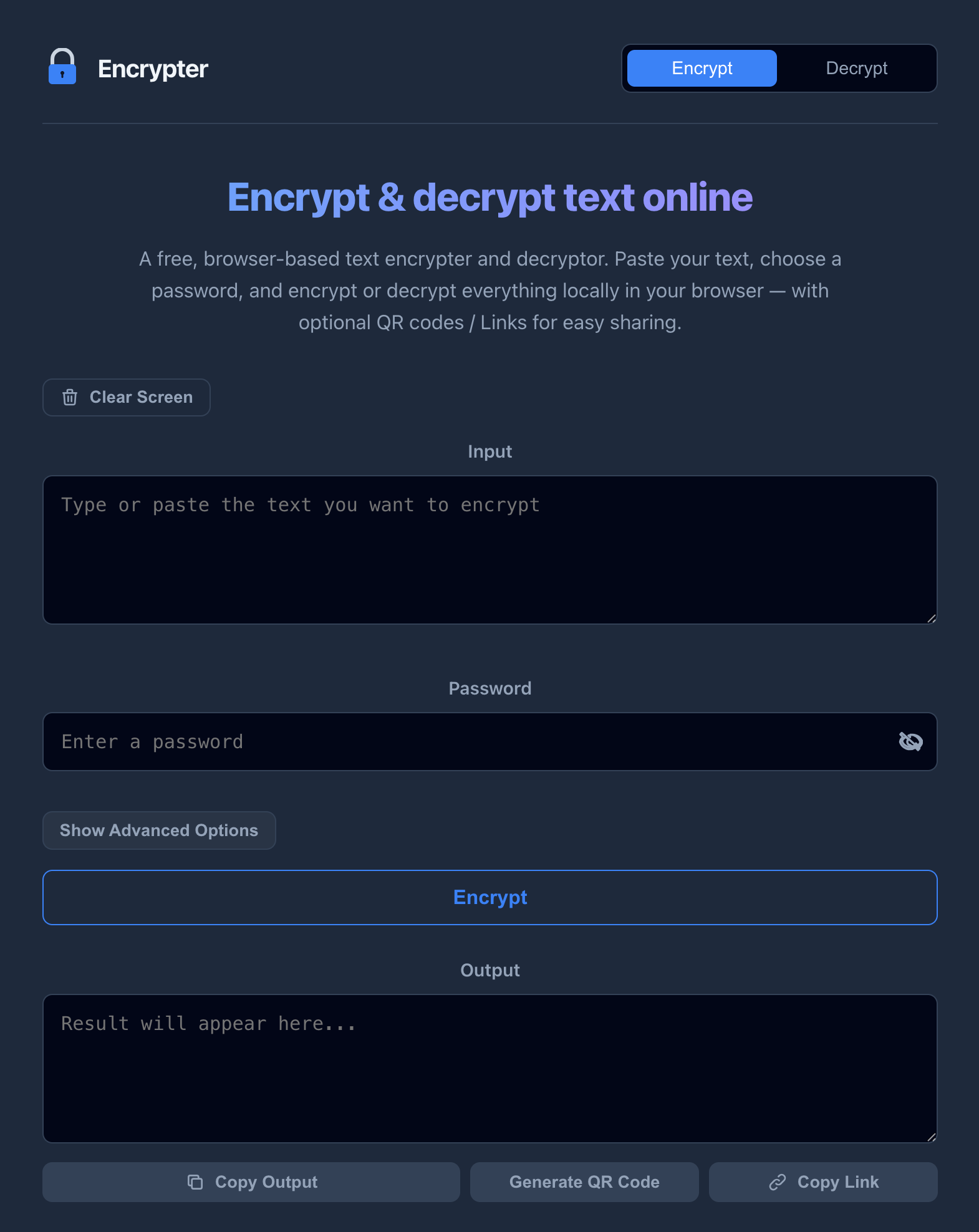
A developer builds Encrypter, a browser-only tool for encrypting text without servers, logins, or tracking—offering a simple, secure way to share secrets.
Not so long ago, the buzz in cybersecurity circles was all about COVID-19 and how malicious actors were exploiting the panic via a wave of targeted phishing attempts. Well, much to everyone's relief, the trend didn't last long. Some of that is due to security firms getting the word out so quickly, and some of it is due to the general public becoming more aware of potential threats and behaving with more care as they encounter suspicious situations.
Learn more about confidential computing and how Intel SGX is used to encrypt sensitive data in memory, enabling compliant collaboration between organizations.
Trigger warning: authoritarianism, state surveillance, the Holocaust. If you want to avoid these topics, please jump to the last paragraph of this introduction, starting with ‘Enough about the depressing stuff.’
We hear the horror stories of data leaks almost every day. Some require a sophisticated attack to gain shell access to the servers. Some happen over the web using the SQL injections in the web apps. As a result of this attack, your customer data can be dumped and personal data leaked.
Everyone knows it’s a good idea to use strong, unique passwords, and as employees around the world have been forced to work remotely, logging in from multiple devices and multiple locations, the need for strong password security has only grown. But last year’s Verizon Data Breach Investigations Report (DBIR) revealed that weak or compromised credentials still cause 80% of hacking-related breaches. Throughout the current pandemic, attackers have been scouring remote workforce applications to gather and sell user credentials on the dark web, even targeting healthcare organizations such as the National Institutes of Health and the World Health Organization.
Imagine the Elliptic Curve Method as exploring Palm Jumeirah, Dubai’s iconic palm-shaped island. The island represents an elliptic curve y² = x³ + ax + b mod M.
There are some misconceptions about why VPNs are used such as the extent of the privacy that they offer and how well such systems can keep users anonymous.
The hype is dead, long live the hype. After deep learning, a new entry is about ready to go on stage. The usual journalists are warming up their keyboards for blogs, news feeds, tweets, in one word, hype. This time it’s all about privacy and data confidentiality. The new words, homomorphic encryption.
Learn the difference between a code signing certificate and email signing document. Find out the benefits of code signing certificates and how it works.
79% of surveyed firms have recently experienced a cloud data breach. In this article, we examined various recommended practices that can help you stay safe.
If you’re like millions around the world getting ready to head back to school this fall, you’re figuring our first, if your campus will even be open, and second, how to adjust to the idea of distance learning.
Understand the purpose of Christopher Pluhar's declaration—a critical component of an application before the Court support the FBI's efforts to compel Apple Inc
For decades, we have benefited from modern cryptography to protect our sensitive data during transmission and storage. However, we have never been able to keep the data protected while it is being processed.
Unlocking the San Bernardino iPhone is no easy task. Discover the details of Christopher Pluhar's declaration, revealing the FBI's pursuit of critical evidence.
In cryptography, encryption is the conversion of cleartext into a coded text or ciphertext. A ciphertext is intended to be unreadable by unauthorized readers.
Envelope encryption is a good way of maintaining your cybersecurity at scale, without tying up a significant portion of your resources on less efficient methods
Anyone who has seen the movie The Imitation Game, or studied computer science in school, probably has at least a brief understanding of Enigma, Alan Turing, and some of the other fun cryptography that went on during WWII. During this time and until the 1970's, governments from around the world had near total control of all cryptographic systems.
What if your password couldn't be stolen — because it doesn't exist? Not hidden, not encrypted, not split between servers. Just... not there. Until you need it.
The United States of America seeks an ex parte order under the All Writs Act for Apple's assistance in unlocking an iPhone 5C used in a criminal investigation.