You signed in with another tab or window. Reload to refresh your session.You signed out in another tab or window. Reload to refresh your session.You switched accounts on another tab or window. Reload to refresh your session.Dismiss alert
Let's learn about Backend Development via these 78 free blog posts. They are ordered by HackerNoon reader engagement data. Visit the /Learn or LearnRepo.com to find the most read blog posts about any technology.
Backend development involves programming and maintaining the server-side logic, databases, and APIs that power an application's frontend. It matters as it ensures the functionality, security, and performance that users interact with.
This tutorial will explore how to create a GraphQL server and client with Next.js to provide a more efficient and flexible development experience for our users.
Step by step to build Node.js Express Registration, Login, and Logout API using JWT and Cookies - Node.js Express Login API with MongoDB (Mongoose) database.
Discover how Maruti Techlabs ensured a seamless transition for Ann’s Boba Tea from LevelUp to Paytronix, preventing downtime and enhancing user experience.
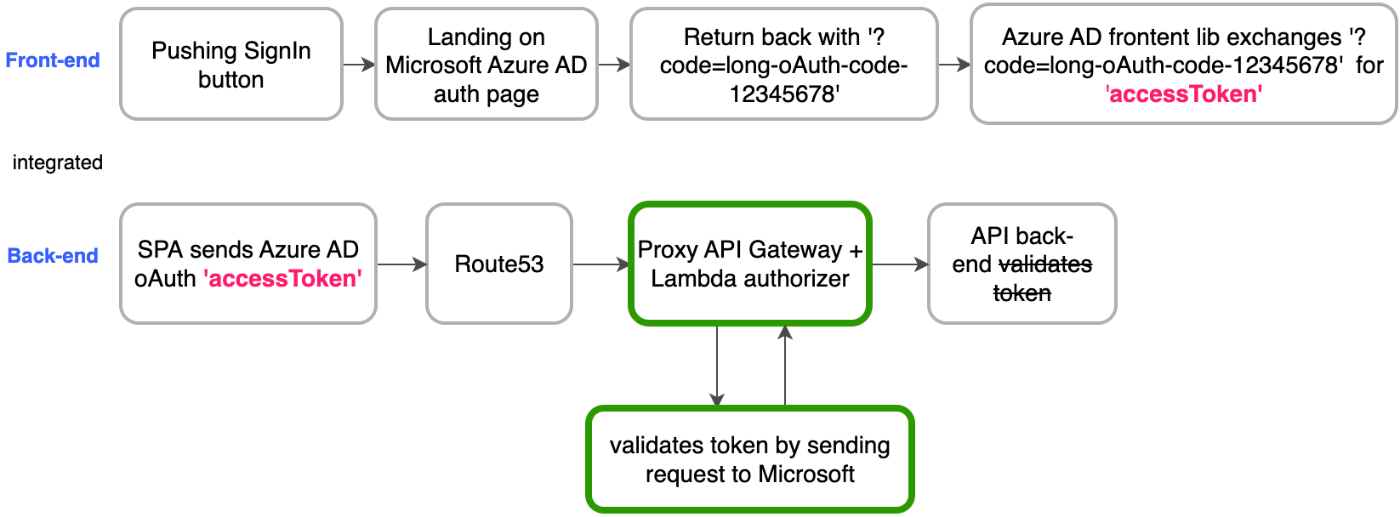
On one of the projects I worked on, there were 8 services that used Auth0 for front-end authentication and a rotated static token for back-end authentication.
TCP / IP model is not a physical thing. It is a conceptual model used to understand how communications are made over the Internet, and consists of 4 layers.
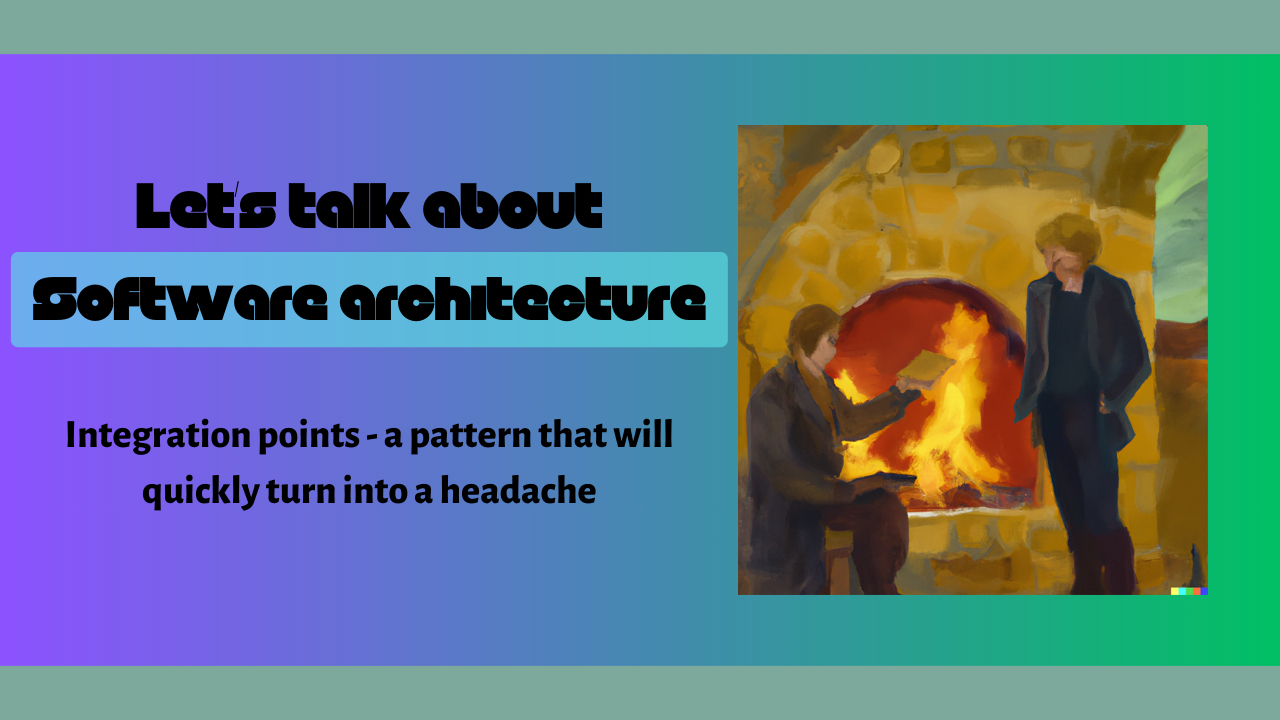
Today we will talk about a software architecture pattern of Architecture Points. Architects might find this knowledge interesting in solving their problems.
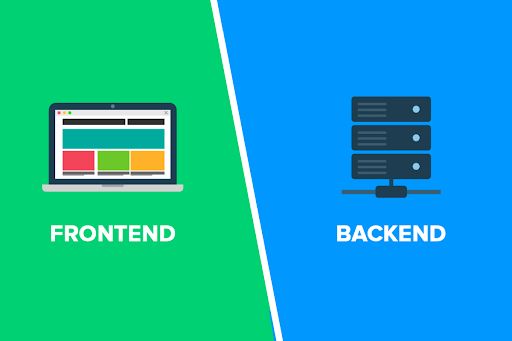
With the evolution of technologies, both front-end and backend have evolved to a great extent. The difference between the two is what we are going to discuss.
This is a beginner-friendly introduction to Node.js and how to set it up to kickstart a new project. It explains npm, dependencies, and how to install them for
In my experience, the development of microservice architecture and infrastructure go hand in hand. It's hard to imagine these tasks handled by separate teams.
The transition from one language to another doesn't need to be hard. Especially, when you are building backend apps in Python and you want to switch to Go.
After 7 major replatformings over 11 years, I've cataloged 5 hidden failure modes that silently break database migrations weeks after everyone stops watching.
Clean code is your secret weapon. It’s the key to fewer late-night debugging sessions, fewer headaches for your future self, and more time for yourself.
If I could point to one of the turning points of that made Codecademy’s revenue takeoff, it was the introduction of a metrics review process to the product t...
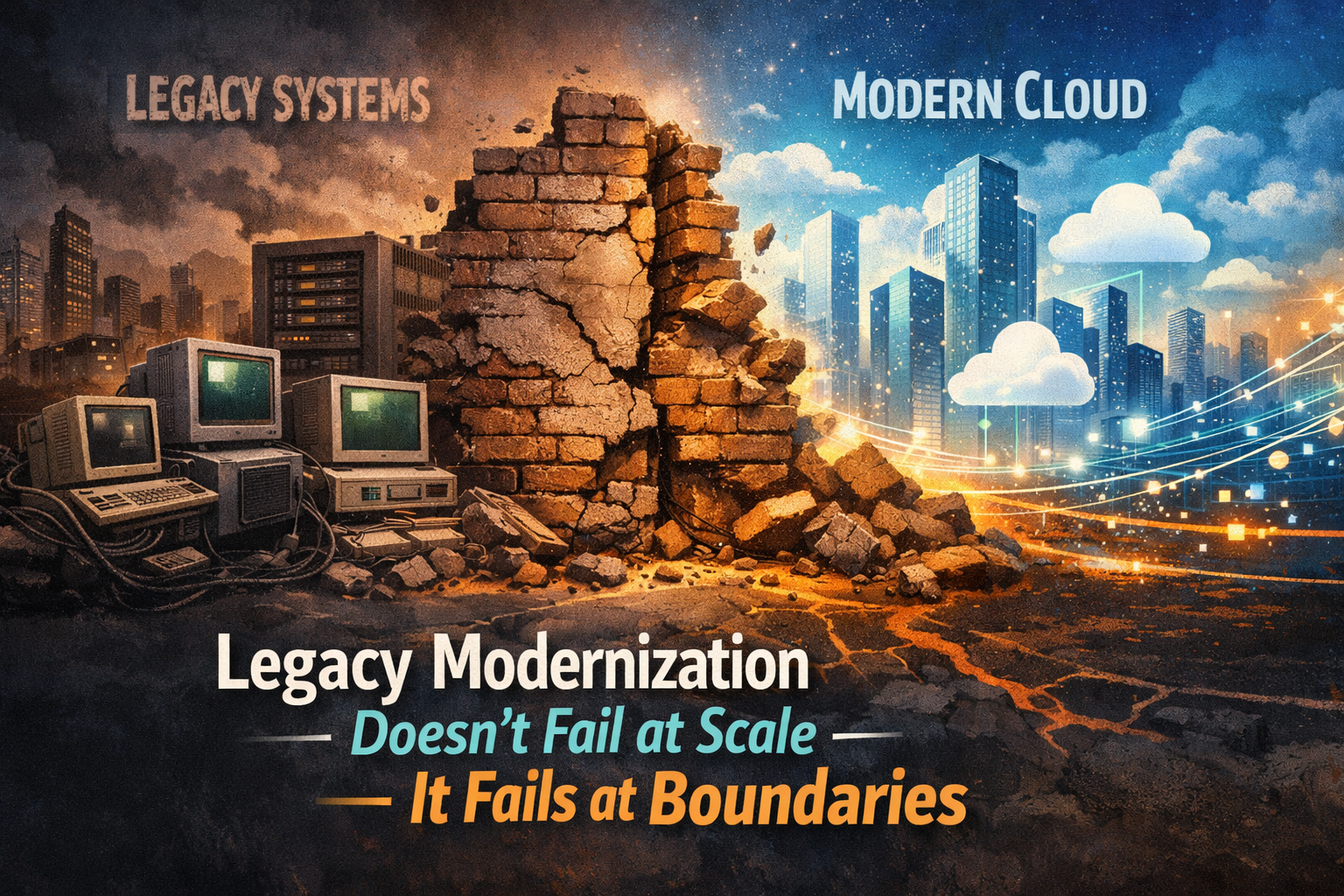
Legacy modernization fails at implicit boundaries, not scale. Learn how API contracts, validation, and error handling prevent silent production failures.
VIBE-Image-Edit is a text-guided image editing framework that combines efficiency with quality. It pairs the Sana1.5 diffusion model (1.6B parameters) with the Qwen3-VL vision-language encoder (2B parameters) to deliver fast, instruction-based image manipulation. The model handles images up to 2048 pixels and uses bfloat16 precision for optimal performance. Unlike heavier alternatives, this compact architecture maintains visual understanding capabilities while keeping computational requirements reasonable for consumer hardware. The framework builds on established foundations like diffusers and transformers, making it accessible to developers already familiar with the ecosystem.
MODEL INPUTS AND OUTPUTS
The model accepts natural language instructions paired with an image to understand both what changes should occur and where they should happen. It processes these inputs through its dual-component architecture to generate coherent edits that respect the original image composition while applying the requested modifications.
INPUTS
Conditioning image: The image to be edited, supporting resolutions up to 2048px
Text instruction: Natural language description of desired edits (e.g., "Add a cat on the sofa" or "let this case swim in the river")
Guidance parameters: Image guidance scale (default 1.2) and text guidance scale (default 4.5) to control edit intensity
OUTPUTS
Edited image: A single or multiple edited versions of the input image matching the text instruction
This model transforms images based on written instructions without requiring mask inputs or additional prompts. It handles diverse editing tasks from simple object additions to complex scene modifications. The multimodal understanding from Qwen3-VL ensures instructions align properly with visual content, reducing the gap between user intent and generated results. The linear attention mechanism in Sana1.5 enables rapid inference, generating edits in seconds rather than minutes. It maintains image coherence across different scales and aspect ratios, supporting both square and rectangular compositions.
WHAT CAN I USE IT FOR?
Content creators can use this model to prototype design changes before committing to manual edits. E-commerce platforms could enable customers to visualize product modifications in context. Marketing teams can generate multiple variations of images for A/B testing without hiring designers. Social media creators could quickly iterate on visual content. The model also supports integration into commercial applications, though it operates under SANA's original license terms. Developers building image editing tools can leverage this framework as a backend engine for their applications.
THINGS TO TRY
Experiment with varying guidance scales to control how dramatically the edits change the original image. Lower image guidance produces looser interpretations while higher values preserve more of the original composition. Test complex multi-step instructions like "add snow falling and make the trees more vibrant" to see how well the model handles compound edits. Try different image aspect ratios beyond standard square formats to explore the model's flexibility. Adjust the number of inference steps to find the balance between speed and quality for your use case—fewer steps run faster but may produce cruder results. Use style keywords in instructions (similar to how prompt engineering works in image generation) to guide the aesthetic direction of edits.
If your company needed a real-time service tomorrow, could you evaluate Go versus Node.js versus Elixir objectively? Or would you default to what you know?
A blunt breakdown of how GraphQL stacks up against REST. Real trade-offs, examples, and none of the fluffy evangelism that usually in infects API debates.
What I learned designing VALK's platform across 15 countries - date formats, RTL, regulatory UI rules, and how to structure Figma for regional variants....
What it actually looks like to run 7 simultaneous projects solo with ADHD - the failures, the systems that survived, and why I'll never take a cofounder....
By building an asynchronous foundation, we can successfully transform our AI agent from a manually-triggered tool into a fully autonomous, self-managing app.
I realized I needed something different. Not another generic team bot, but a Personal AI Assistant — one that knows my specific context, my preferred shortcuts
Walletless dApps from Flow use account abstraction to improve the web3 user experience. In part two, we walk through how to build the frontend for this dApp.
Krishi Reddy Karkal’s journey from frontend empathy to backend logic and cloud mastery shows how full-stack skills drive innovation and system performance.
Segment broke its product into 140 microservices instead of a monolithic monolith. They had to burn months of effort to move everything back to a Monolith.
Complete optimization playbook for ROT13 cipher implementation. Learn SIMD, parallel processing, cache optimization, and CUDA techniques to achieve 13x speedup.