You signed in with another tab or window. Reload to refresh your session.You signed out in another tab or window. Reload to refresh your session.You switched accounts on another tab or window. Reload to refresh your session.Dismiss alert
Let's learn about C via these 56 free blog posts. They are ordered by HackerNoon reader engagement data. Visit the /Learn or LearnRepo.com to find the most read blog posts about any technology.
One of the mother sauces of programming, if a mother sauce could shoot you in the foot.
If you’ve adopted Linux, chances are you might have done so for development purposes. After all, it has everything you need to program in most languages, and do so for (almost) free.
All data in computer is represented in binary i.e. in 0 or 1. Computers or machines do not understand our languages, they understand bits. Generally programmer do not care about operations at the bit level. But sometimes a programmer has to dive in a deeper level and work on bits.
C# is one of the most versatile programming language and brings in ease of programming offered by languages like Java, and has roots in the C family of languages including C and C++. C# is type-safe, object oriented and runs in the .Net Framework run-time, and C# code is compiled into IL (intermediate language) that conforms to CLI specifications.
I have read somewhere that a programmer should learn a new programming language every year ( I think it's code complete, not sure, though), but if you cannot do so, I suggest to at least learn following five programming language to do well in your career.
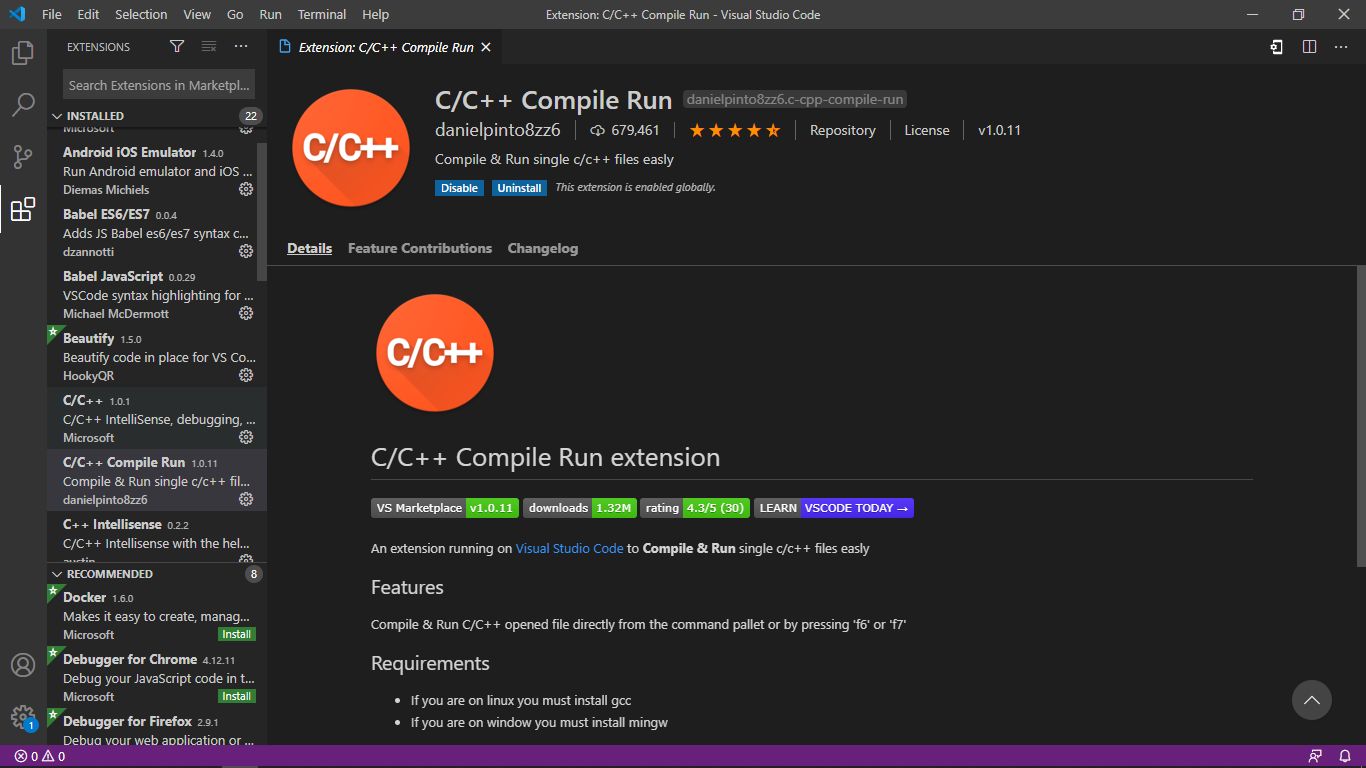
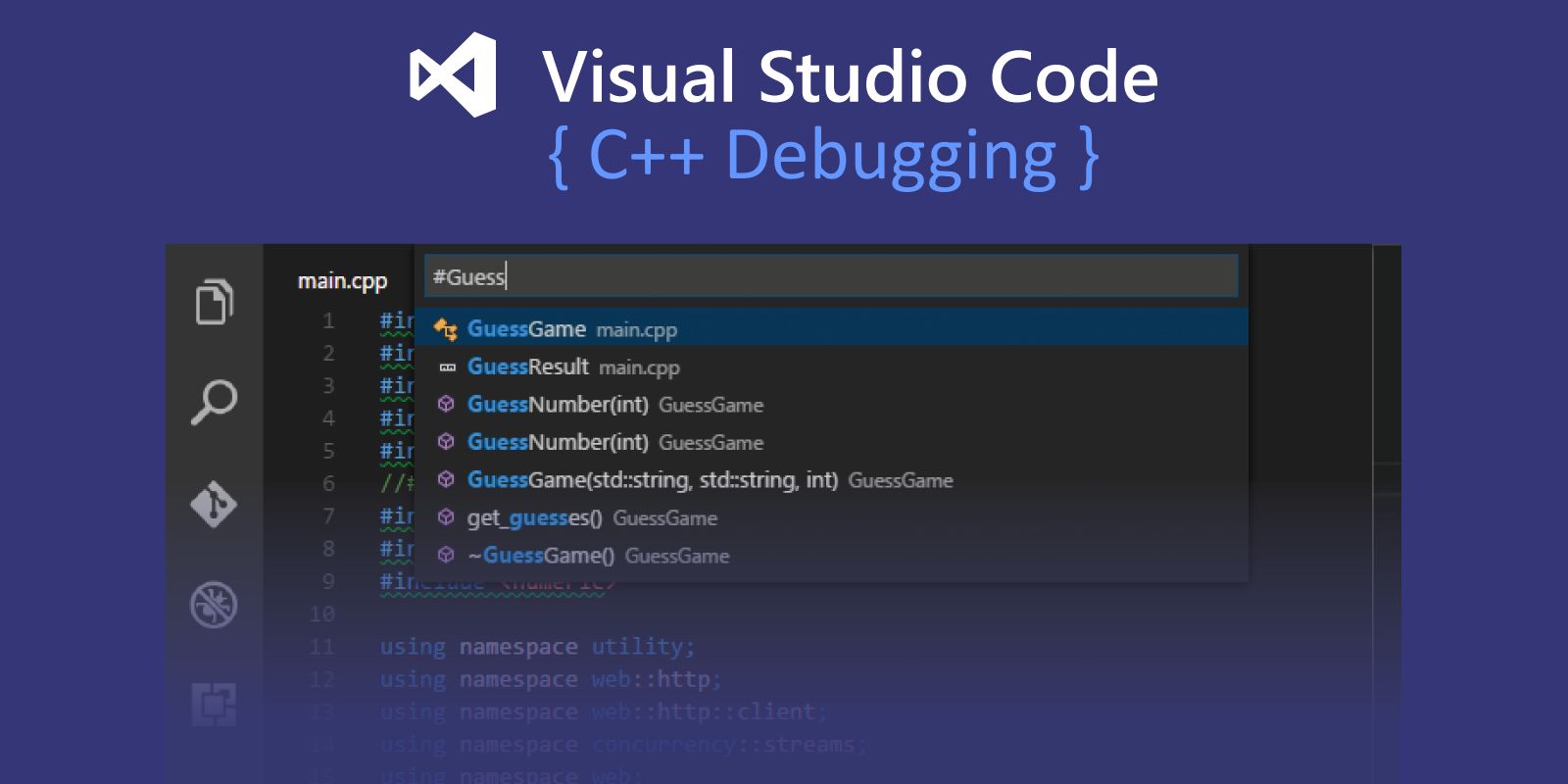
Trying to compile a .cu file is not supported in the VS Code natively. This can be a issue if you want to compile and debug (atleast the CPU part of the file as kernel debugging is not supported in VS Code at the moment).
From complex databases to self-driving cars, the usage area of C and C++ languages is surprisingly wide. Even today, with a myriad of new & robust programming tools, the two coding languages from 70s cannot be replaced. So what are the common applications of C & C++ today and why we still use them? Let’s find out in this article.
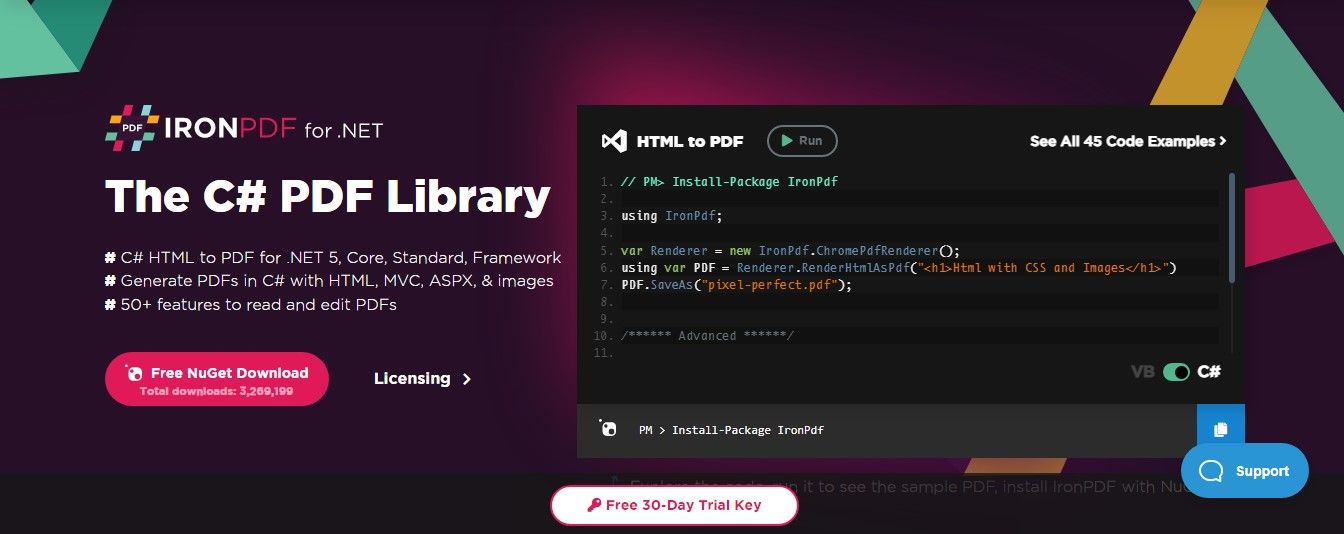
IronPDF is the ideal solution for converting HTML sites in .NET and .NET core projects. It not only transforms HTML but also has a lot of other useful capabili
Stack overflow is a type of buffer overflow vulnerability. When we pour water in a glass more than its capacity the water spills or overflow, similarly when we enter data in a buffer more than its capacity the data overflows to adjacent memory location causing program to crash. This is know as buffer overflow.
When working with embedded systems that depend on speed or have a minimal amount of memory, C is a perfect language of choice. This is a short paper about why you should learn C and the benefits of doing so.
Buck is a cross-platform, cross-language build system made for large scale compilation at Facebook. All Buckaroo packages use Buck as a build system, so it goes without saying that we’re big fans.
Explicit Interface Implementation is a complex and rarely used technique that allows a single class to inherit from multiple interfaces that have the same method signature. Explicitly implementing each interface, prepending the interface name to the method, allows the same method signature to exist in the same class. I shall not demonstrate that here, but there are plenty of examples of this online. There is another benefit to explicitly implementing an interface, and that is to hide members from being accessed via the class reference. I’ll create an example of this technique using a factory design pattern and Fruit class and a console application that you can step through via F11. If you create a new C# console application in Visual Studio, then copy and paste all of the below code, you can step through (F11) the code to see how it works.
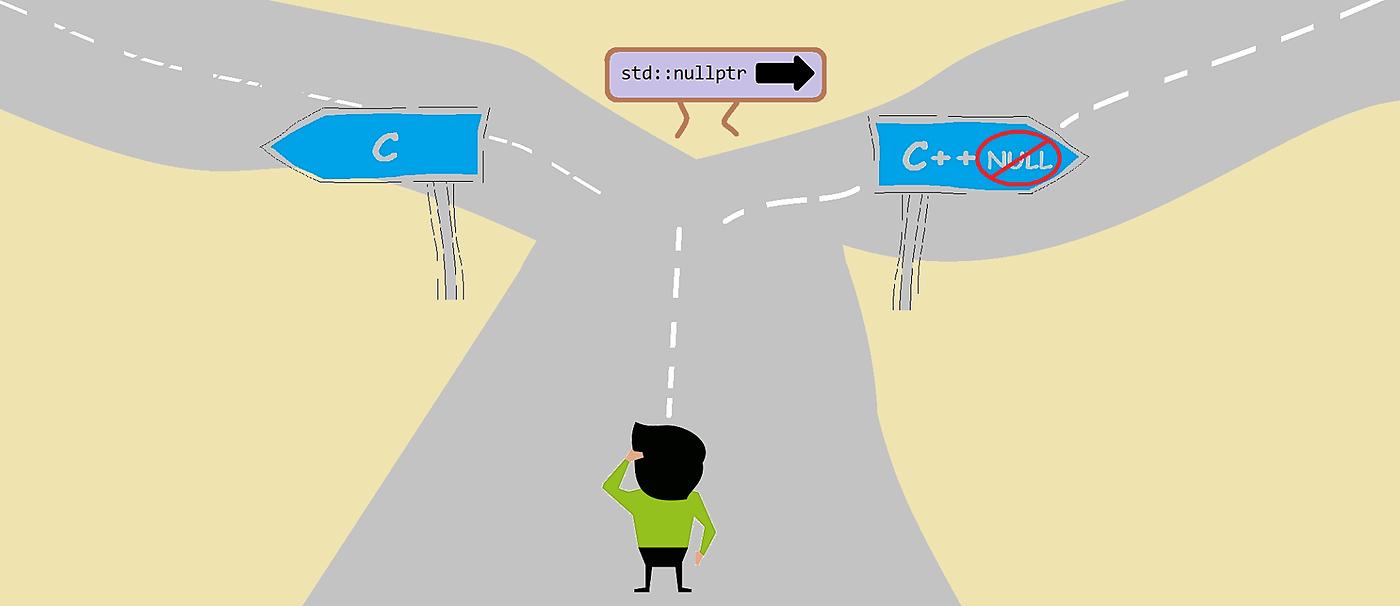
The answer to "What exactly nullptr is in C++?" would be a piece of cake for experienced C++ eyes & for those who are aware of Modern C++ i.e. keyword. But nullptr is more than just a keyword in C++ & to explain that, I have written this article. But before jump-into it, we will see issues with NULL & then we'll dive into the unsophisticated implementation of nullptr & some use-cases of nullptr.
Reversing a number in the C/C++ program means interchanging the digits i.e. to bring the last digit of the given number to the first position or vice versa.
Most intermediate dotnet devs writing async await code in C# will come across async void at some point. Here's a creative solution for avoiding the headaches.
So we’ve all compiled programs before, but do you know how your computer divided up and saved the different parts of the program? Be patient, this kind of overwhelmed me at first. Let’s jump in.
Exception handling in C++ is a well-unschooled topic if you observe initial stages of the learning curve. There are numerous tutorials available online on exception handling in C++ with example. But few explains what you should not do & intricacies around it. So here, we will see some intricacies, from where & why you should not throw an exception along with some newer features introduced in Modern C++ on exception handling with example. I am not an expert but this is what I have gained from various sources, courses & industry experiences.
The greatest common divisor (GCD) is the largest positive integer that is also a common divisor of a given set of positive integers. It is also known as the highest common factor (HCF) or the greatest common factor (GCF).
In this post, we will provide the C Programming Course for Free, and you can learn - What you'll learn, the list of Course content, Requirements, Description,
Libraries and system utilities form the foundations on which larger projects are built. So it's critical to make sure they, in particular, are secure. That's why we recently introduced five new rules for C++ and C to detect broken authentication and access control in *nix systems. The new rules fall into three categories: account validity, granting permissions, and changing directories.
This release packs over 200 new feature requests, bugs, and issues you raised. We welcomed a few great contributions from our community of 200+ contributors.
Aggregates are the heart of your system. They hold domain logic and are responsible for emitting events that will eventually make your data consistent across multiples data projections and bounded contexts.
Libraries and system utilities form the foundations on which larger projects are built. So it's critical to make sure they, in particular, are secure. That's why we recently introduced five new rules for C++ and C to detect broken authentication and access control in *nix systems. The new rules fall into three categories: account validity, granting permissions, and changing directories.




 I have read somewhere that a programmer should learn a new programming language every year ( I think it's code complete, not sure, though), but if you cannot do so, I suggest to at least learn following five programming language to do well in your career.