You signed in with another tab or window. Reload to refresh your session.You signed out in another tab or window. Reload to refresh your session.You switched accounts on another tab or window. Reload to refresh your session.Dismiss alert
Let's learn about Elasticsearch via these 61 free blog posts. They are ordered by HackerNoon reader engagement data. Visit the /Learn or LearnRepo.com to find the most read blog posts about any technology.
Elasticsearch is a distributed, RESTful search and analytics engine for storing, searching, and analyzing large volumes of data quickly. It matters for powering full-text search, log analytics, and data visualization in various applications.
Logging and monitoring are like Tony Stark and his Iron Man suit, the two will go together. Similarly, logging and monitoring work best together because they complement each other well.
Cloudwatch is an AWS service that allows storage and monitoring of your application logs from an array of AWS services. This can be really useful for creating alerts to notify developers when a certain threshold of errors has been hit, but sometimes we might need to deeply analyse our logs, not only to spot errors but to find insights into our application and improve performance. This is where an ELK (Elasticsearch, Logstash, Kibana) stack can really outperform Cloudwatch. ELK allows us to collate data from any source, in any format, and to analyse, search and visualise the data in real time.
In this article, I want to teach you how to connect Java Spring Boot 2 with Elasticsearch. We’ll learn how to create an API that’ll call Elasticsearch to produ
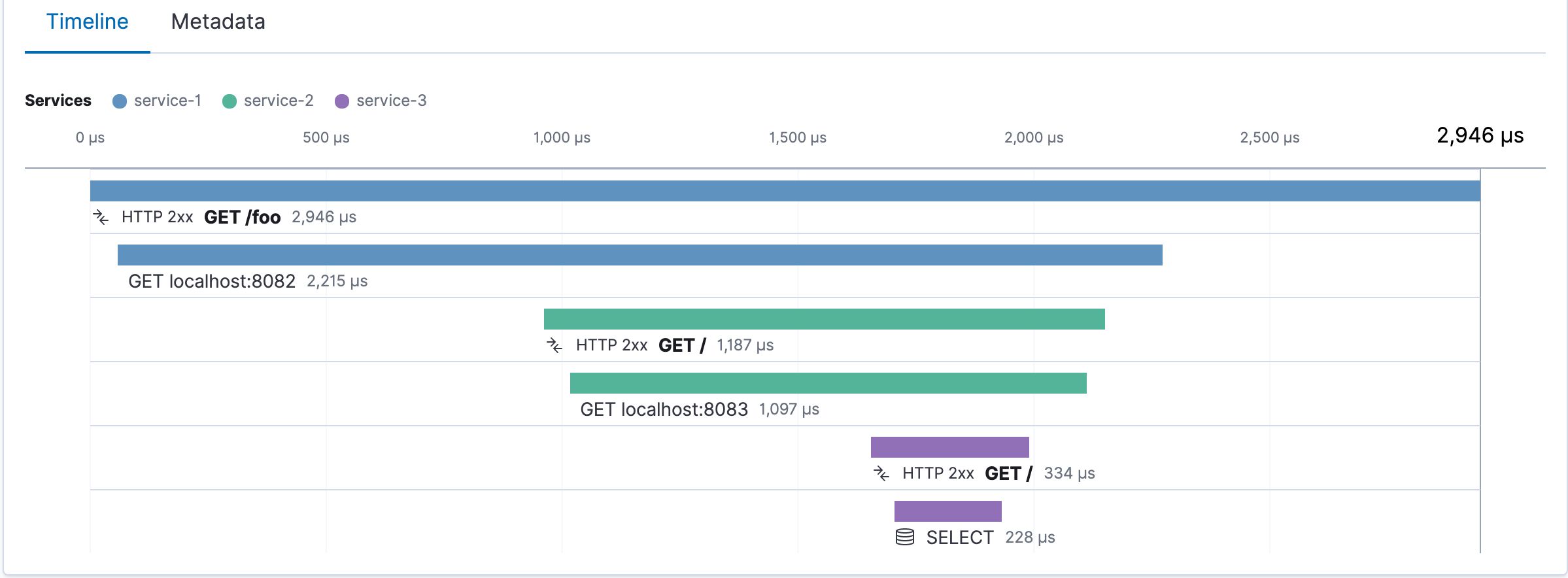
Elastic APM is extensively useful in monitoring the lifecycle of a HTTP request in a system especially in µservices architecture. Wide variety of web frameworks and databases are supported which is useful in tracking the request up to DB calls. The documentation is simple and concise which makes it easy to instrument the application.
This article aims to help or at least make it easy to trace the HTTP request lifecycle after instrumentation. Golang is used in this article for code snippets but the concept can be extended to other languages as well.
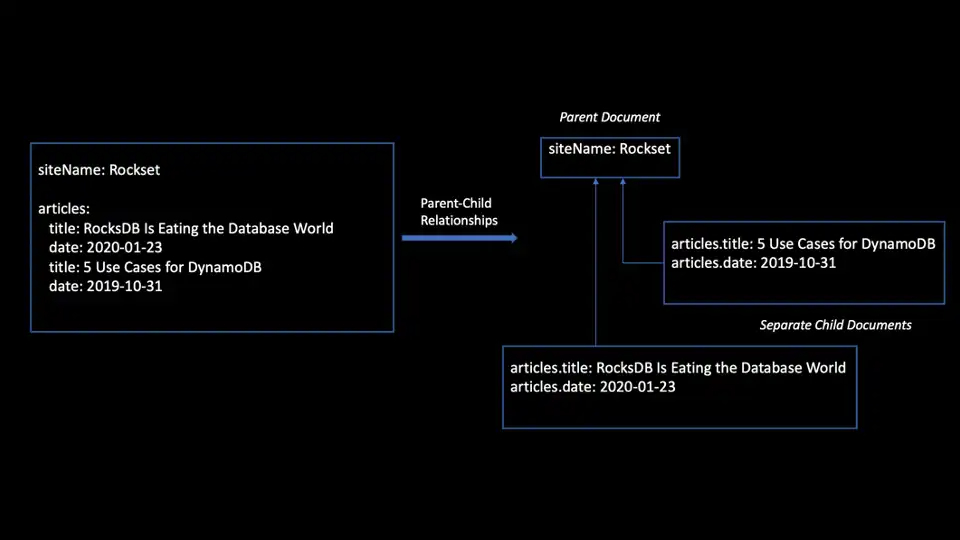
PGSync is a change data capture tool for moving data from Postgres to Elasticsearch. It allows you to keep Postgres as your source-of-truth and expose structured denormalized documents in Elasticsearch.
While Elasticsearch is known for being flexible and highly customizable, it is a complex distributed system that requires cluster and index operations.
For analytical use cases, you can gain significant performance and cost advantages by syncing the DynamoDB table with a different tool or service like Rockset.
For a system like Elasticsearch, engineers need to have in-depth knowledge of the underlying architecture in order to efficiently ingest streaming data.
While running a self managed elasticsearch cluster like any other database, it's important to make provisions for data backups. Data backups on Elasticsearch can't be done by simply copying elasticsearch data files from one disk to another, this tutorial guides you through making the best use of the Elasticsearch snapshot module for creating cluster snapshots and leverages the Azure blob storage for securely storing your backed up data. Also besides backing up data, the snapshot api also comes in handy for migrating data from one cluster to another.
In this text I will explain what is spell correction in the area of search functionality, how it works in Google, Amazon and Pinterest and will demonstrate how to make your own implementation from the ground up using custom search engine Manticore Search.
One of my favourite areas of cybersecurity is SIEM (Security Incident Event Management). In 2017 I wrote a post on how I got a role in cyber security, one of my recommendations was using the Elastic Stack as a SIEM as a start-off point for those looking to understand log analysis and how to investigate incidents. But one of the main gripes people had was, where can they get data to work on in their home environments. This post will focus on setting up a honeypot that already utilises the ELK Stack…
Amazon Elasticsearch Service recently added support for k-nearest neighbor search. It enables you to run high scale and low latency k-NN search across thousands of dimensions with the same ease as running any regular Elasticsearch query.
There are many ideas and considerations behind graph databases. This includes their use cases, advantages, and the trends behind this database model. There are also several real-world examples to dissect.
If we want to create a good search engine with Elasticsearch, knowing how Analyzer works is a must. A good search engine is a search engine that returns relevant results. When the user queried something in our Search Engine, we need to return the documents relevant to the user query.
As your infrastructure grows, it becomes crucial to have robots and a reliable centralized logging system. Log centralization is becoming a key aspect of a variety of IT tasks and provides you with an overview of your entire system.
Running systems in production involve requirements for high availability, resilience and recovery from failure. When running cloud-native applications this becomes even more critical, as the base assumption in such environments is that compute nodes will suffer outages, Kubernetes nodes will go down and microservices instances are likely to fail, yet the service is expected to remain up and running.
Autocomplete is a feature to predict the rest of a word a user is typing. It is an important feature to implement that can improve the user’s experience of your product.
Once upon a time, a company I worked for had a problem: We had thousands of messages flowing through our data pipeline each second, and we want to be able to send email and SMS alerts to ours users when messages matching specific criteria were seen.
With the amount of data created growing exponentially each year and forecasted to reach 59 zettabytes in 2020 and more than 175 zettabytes by 2025, the importance of discovering and understanding this data will continue to be, even more than before, a decisive and competitive differentiator for many companies.
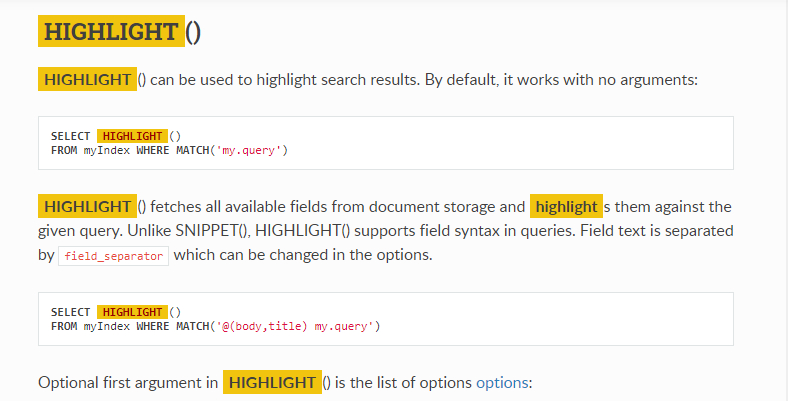
In this tutorial you will learn how to highlight search results in Manticore Search. You can benefit from search results highlighting if you want to improve readability of search results in your application or a web site.
If you're reading this blog, chances are you really interested in Elasticsearch and the solutions that it provides. This blog will introduce you to Elasticsearch and explain how to get started with implementing a fast search for your app in less than 10 minutes. Of course, we're not going to code up a full-blown production-ready search solution here. But, the below-mentioned concepts will help you get up to speed quickly. So, without further ado, let's start!
In this article, we will explore how to integrate Elasticsearch into a Ruby on Rails application and leverage its advanced features to deliver efficient results
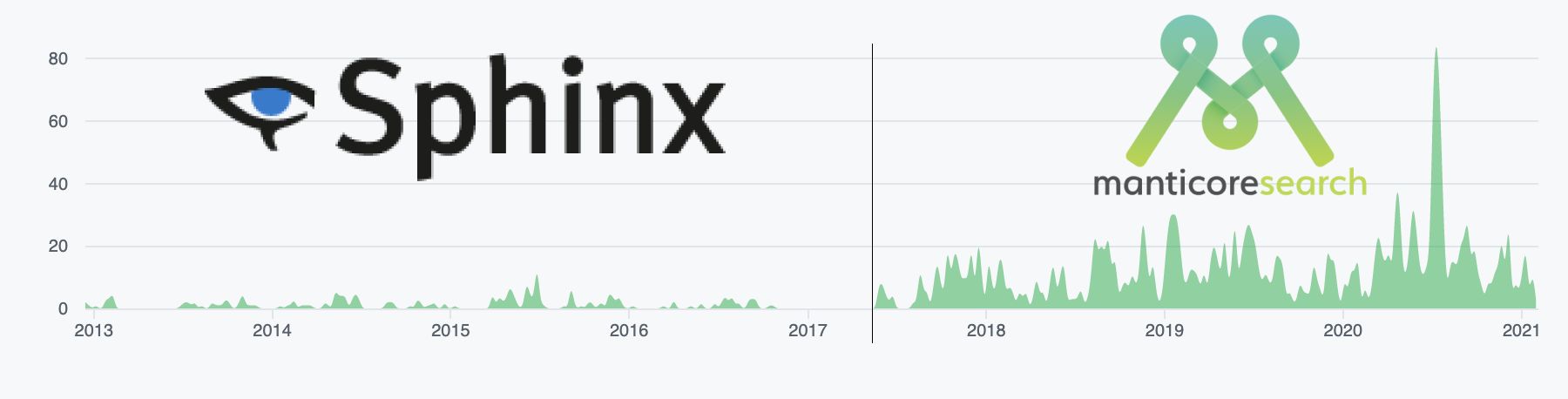
In May 2017 we made a fork of Sphinxsearch 2.3.2, which we called Manticore Search. Below you will find a brief report on Manticore Search as a fork of Sphinx and our achievements since then.
With the amount of data created growing exponentially each year and forecasted to reach 59 zettabytes in 2020 and more than 175 zettabytes by 2025, the importance of discovering and understanding this data will continue to be, even more than before, a decisive and competitive differentiator for many companies.
This article demonstrates how you can use the Operator Lifecycle Manager to deploy a Kubernetes Operator to your cluster. Then, you will use the Operator to spin up an Elastic Cloud on Kubernetes (ECK) cluster.
Whether you're a seasoned Elasticsearch user or just beginning your journey, understanding reindexing is important for maintaining an efficient cluster.
Stop blocking user saves on Elasticsearch. Learn a senior Symfony pattern: decouple indexing with Messenger and ship zero-downtime reindexing using aliases.
Discover how Apache Doris revolutionizes log analysis. From schema-free support to cost-effective storage, learn how to build an efficient log analysis system.
Are you a software tester? This is where you find out more about using different reading logs in Kibana in order to better track and understand the errors.