You signed in with another tab or window. Reload to refresh your session.You signed out in another tab or window. Reload to refresh your session.You switched accounts on another tab or window. Reload to refresh your session.Dismiss alert
Let's learn about Enterprise Software via these 81 free blog posts. They are ordered by HackerNoon reader engagement data. Visit the /Learn or LearnRepo.com to find the most read blog posts about any technology.
Enterprise software is designed to satisfy the needs of an organization rather than individual users, typically supporting complex business processes. It matters for streamlining operations, improving efficiency, and facilitating collaboration across large companies, driving productivity and strategic growth.
Data is useless without the ability to easily get and act on it. The success of future enterprises will combine sophisticated information collection with better user experience, and the Natural Language User Interface comprises much of this user experience.
Enterprises will need to understand how they will use customer data and how it will get processed through AI models that are trained with the latest innovation.
An in-depth guide to th 7 leading requirements management software solutions in 2026. Compare Jama Connect, DOORS, Polarion, and more to find the right fit.
Kailin O'Donnell is the Director and Co-Founder of NEM Ventures, the VC and Investments arm of the NEM Blockchain Ecosystem. Kailin is a DLT advocate who has been deeply involved in NEM since before launch, coding some early SDKs for NIS1 and Symbol, and has assisted multiple companies building on the NEM blockchain.
The e-commerce industry is one of the most rapidly changing ones. A constant stream of new tendencies, innovative technology, and the growing needs of the customers are the factors that make e-commerce business owners follow these rules to stay afloat.
There is a perception that enterprise software is easy. The thought process goes something like: “How can adding up numbers and producing reports be as hard to do as programming image recognition, or writing software to control nuclear power plants?”
Explore the impact of low employee motivation and the role of enterprise gamification in boosting engagement, eliminating friction, and fostering creativity.
Moving towards digital communication at scale has always been a tedious task for all types of businesses, no matter the industry you're serving or the size of your business. With so many technological advances companies are now looking for new ways to enhance and improve their customer experience and at the same time to save in operational costs.
This is a collaboration between Baolong Mao's team at JD.com and my team at Alluxio. The original article was published on Alluxio's blog. This article describes how JD built an interactive OLAP platform combining two open-source technologies: Presto and Alluxio.
Here we explore 15 advantages that make online proofing software indispensable for creative teams including real-time collaboration and feedback loops.
Mad Devs have been working with WebRTC since 2013. We have implemented several projects with video or audio calls enabled. That’s why I want to share my thoughts on when to build your own solution from scratch, when to use open source alternatives and when to order a custom solution from a third-party vendor.
A single source of truth (SSOT) enables that synchronization. A company with SSOT relies on one and only one point of reference for the latest, aggregated info.
A lot of my recent research has been around cryptocurrency as money - and how stable assets are the core to scaling the industry and building reputation and trust. I believe that creating price stability often through collateralization, whether that’s with fiat currencies like the dollar or pound, cryptocurrencies like ethereum or bitcoin, or commodities like gold and oil, will be essential to many web3 innovations in the coming decade.
"All models are wrong." George Box, the statistician is supposed to have said. Unfortunately, like he also continued to say, some are useful. Whenever I try to take a step back and think about the broader investing landscape, that remains true.
COVID-19 proved to a lot of organizations that we’re not as digital as we like to think we are – even today’s top enterprises are still relatively ‘old-school’ and are behind in their digitalization progress.
Technology has enabled professionals from diverse fields to delegate repetitive manual tasks to software programs, giving them time to do more interesting and creative work and allowing for professional development. In the field of accounting, new software is able to take on complex calculations and bookkeeping, giving CPAs the ability to perform previously laborious tasks with just a couple of mouse clicks.
Technology in business is a phenomenon that is taking over the world. Business is certainly not going anywhere anytime soon; technology is the only way to go. Business needs to have the right tools in place to compete in a competitive corporate environment.
The purpose of Guidde is to help people, like you, record their videos. They may have numerous reasons why they haven’t started yet, and that’s where we come in
Every organization has different tools to support internal processes. As companies scale, IT teams are faced with the growing complexity of user requirements, which often go beyond the capacity of consumer software.
Small and medium-sized enterprises are fast realizing the need of having an enterprise resourcing planning (ERP) software in place. The software that can help manage the day to day business activities such as accounting, sales, finance, procurement, planning, and supply chain operations. So, if you have been running a legacy system you may already know the value that an ERP provides. It eliminates instances of data duplication, mitigates errors, and automates businesses like never before.
A technical case study on leveraging Domain-Driven Design (DDD) and Microservices to architect scalable tax compliance engines for high-volume global enterprise
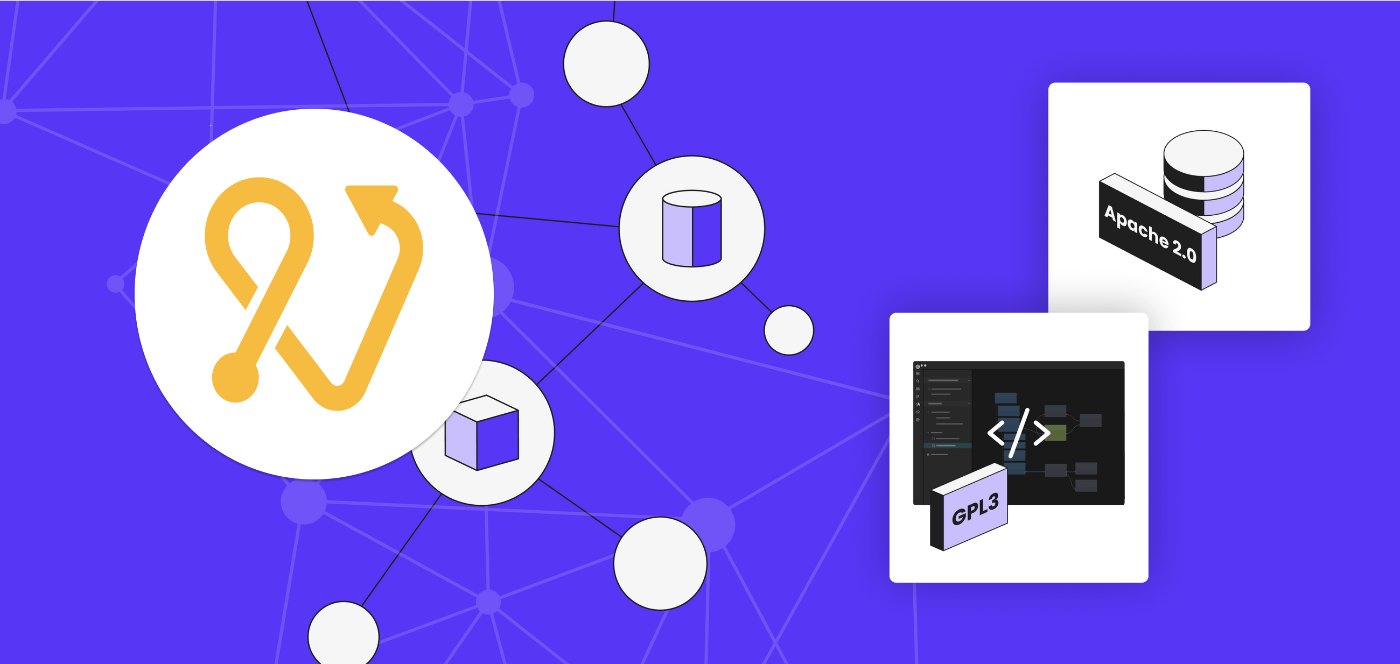
Co-founder and CEO of Noodl, James Haliburton, announces their transition to an open-source model. This significant shift aims to empower developers and democra
A €900K logistics app built over 5 years — but barely usable. We audited the system, uncovered critical flaws, and mapped a real path to rebuild it right.
The modern world is bombarded with the flow of advanced technologies. Cloud and quantum computing, Internet of Things, AI, 3D printing, and a plethora of other technologies ushered by the Fourth Industrial Revolution quickly change the usual way we perceive high technology and promise unfathomable horizons of opportunities.
An AI product that could reduce waste, improve data synchronicity between multiple feedback hubs/channels, and create more efficient workflows in organizations.
A company requires many IT systems to run its business, and typically spends a few percent of its revenue on building and operating those IT systems. A typical IT system will live for a decade and sometimes much more before being replaced.
Tiered Locality is a feature led by my colleague Andrew Audibert at Alluxio. This article dives into the details of how tiered locality helps provide optimized performance and lower costs. The original article was published on Alluxio’s engineering blog
With virtually every non-essential business forced to rely on new technology and embrace different ways of working, the coronavirus pandemic has presented organizations with numerous obstacles. While much attention has been paid to how companies can best navigate these challenges, it’s important that we also recognize another truth emerging from our new normal: enterprise security still leaves much to be desired.
Intranets are vital communication hubs for many companies. According to Simpplr’s Employee Engagement Statistics: 2018, over 70% of professionals involved in employee engagement and internal communications consider intranets to be an essential aspect of their strategy. Indeed, it is on corporate intranets where employees not only collaborate but also share their ideas, express opinions and attitudes to everything that happens in a company.
Data storage and access have long been a concern for businesses. A ton of data is created daily, and efficient storage is a must to keep track of everything.
Sivakumar Karuppiah modernized API Gateway infrastructure, improving response times by 40% and setting new standards for enterprise digital transformation.
Choosing the right facility maintenance strategy greatly depends on understanding your organization demands, legal requirements, the software you use and cost.
Sekar Mylsamy led a major system modernization, cutting API latency by 70%, slashing onboarding time by 50%, and reshaping enterprise agility and scalability.
To ensure that organizations have a cohesive approach to purchasing and introducing new tools, companies should standardize their software procurement process.
Tropic wants you to fall in love with procurement. See how this startup is transforming an underserved industry in an interview with their CEO, David Campbell.
RISE with SAP promised a clean cloud path, yet only 37% of ECC customers have migrated. We explore the hesitation and the Brownfield vs. Greenfield choice.
Mobile devices have redefined the way we interact with digital technology, and enterprise mobile applications are probably the most interesting example of this shift. While they hold considerable potential for improving business operations, you’ll be right to wonder whether they can really fulfill all the trendy promises seen in the media. Below is a detailed analysis of what these apps can really do and how to harness their potential while avoiding the risks.
You’ve probably noticed this trend of automating tasks, processes, and even complete departments. Maybe, your company is also considering implementing an intelligent process automation solution, but you still haven’t found the answer to the following questions:
This is a summary from my interview with Tim Bouckley. The conversation is apropos the evolution of design as a capability within the software field, and its role in traditional companies’ digital transformation.
AI isn't taking your job. It's exposing the gap between what you claim to contribute and what you actually do. That gap has always been the real problem.




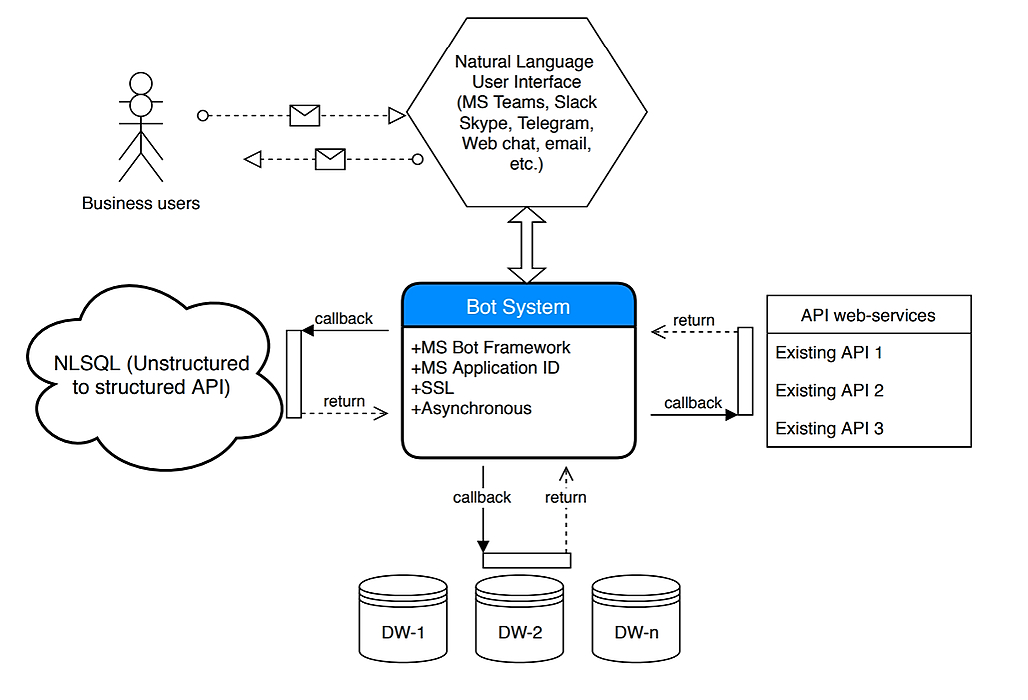








 Moving towards digital communication at scale has always been a tedious task for all types of businesses, no matter the industry you're serving or the size of your business. With so many technological advances companies are now looking for new ways to enhance and improve their customer experience and at the same time to save in operational costs.