You signed in with another tab or window. Reload to refresh your session.You signed out in another tab or window. Reload to refresh your session.You switched accounts on another tab or window. Reload to refresh your session.Dismiss alert
Let's learn about Http via these 61 free blog posts. They are ordered by HackerNoon reader engagement data. Visit the /Learn or LearnRepo.com to find the most read blog posts about any technology.
HTTP (Hypertext Transfer Protocol) is the fundamental protocol for transferring hypermedia documents like HTML over the internet. It is the backbone of data communication for the World Wide Web, enabling browsers and servers to communicate seamlessly.
The number of security breaches and cybercrimes is increasing rapidly. With more and more approaches being transferred online, hackers have found their way of hacking into a system and corrupting the information or stealing data to turn it into profits. As the technology keeps on changing, the hacking attempts are also becoming smart and upgraded to ensure hackers are never caught in action.
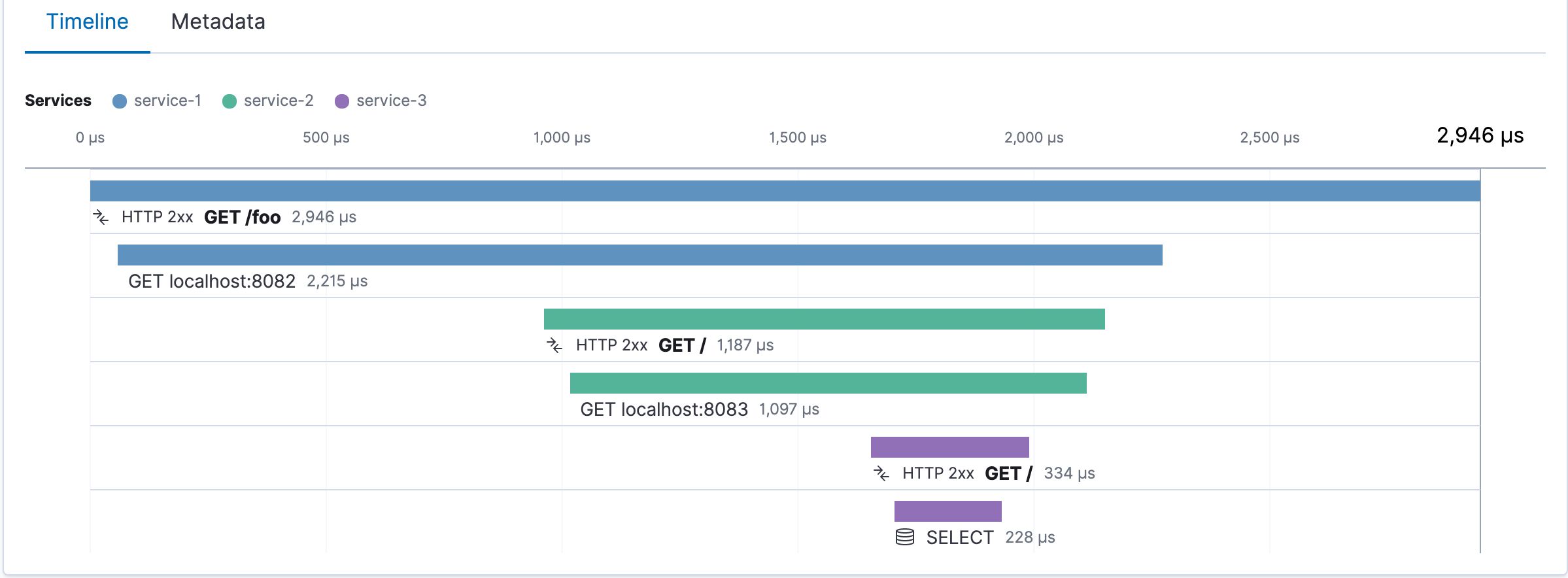
Elastic APM is extensively useful in monitoring the lifecycle of a HTTP request in a system especially in µservices architecture. Wide variety of web frameworks and databases are supported which is useful in tracking the request up to DB calls. The documentation is simple and concise which makes it easy to instrument the application.
This article aims to help or at least make it easy to trace the HTTP request lifecycle after instrumentation. Golang is used in this article for code snippets but the concept can be extended to other languages as well.
In this tutorial, I'm going to walk you through building a streaming API using Golang. Don't worry, its surprisingly easy to build a robust streaming server, especially if we utilize one of the more modern protocols: HLS.
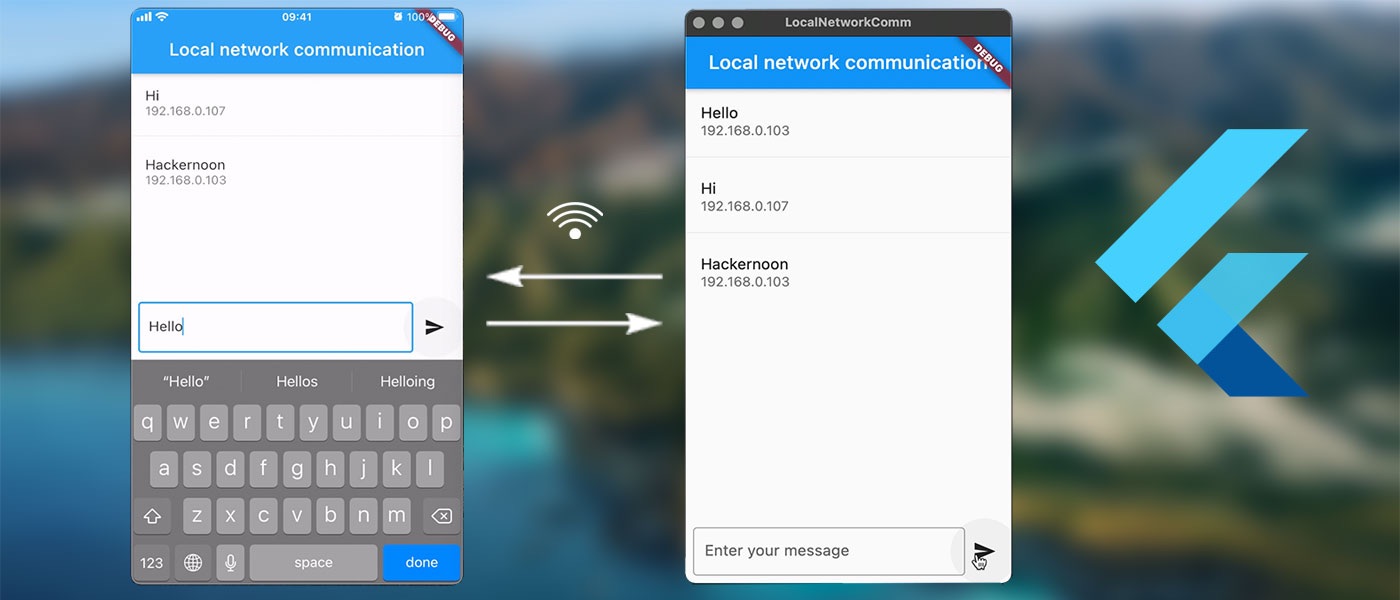
The task is to build an app that can send and receive messages over a local network. We can do it using sockets, but today we are going to create a simple app that uses an HTTP server for communication.
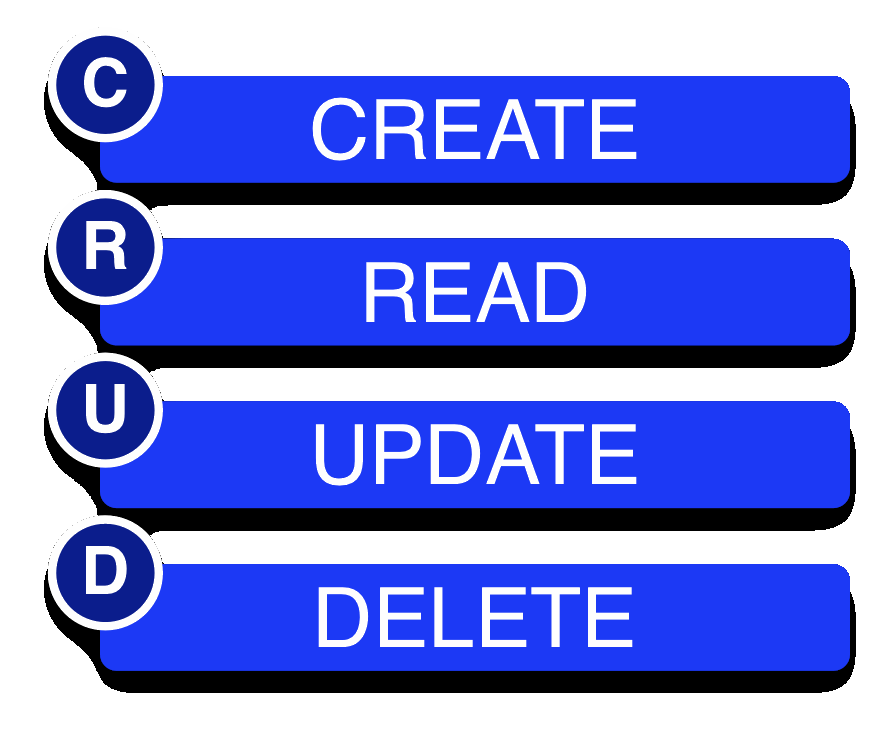
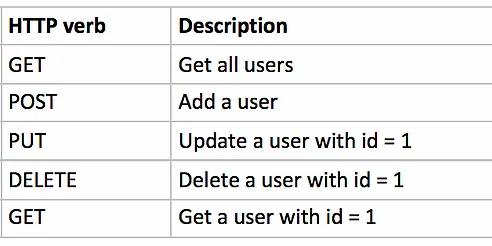
When I’m learning something new I like to talk to myself about it until I feel I understand it. You can feel when you’re just hiding behind the fact that no one else is questioning you, and you’re really just kind of lying to yourself. “Yeah yeah, REST, CRUD, awfully simple…”
This guide explains how to build a simple ESP8266 firmware updater in NodeJS. The ESP8266 will send a GET request to my application with some key information stored in its header. This will then be used to serve up the appropriate binary.
Although SSH certificates are the most secure way to regulate SSH access, they are underutilized. This article explains why you should be using SSH certificates
HTTP provides a general framework for access control and authentication. The most common HTTP authentication is based on the
"Basic" schema. This page shows an introduction to the HTTP framework
for authentication and shows how to restrict access to your server using the HTTP "Basic" schema.
HTTP (Hypertext Transfer Protocol) is the language that web browsers and web servers speak to each other. Example, Request a web page or download a file or watch a video, it is HTTP that makes it possible.1 — Building Blocks Of HTTP
Clickjacking refers to any attack where is user is tricked into clicking any unexpected web element unintentionally. It is a malicious practice in which the attacker tricks a user to click on another webpage who actually clicks on another page. This technique is mostly used for websites or web pages by overlaying malicious content over a trusted webpage or by placing a transparent element or an entire page over a visible one.
HTTP is a protocol which allows the fetching of resources, such as HTML documents. It is the foundation of any data exchange on the Web and it is a client-server protocol, which means requests are initiated by the recipient, usually the Web browser. A complete document is reconstructed from the different sub-documents fetched, for instance text, layout description, images, videos, scripts, and more.
Compression is an important way to increase the performance of a Web site. For some documents, size reduction of up to 70% lowers the bandwidth capacity needs. Over the years, algorithms also got more efficient, and new ones are supported by clients and servers.
Starting with Firefox 23, Firefox blocks active mixed content by default. This follows a practice adopted by Internet Explorer (since version 9) and Chrome.
Certificate chains are used to be able to verify an end user certificate against a list of intermediaries and a root authority. We are going to explain this in a bit more detail.
Working on the web means coming into contact with HTTP responses. Whether you spend your time primarily on the client or on the server, you're likely familiar with the popular ones like 200, 404, and 500. While memorizing all the codes using cat memes as a mnemonic can be helpful, let's dive deeper into what some of the most common codes mean.
URL redirection, also known as URL forwarding, is a technique to give more than one URL address to a page, a form, or a whole Web site/application. HTTP has a special kind of response, called a HTTP redirect, for this operation.
The concept of instrumentation often refers to tracing where events happen in an application. Many application performance monitoring (APM) tools use it to provide metrics on the inner workings of your application. But sometimes, all you really need are details about API calls.
APIs are less like USB ports or fire hoses than they are as a person at a help desk in a foreign country. An API will not give you all of a program’s information or code (like a fire hose), because what would stop you from replicating the entire code base? Instead, an API provides you with data its programmers have made available to outside users. Even so, you have to know the language and ask the right questions to do anything with this data.
HTTP requests with Python is dead simple. In just a few lines of code, you can parse data from the internet like a browser. Read more about HTTP and Requests...
Xanny finally reached version 1.0 in Dec 2020. According to its official repository, Xanny is a simple, fast and low HTTP router and URL marcher for building Deno servers.
HTTP (HyperText Transfer Protocol) is the underlying protocol of the World Wide Web. Developed by Tim Berners-Lee and his team between 1989-1991, HTTP has seen many changes, keeping most of the simplicity and further shaping its flexibility. HTTP has evolved from an early protocol to exchange files in a semi-trusted laboratory environment, to the modern maze of the Internet, now carrying images, videos in high resolution and 3D.
Heartbeat.sh provides one of the simplest ways to monitor your servers and processes for free. If I want to monitor a service, I can monitor it by simply sending an HTTP POST request to my heartbeat.sh server, and voila, my service is being monitored! I will show you how to do this in three easy steps.
Using a browser to consume content is something most of us do everyday. Heck, you're doing it right now. Recently though, I was humbled by the realization that for something I do so often, I only had a vague idea of what was happening "under the hood". But rather than stew in my own shame and self-loathing, I decided to dive in to gain a better grasp on the complete end-to-end process, or life cycle, of a browser.