You signed in with another tab or window. Reload to refresh your session.You signed out in another tab or window. Reload to refresh your session.You switched accounts on another tab or window. Reload to refresh your session.Dismiss alert
Let's learn about Mobile Development via these 95 free blog posts. They are ordered by HackerNoon reader engagement data. Visit the /Learn or LearnRepo.com to find the most read blog posts about any technology.
Mobile development is the process of creating software applications that run on mobile devices like smartphones and tablets. It is critical for reaching users on their preferred devices and delivering accessible, on-the-go digital experiences.
You must have heard the words like trends of color schemes/patterns in mobile app development and designing because mobile phones are the best and most convenient way to connect yourself to the digital world.
React Native is a framework for building native apps using React and Javascript. In this post, I’ll walk through the process of building a music streaming similar to Spotify. What’s really cool is that the exact same code is going to work for both iOS and Android, and the apps are going to be 100 % native (no WebViews or anything).
Thanks to the mobile era we have mobile apps for everything these days. Every business from a barbers shop to huge retailers has apps so that they can be closer to their customers.
The success of an app highly depends on its security. Users want safe app environments where they can interact with each other. Therefore, developers need to deliver digital solutions with app security in mind.
It is not wrong if we say that we are living on our mobile phone screens and our world has been succumbed within mobile phone applications. There is a huge development market for smart phone application development. There have been popular mobile applications generating revenue cycles that are hard to ignore. Some of the popular mobile phone applications in the running are: Facebook, Instagram, Pinterest, Snapchat, etc.
This is today's reality: Artificial intelligence has already made a lot of buzz in the mobile app development industry. More cheap and available screens, easy real-time access to the data robust analysis tools have become even more powerful - all of this is already a normal part of our daily routine in society.
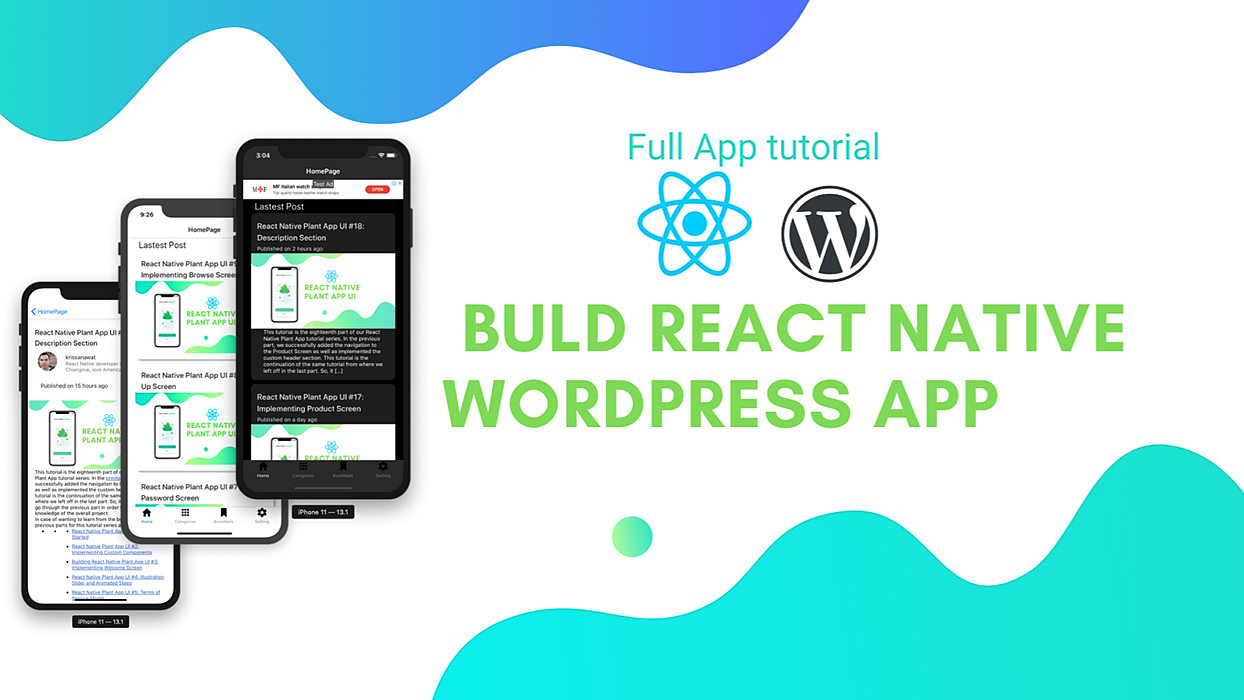
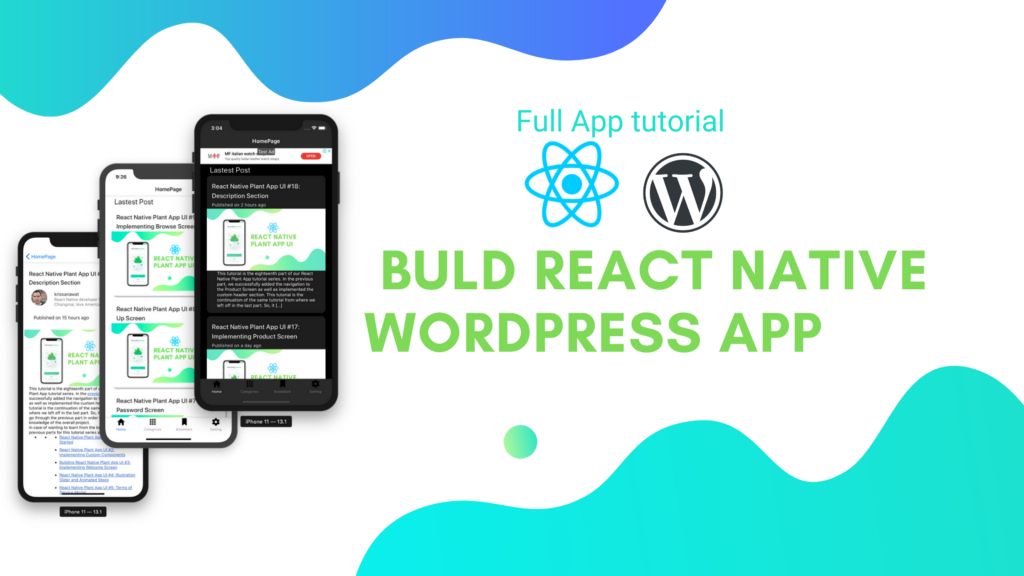
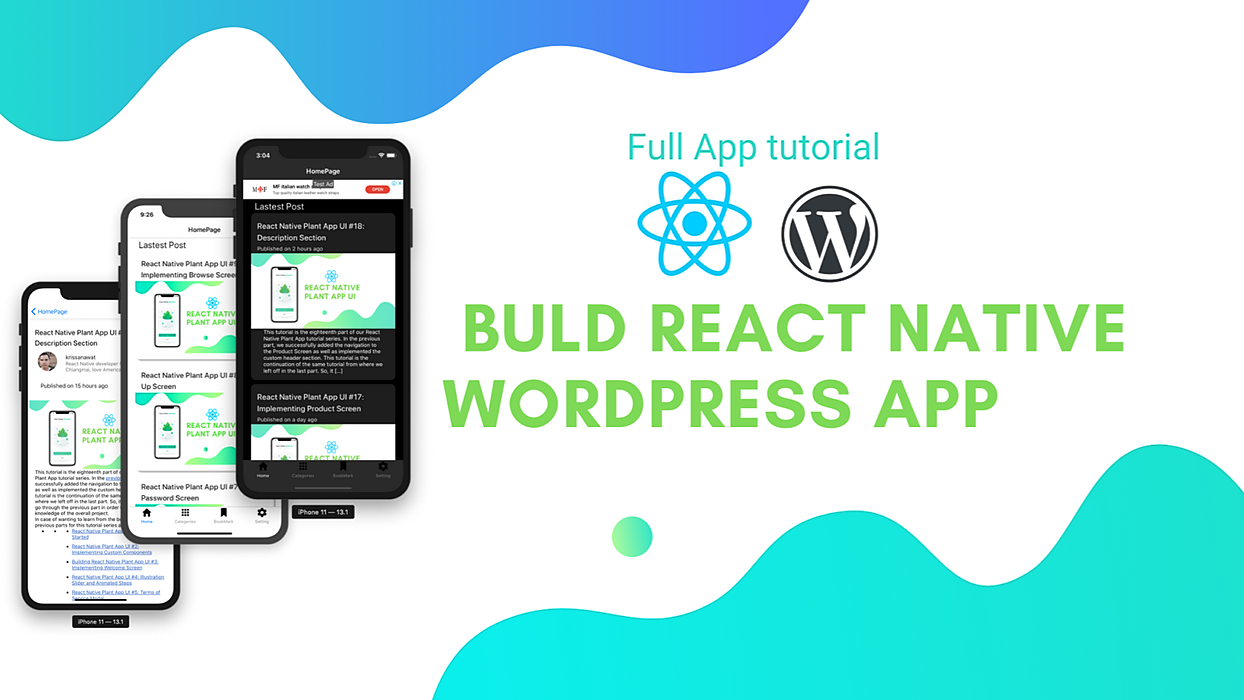
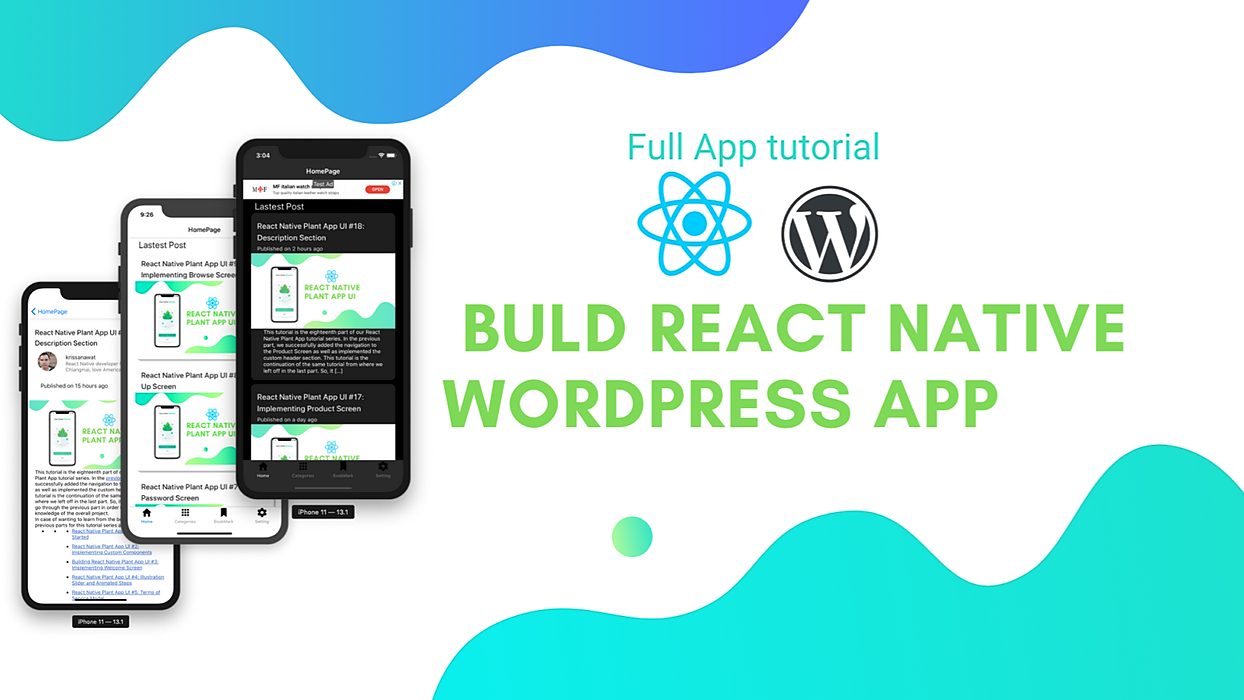
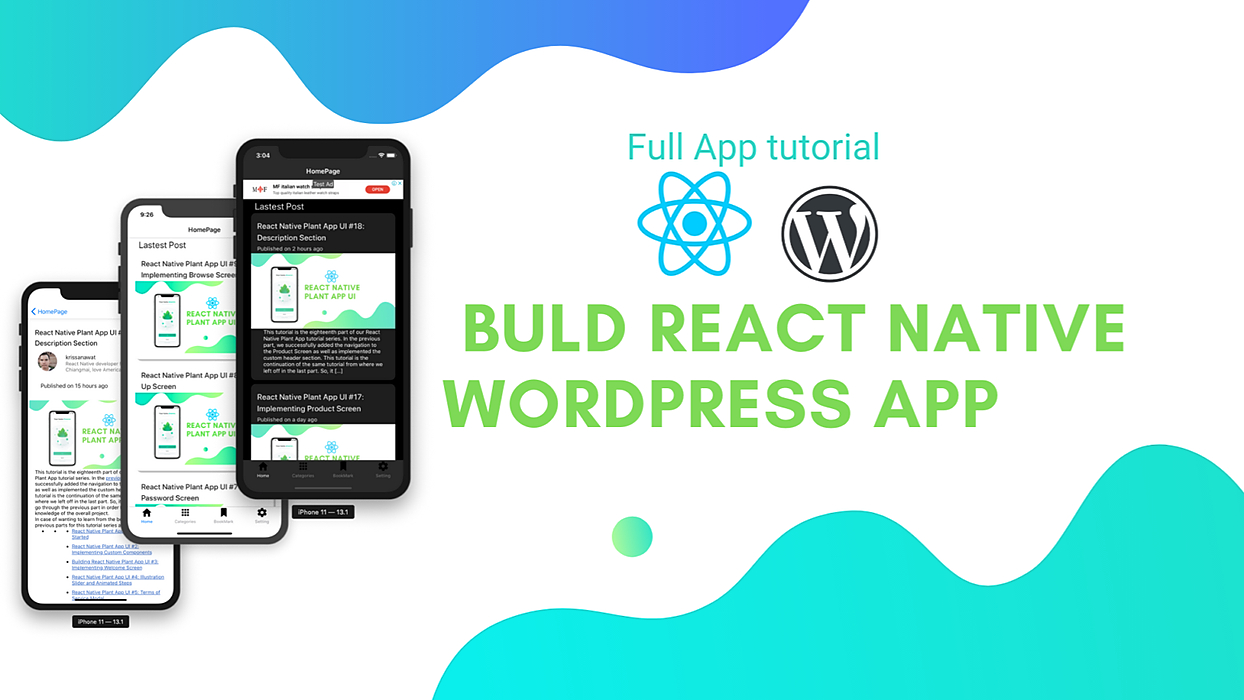
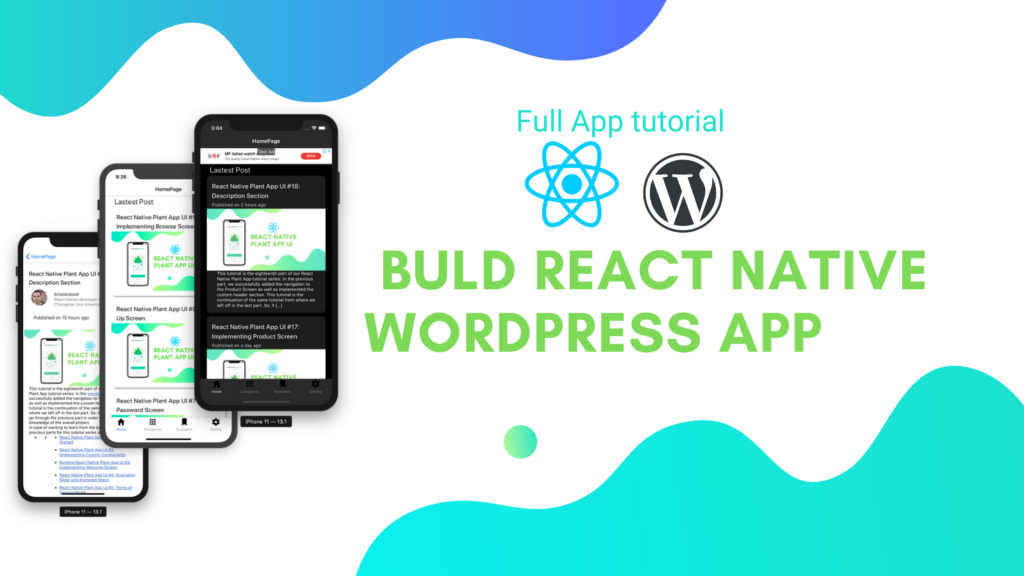
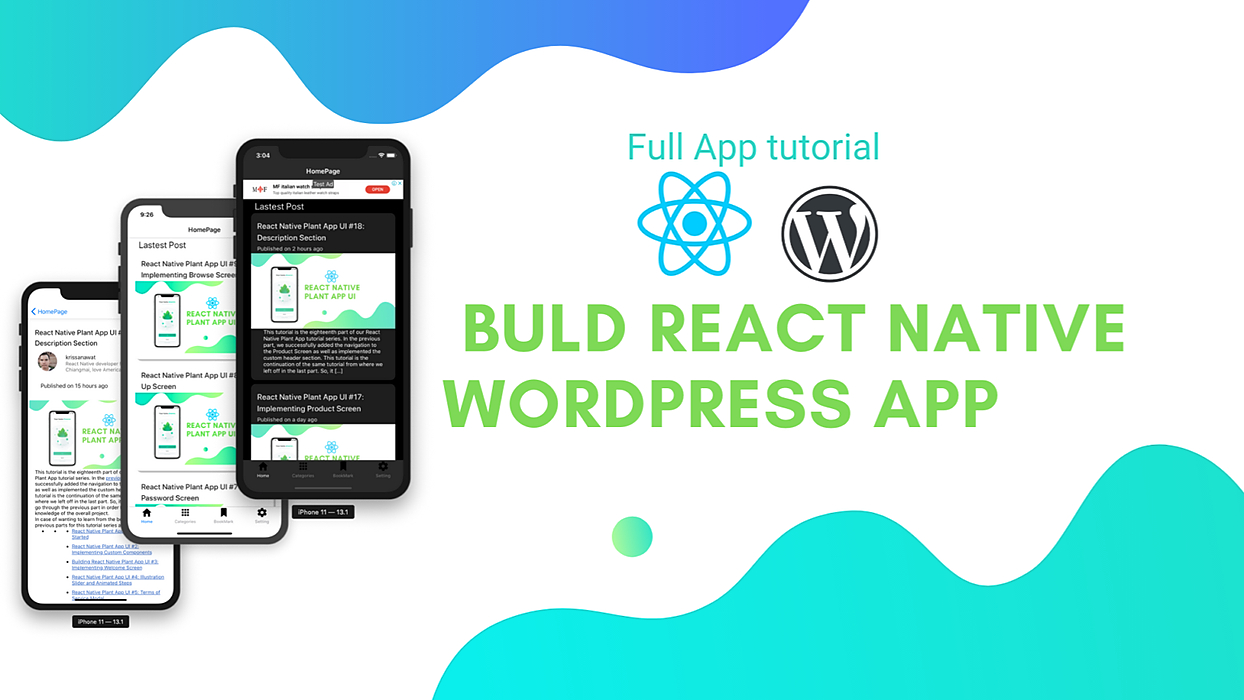
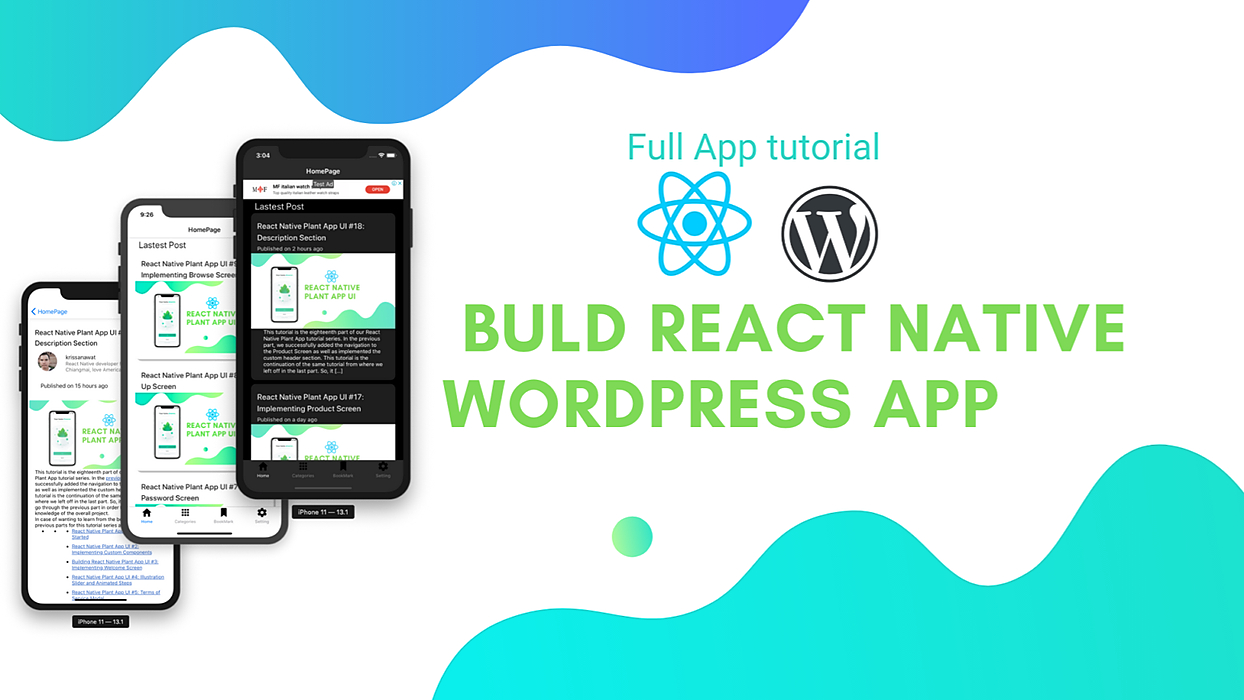
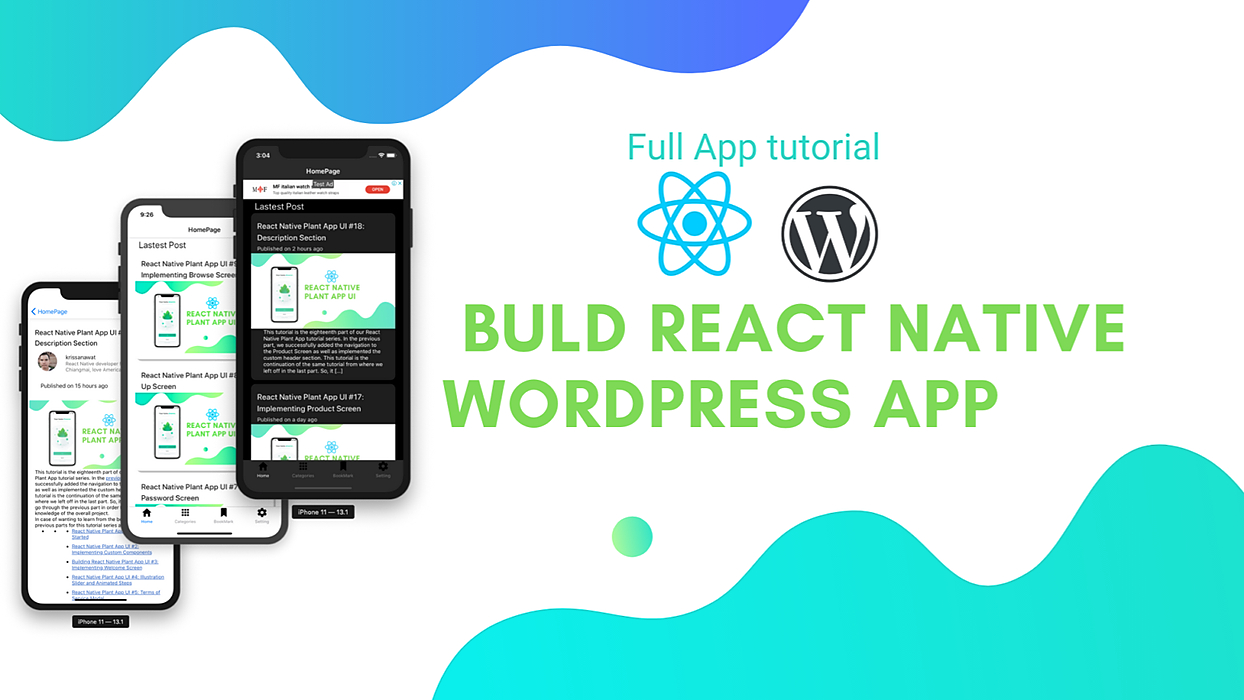
This series intends to show how I build an app to serve content from my WordPress blog by using react-native. Since my blog is talking about react-native, the series and the articles are interconnected. We will learn how to set-up many packages that make our lives comfortable and learn how to deal with WordPress APIs. Here, the most prominent features talked about in the book are the dark theme, offline mode, infinite scroll and many more. You can discover much more in this series. this inspiration to do this tutorial series came from the React Native App Templates from instamobile
As a Microverse student for one month, I realized that my first clone webpages didn’t have a responsive layout. I was using pixels in the Navbars, percentages in one section and rem in another, I didn’t have a rule or a standard procedure. The goal was to make it look like the original webpage IN MY SCREEN.
As I advanced through the course, I learned that these units made all the
difference to the webpage’s response in different screen sizes. My code
reviewers would tell me to adjust my webpage because it looked different when they were viewing it.
When I started having these issues, I made a lot of research on the subject,
but I was still a little confused about it. This article’s goal is to create a
simple and direct rule to achieve the required responsiveness any developer needs in their code.
In this post, we look at the technical side of War Robots over 10 years: the cool stuff, the problems, the experiments, remastering the game, and more!
Developing an application may seem a piece of cake for pros, but newbies need online guides to help them get from A to Z with their app development project.
Android development has witnessed massive growth in all these years, and any developer who’s worth his salt will thoroughly test his products before launching them into the market. While having a conversation about testing in Android, we often hear two forms of tests doing the rounds — Unit Test and Integration Test.
The creation and development of mobile applications is a large and rapidly developing industry. In the past few years, it has been modified significantly due to the introduction of novel futuristic technologies.
Medical technologies are not limited to remote examinations, robotic surgical controllers and diagnostic algorithms. Today they transform mental health domain, specifically, work methods with patients and the doctor’s role.
Don’t you think that a great many mobile apps would be a lot more convenient if they had voice control? And I don’t mean chatting with a banking bot. In most cases, voice navigation or a conversational form-filling is just enough.
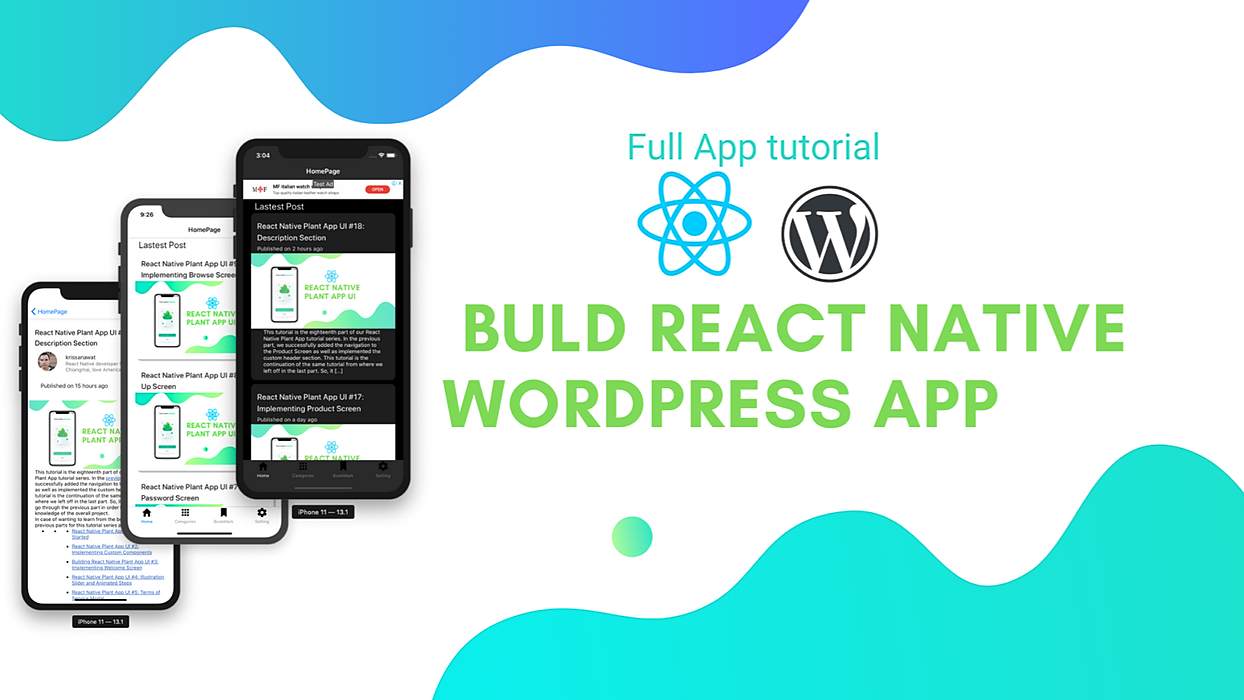
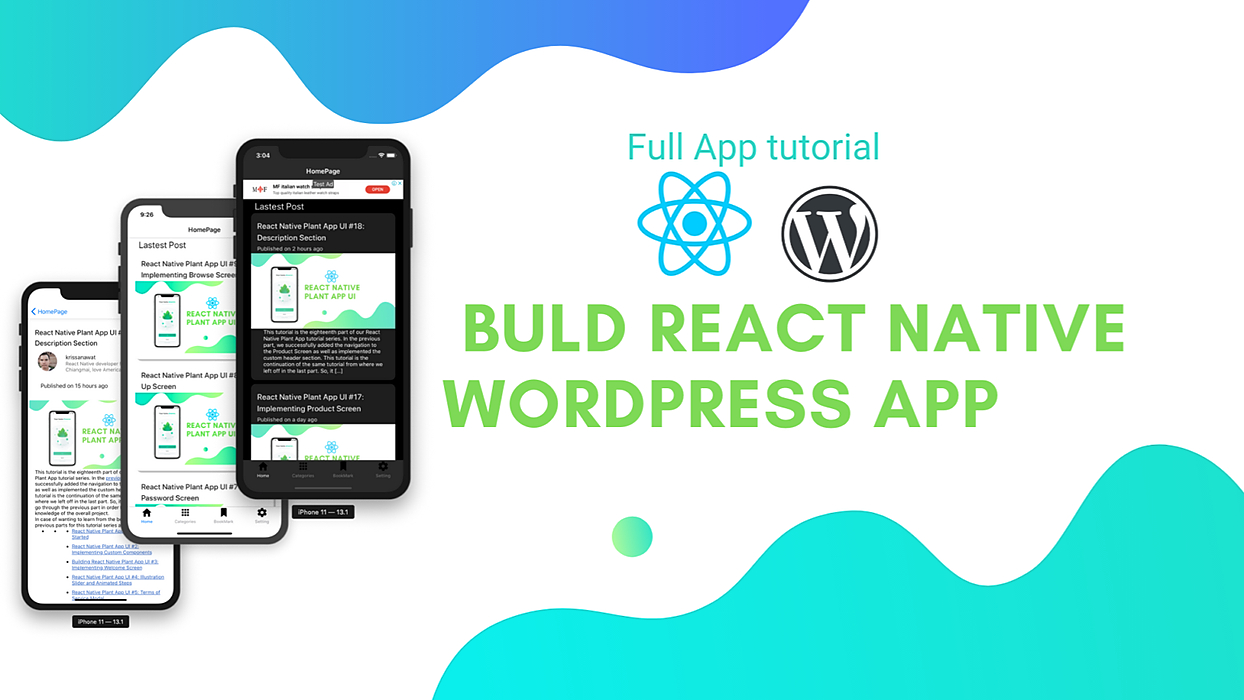
This series intends to show how I build app to serve content from my WordPress blog by using react native. Since, my blog is talking about react-native, the series and the articles are interconnected. We will learn how to set-up many packages that make our lives comfortable and learn how to deal with WordPress APIs. Here, the most prominent features talked about in the book are the dark theme , offline mode, infinite scroll and many more. You can discover much more in this series.this inspiration to do this tutorial series came from the React Native App Templates from instamobile
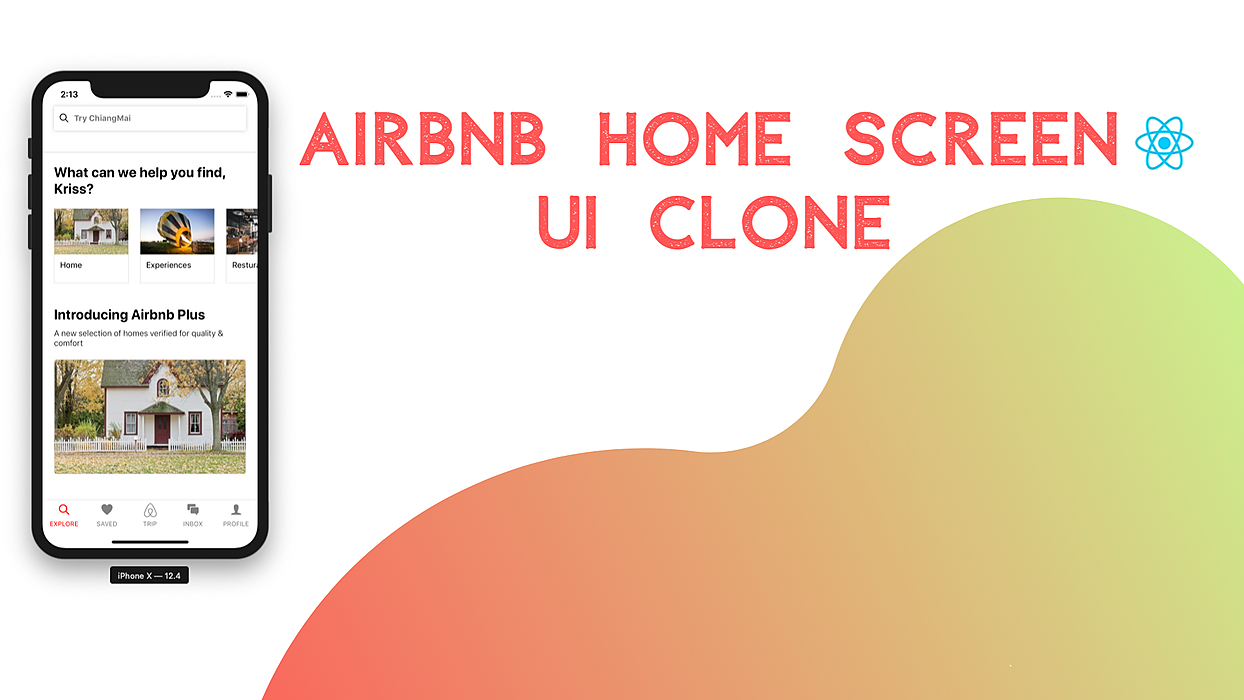
This tutorial is the third part of our Airbnb Home Screen UI clone using React Native. In the previous part, we successfully implemented the Category and Airbnb plus sections. This tutorial is the continuation of the same tutorial from where we left off in the last part. So, it is recommended to go through the previous parts for better understanding and insight into the overall project.
First, welcome to my series of “My Roadmap For Making a Popular Workout App”. I will share with you my trip to make my workout app into a popular mobile app.
Cross-selling and upselling are key areas to focus on with an eCommerce business, and this article will teach you how to implement upselling on your storefront.
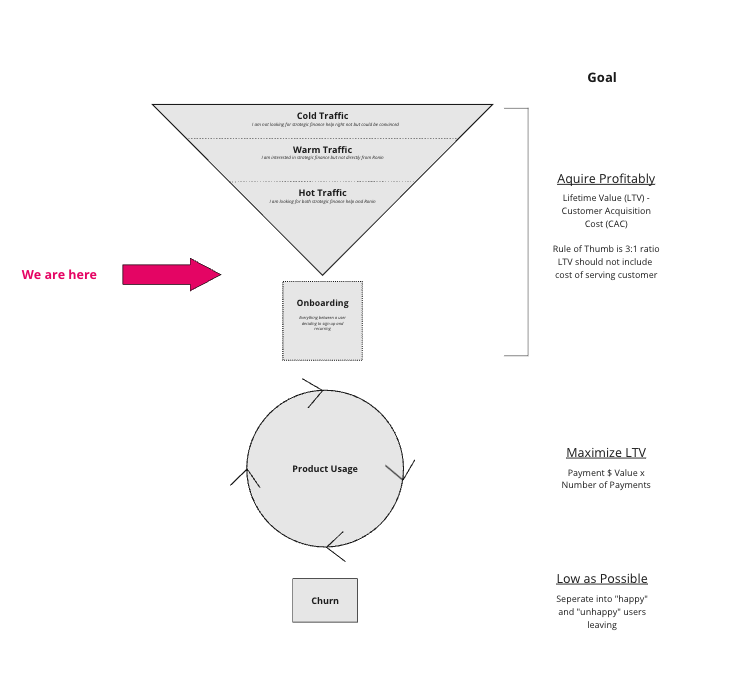
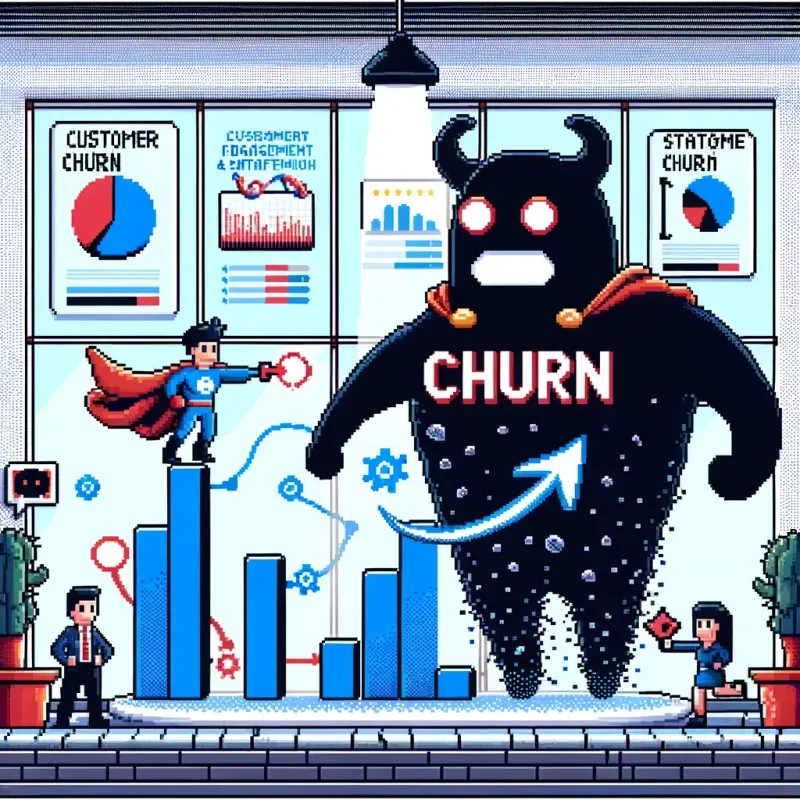
Why You Can’t Fight Churn All At Once Churn isn’t one problem. It’s four—and the worst part? Three of them aren’t even about your product. Until you separate...
Here, we are going to implement pull to refresh which will refresh and make API call again to refresh the posts in the Home screen list. Also, we are going to add the Infinite scroll to the bottom of Home screen. The infinite scroll will trigger the request to server which will load more articles into the list.
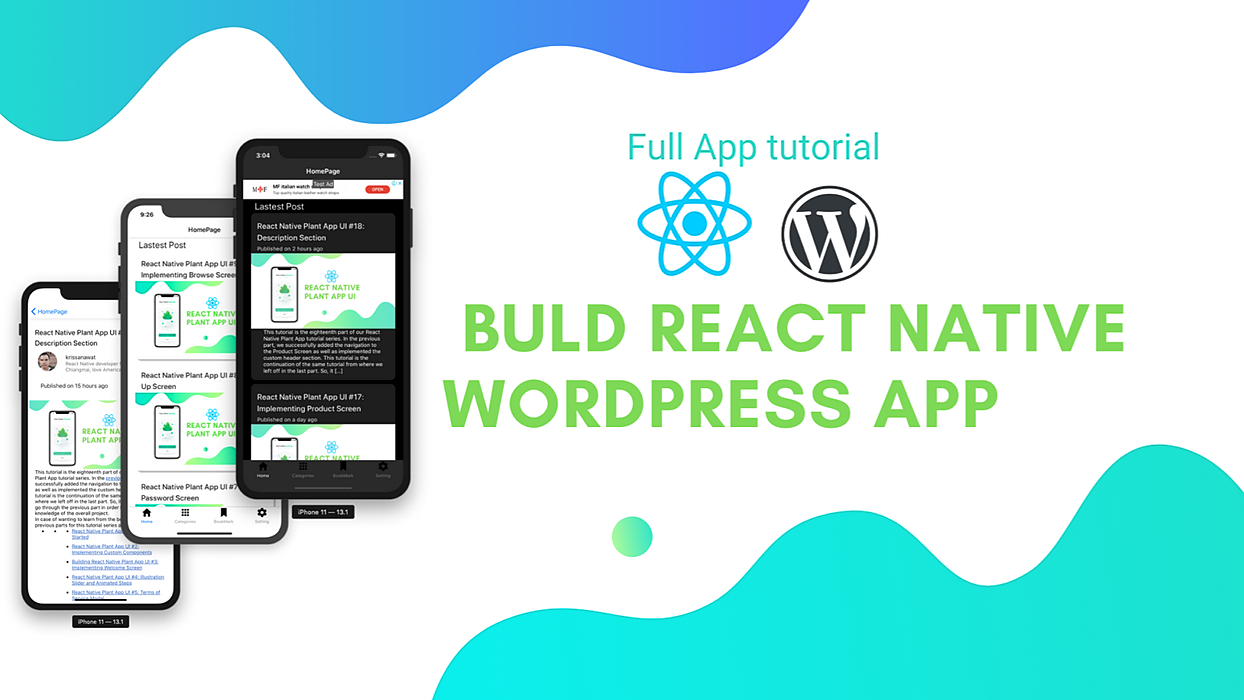
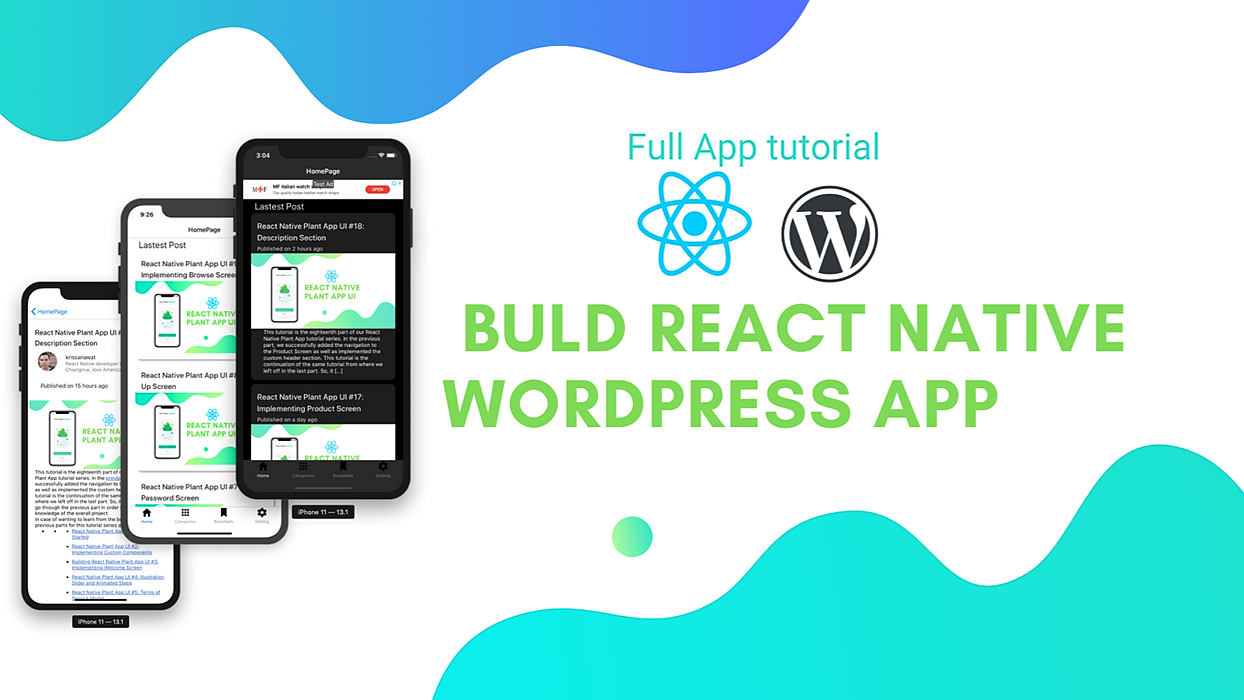
This series intends to show how I build an app to serve content from my WordPress blog by using react-native. Since my blog is talking about react-native, the series and the articles are interconnected. We will learn how to set-up many packages that make our lives comfortable and learn how to deal with WordPress APIs. Here, the most prominent features talked about in the book are the dark theme, offline mode, infinite scroll and many more. You can discover much more in this series. this inspiration to do this tutorial series came from the React Native App Templates from instamobile
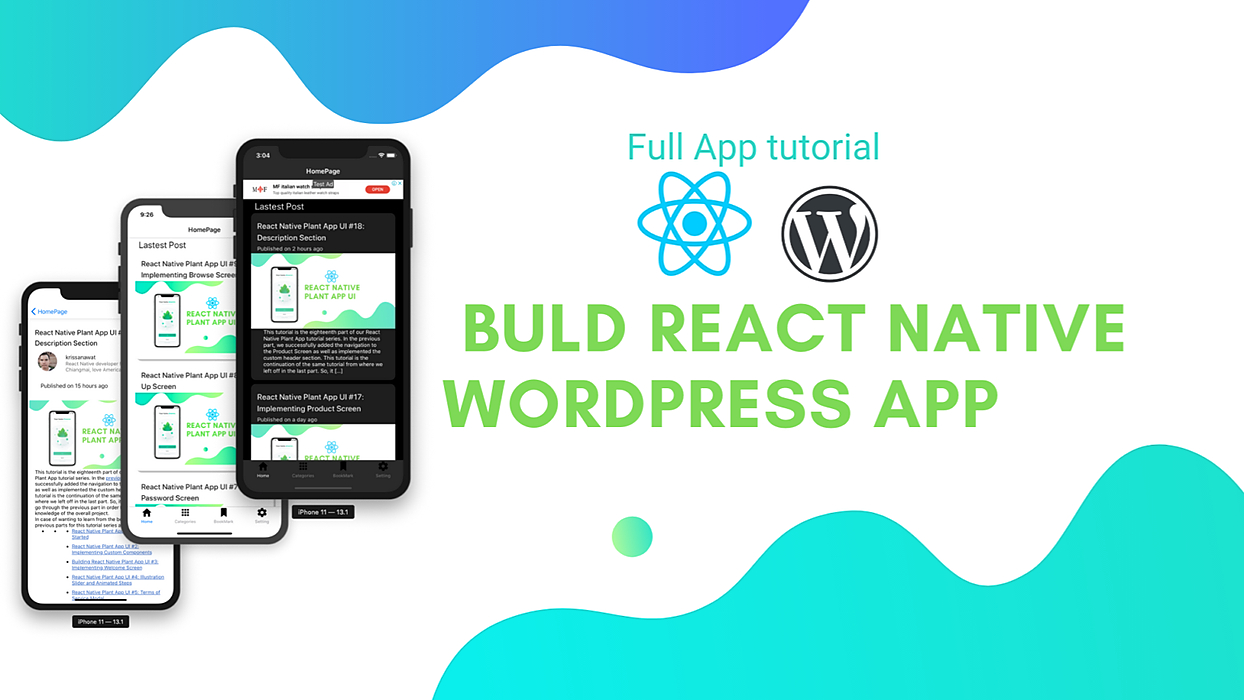
This series intends to show how I build an app to serve content from my WordPress blog by using react-native. Since my blog is talking about react-native, the series and the articles are interconnected. We will learn how to set-up many packages that make our lives comfortable and learn how to deal with WordPress APIs. Here, the most prominent features talked about in the book are the dark theme, offline mode, infinite scroll and many more. You can discover much more in this series. this inspiration to do this tutorial series came from the React Native App Templates from instamobile
We are going to learn how to bookmark the articles so that we can easily access them in our Bookmark screen later. The process is simple. We are going to save post id to Asyncstorage from the SinglePost screen and then fetch the articles on the bookmark screen. Here, we are going to add the bookmark icon to the SinglePost screen and configure its functionality.
In this chapter, we are going to implement the Contact screen. This screen is specially for contacting the developer and writer of articles. The users can use it to send a personal message to the developer. For the implementation, we are going to use two main packages. One is tcomb-form-native and the other is react-native-firebase. The tcomb package is to handle the form validation. And, react-native-firebase to connect react native app to real time firebase database.
Learn why exposure points can make or break your mobile A/B tests, common pitfalls to avoid, and practical tips to improve your app experimentation results.
Here, we are going to integrate the offline mode to the app. This feature is very handy when we are out of connection and we can still access some of the features in the app. Here, we are just going to notify the network status and cache the data using react-native-NetInfo package. Caching will help to pull the data from the AsyncStorage during the offline mode.so this app inspired from React native template from instamobile
A popular NPM library for handling mobile touch events called hammerjs is downloaded 1.4 M times per week but it wasn’t updated since the last 8 years.
Modern mobile products are the quintessence of the founders’ vision and actual market needs. To be successful, a mobile application needs to continually evolve in order to keep pace with changing market conditions. However, not every approach to application development can ensure such success.
“In-play is just an incredibly engaging experience. It’s incumbent upon the existing operators to create really exciting new markets to engage the customer.” – Seth Young, Chief Innovations Officer at PointsBet.
Now, we need to display the excerpt of the overall post on the list. For that, we are going to make use of components from the react-native-render-html package. And, we need to display the published date of the article as well. For that, we are going to make use of the moment package which provides the moment.js configurations. In order to use these packages, we need to install them first. For that, we need to use the command from the following code snippet:
An interview with a senior mobile software engineer discussing Android development, cross-platform frameworks, architecture, and solving real business problems.
Since we have the list of articles in the Home Screen, we need to display full articles as well. For that, we are going to create the SinglePost screen which will display the overall article. Here, we will learn how to fetch a single article from the WordPress API.
This series intends to show how I build an app to serve content from my WordPress blog by using react-native. Since my blog is talking about react-native, the series and the articles are interconnected. We will learn how to set-up many packages that make our lives comfortable and learn how to deal with WordPress APIs. Here, the most prominent features talked about in the book are the dark theme, offline mode, infinite scroll and many more. You can discover much more in this series. this inspiration to do this tutorial series came from the React Native App Templates from instamobile
Here, we are going to add the share button and implement its feature as well. The feature makes the article sharable to the social media accounts when pressing the share button. For that, we are going to make use of the Share component from the react-native package.
If your company needed a real-time service tomorrow, could you evaluate Go versus Node.js versus Elixir objectively? Or would you default to what you know?
Motorola cut the cord when it placed the first handheld mobile phone call over 40 years ago. Ever since, the race for smarter mobile development lives on.
Mobile debugging requires reliable tools, especially in production. In this article, I discuss ELK, Sentry, and Jaeger as the best mobile debugging tools.
With an ever-increasing variety of mobile devices quickly overtaking desktop browsing in overall traffic, mobile support is no longer a matter of deciding whether or not you should do it but how you should do it. Like almost everything in software development trends, there is always more than one way to do it. But from all the trends out there I believe mobile-first will fit the bill best for most people and I’ll explain why.
Living in a digital-only era, we use our phones while in the office, on the streets, in our cars, at home, while we’re eating, relaxing in the bed, and even while bathing. There are 99.9% chances that you might be reading this from your smartphone right now. Are you?
Here, we are going to implement the Categories screen. This screen will contain the list of categories related to the article posts. And on clicking on these categories, we will navigate to the posts which are based on that respective category.
Now, we need to goto Setting.js file and implement a Contact menu option UI in order to navigate to the Contact screen. For that, we need to use the code from the following code snippet in the Setting.js file:
User ratings are very valuable to business as they play a crucial part in people's purchasing decisions; be it restaurants, movie tickets or in the current context, our react native app. You must have seen prompts when you are surfing through any android app or playing games, that ask you to rate the app in google play store.
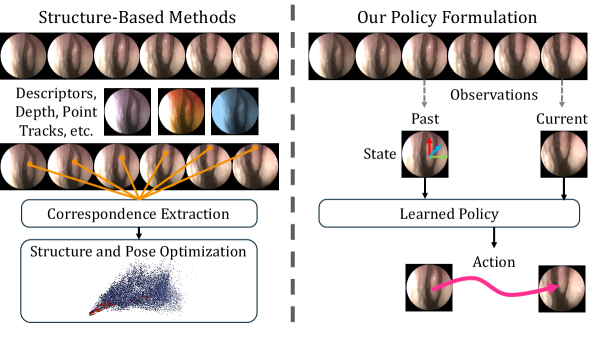
This is a Plain English Papers summary of a research paper called Investigating a Policy-Based Formulation for Endoscopic Camera Pose Recovery [https://www.a...
Despite the covid19-pandemic sending the world into frenzy, the new iPhone 12 might just bring some good news for the Apple loyalists and even the company in general. Although a lot has been speculated regarding the design and the innovations surrounding the same, we will take some time out to discuss the technological relevance of the inclusions.
Hi everyone! I'm Irina Heinz, Content Strategist at Checkaso, and I've compiled some major stories of the month for you. Well, I mean news. If there will be enough likes, shares, and views, we'll keep it up. Okay then, what all the buzz in mobile is about in July?
When you look at the LinkedIn profile of all successful subscription companies, you'll see a lot of people who work on checkout pages. Big companies spend 10...
The efficiency paradox that rewrites multimodal AI
Vision-language models face a cruel choice. Stay small and efficient, and you sacrifice reasoning capability. Scale to hundreds of billions of parameters, and you handle complex visual tasks effortlessly but burn enormous computational resources. The field has accepted this tradeoff as inevitable, like two ends of a rope you can only hold one end of at a time.
STEP3-VL-10B breaks this assumption by asking a different question: what if the bottleneck isn't model size at all, but how the model allocates its thinking?
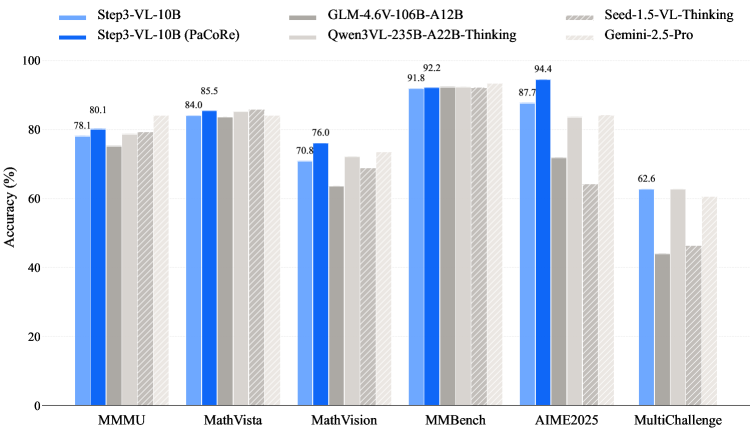
A 10 billion parameter model that rivals systems 10 to 20 times larger sounds like marketing. The paper proves it's architecture. The approach combines three strategic choices made in sequence: unfrozen joint pre-training of vision and language components on 1.2 trillion multimodal tokens, over 1000 iterations of reinforcement learning that teaches the model to reason more efficiently, and a test-time reasoning method called Parallel Coordinated Reasoning that generates multiple interpretations of an image before synthesizing a final answer. The results are striking. STEP3-VL-10B reaches 92.2% on MMBench, 80.11% on MMMU, 94.43% on AIME2025, and 75.95% on MathVision, matching or exceeding models like GLM-4.6V-106B, Qwen3-VL-235B, and proprietary systems like Gemini 2.5 Pro.
But the real insight runs deeper than benchmark numbers. This work demonstrates that reasoning ability comes from multiple sources, and parameter count is only one of them. That realization changes what's possible for efficient AI.
Teaching vision and language to grow up together
Traditional vision-language models treat perception and language as separate problems that happen to live in the same system. A frozen Perception Encoder extracts visual features. A language model interprets those features. They've never learned to understand each other.
STEP3-VL-10B starts differently. During pre-training, both the Perception Encoder and the Qwen3-8B language decoder receive gradients simultaneously. They co-evolve across 1.2 trillion multimodal tokens. The Perception Encoder learns what patterns the language model actually cares about understanding. The language model learns what kinds of visual information matter for reasoning.
This sounds like a small change. It's not. Consider how humans learn language and visual understanding. You don't learn to recognize objects in isolation, then separately learn to talk about them. You learn them together, each informing the other. When you learn the word "bridge," you simultaneously understand what bridges look like, why they matter structurally, and how to reason about them. That integration is what STEP3-VL-10B captures at scale.
The scale matters too. 1.2 trillion tokens is large enough that both components can specialize meaningfully while still learning deep interdependencies. Too small, and emergent reasoning patterns never develop. Too large without the right architecture, and you're wasting compute. This number reflects the point where the two components have learned to cooperate fully.
The foundation established during pre-training is silent and invisible in benchmarks. You won't see a paper that says "unfrozen pre-training alone gave us 2% on MMBench." But without this step, the rest of the approach doesn't work. The model needs to enter RL training already understanding vision and language as integrated domains, not after-the-fact combinations.
Learning to reason through structured iteration
Pre-training establishes foundations. Reinforcement learning teaches strategy. The paper implements what it calls RLVR (Reinforcement Learning with Vision-Reasoning), running over 1000 iterations where the model generates multiple candidate reasoning chains for visual problems, receives rewards based on reasoning quality and correctness, and updates its weights to prefer better patterns.
What happens during this process is revealing. Figure 2 shows two curves that initially seem contradictory. The reward curve climbs steadily without saturating, indicating the model keeps finding room for improvement. Simultaneously, the average number of tokens generated initially spikes then decreases back toward baseline levels. This isn't a sign of failure or saturation. It's the opposite. The model is learning to reason more efficiently, achieving the same quality of reasoning in fewer tokens.
Performance trends showing reward increasing while token count decreases
RLVR dynamics: reward continuously improves (left) while the model learns to reason more concisely, reducing rollout tokens after initial exploration (right).
This pattern indicates genuine learning, not mere memorization or output inflation. The model isn't cheating by making longer outputs to seem smarter. It's developing better internal representations of visual reasoning. Early RL iterations teach basic structured thinking. Later iterations refine edge cases and teach multi-step integration across multiple hypotheses.
Figure 3 tracks this progress on representative benchmarks. Metrics on reasoning tasks (the kind where visual hypothesis exploration matters most) and perception tasks (the kind where all models converge to similar performance) both show the same pattern: rapid initial growth followed by steady improvement that mirrors the reward dynamics.
Benchmark performance over RL iterations
Performance gains during RLVR track reward improvements: rapid initial growth followed by steady gains, indicating sustained learning rather than saturation.
The convergence between reward trends and benchmark trends confirms something important. The RL procedure isn't optimizing for gaming metrics or statistical artifacts. It's genuinely teaching the model better reasoning behavior, and that behavior transfers directly to standard benchmarks. This is crucial for believing that the approach will generalize beyond the specific tasks used during training.
Why test-time scaling beats parameter scaling
Here's where the conceptual breakthrough becomes concrete. Instead of scaling the model by making it larger, STEP3-VL-10B scales it at inference time through Parallel Coordinated Reasoning.
The mechanism is elegant. For a complex visual reasoning task, the model doesn't generate one answer. It generates multiple competing interpretations of the visual input. For a diagram, it might ask: what if the key relationship is spatial? What if it's conceptual? What if these elements are functionally connected rather than physically arranged? Each interpretation proceeds through independent reasoning chains. Then the model synthesizes across these chains, considering how different interpretations support or contradict each other, arriving at a final answer that integrates multiple hypotheses.
The term "Parallel Coordinated" captures both elements. The reasoning chains run in parallel, making efficient use of compute. But they coordinate, with the model tracking how different interpretations relate to each other. The final answer emerges from synthesis, not from selecting the loudest individual chain.
Figure 1 illustrates the consequence. STEP3-VL-10B bridges a gap that previous models couldn't cross. On pure perception tasks, where extracting visual information is straightforward, all models converge to similar performance. The curve flattens. But on complex reasoning tasks, where multiple interpretations are possible and need reconciliation, larger models normally pull away dramatically. STEP3-VL-10B with PaCoRe doesn't follow that pattern. Its performance on reasoning tasks rises alongside the perception baseline, breaking the historical correlation between reasoning difficulty and model size.
Comparison showing Step3-VL-10B bridging perception and reasoning gaps
STEP3-VL-10B with PaCoRe achieves frontier performance on both perception and reasoning tasks, bridging the traditional efficiency-capability gap.
This test-time scaling trades compute at inference for parameters in training. For many real-world applications, this is a profound advantage. You're spending inference tokens (generated at runtime) instead of training-time parameters. A batch processing system can spend more compute on a single request to get better accuracy. An interactive system can dial down test-time reasoning if latency becomes critical. An on-device application gets a model 10x smaller than the alternative while maintaining comparable reasoning capability. The flexibility is as valuable as the benchmark numbers.
This approach connects to broader work on test-time scaling across the field. OpenAI's o1 model and Anthropic's extended thinking both explore similar territory for language reasoning. STEP3-VL-10B demonstrates that the principle isn't language-specific. Multimodal systems can benefit equally from allocating more compute to test-time reasoning, particularly when visual interpretation ambiguity is involved.
Where the model actually excels
The benchmark results reveal something important: the approach's strengths are concentrated where reasoning matters most.
On MMBench (92.2%) and MMMU (80.11%), STEP3-VL-10B performs competitively but not dramatically ahead of the largest models. These benchmarks test perception and basic understanding. Multiple visual interpretations don't help much when the task is straightforward pattern recognition. The model shines on tasks where it needs to explore hypotheses.
Look at AIME2025 (94.43%), a competition mathematics benchmark that requires integrating visual information, problem setup, and multi-step reasoning. The model doesn't just extract numbers from diagrams; it interprets spatial relationships, reasons through constraints, and verifies answers against the original problem. MathVision (75.95%), focused specifically on visual mathematics and geometry, shows similar strength. These tasks demand the kind of hypothesis exploration that PaCoRe provides.
The split between perception and reasoning isn't accidental. It reveals the architecture's actual operating principle. When visual tasks are straightforward, you don't need multiple interpretations. When they require reasoning through ambiguity or multi-step inference, exploring alternative interpretations becomes powerful. The model learned to allocate its test-time reasoning where it's most valuable.
This specificity matters for practitioners considering deployment. STEP3-VL-10B is exceptional for applications with complex visual reasoning: mathematics and geometry, engineering diagram analysis, scientific image interpretation, medical imaging in domains requiring reasoning about relationships rather than classification. For tasks where perception dominates and reasoning is minimal, a smaller model might suffice.
What the approach can't do (yet)
Every elegant solution has boundaries. Understanding them prevents misuse and clarifies where different approaches remain necessary.
Latency becomes a constraint when test-time reasoning is needed. Parallel Coordinated Reasoning works by generating multiple reasoning paths. A system requiring sub-100-millisecond response times can't afford this exploration. Real-time interactive applications, mobile interfaces with strict latency budgets, and streaming systems where decisions must be made instantly need different architectures or models optimized for speed over reasoning quality.
The language backbone, borrowed from Qwen3-8B, becomes a limitation for tasks with minimal visual content or requiring extensive reasoning over pure language. A problem involving a single small diagram and 50 pages of text might not benefit from STEP3-VL-10B's strengths. Large language models with stronger language modeling components would perform better. The model was optimized for vision-language integration, not language-heavy tasks.
Domain specialization matters too. The training emphasized visual reasoning across diverse domains. Specialized fields requiring deeply specific language knowledge (legal document understanding with minimal images, scientific text with citation-heavy reasoning, domain-specific jargon) might see better results from models trained specifically for those domains. STEP3-VL-10B's strength is breadth; specialized applications might trade some breadth for depth elsewhere.
These limitations aren't failures. They're the natural boundaries of an approach optimized for specific tradeoffs. A smaller, faster model for latency-critical applications. A larger language backbone for language-heavy reasoning. These coexist with STEP3-VL-10B in a broader toolkit rather than being replaced by it.
The research reproducibility layer
The paper releases the full model suite open-source. This is more than a nice addition to the research narrative; it's a statement about how knowledge should move in fast-moving fields.
Open release means researchers can use STEP3-VL-10B directly, fine-tune it for specific domains, and study what actually drives its performance rather than inferring from published claims. Training details sufficient for reproduction are included, though not every step-by-step training configuration. The benchmark evaluation procedures are documented clearly enough that future work can claim improvements with confidence rather than uncertainty about whether they used the same setup.
This matters because multimodal AI is moving fast. When models are proprietary and benchmarked behind those companies' methodologies, research gets gated. One group's research direction becomes the constraint for a thousand other researchers trying to build on it. Open models and reproducible baselines accelerate progress across the field. They also build trust in claims. When someone says "our new method beats STEP3-VL-10B," the community can verify whether that's true, whether they're testing the same way, and whether the comparison is fair.
The release also matters for practitioners. A frontier-performing open model at 10 billion parameters is genuinely valuable for on-device inference, cost-effective deployment, and experimentation in resource-constrained settings. Organizations can use this as a baseline, fine-tune it for their domains, and maintain control over their systems rather than relying on proprietary APIs.
Reframing how multimodal AI scales
STEP3-VL-10B is a specific model. It's also a proof of concept that challenges how the field thinks about scaling multimodal systems.
The traditional frame went like this: larger model equals smarter model, so efficiency means making models smaller while accepting capability reductions. The new frame this work enables is more nuanced. Reasoning capability comes from four sources: parameter count, pre-training scale, post-training refinement through RL, and test-time compute allocation. The optimal mix depends on the application. A research system where latency doesn't matter might push hard on test-time compute. A mobile application might minimize both parameter count and test-time reasoning. An on-device system might increase parameter count slightly to reduce test-time overhead.
This shift isn't theoretical. Major AI labs are already exploring test-time scaling for language reasoning. OpenAI's o1 model represents a massive commitment to test-time compute. Anthropic's extended thinking explores similar scaling. STEP3-VL-10B shows this principle works equally well for multimodal systems, where visual ambiguity and interpretation complexity create natural opportunities for hypothesis exploration.
The practical implications cascade outward. Future multimodal systems might look less like "bigger models" and more like "smarter inference procedures." A 10 billion parameter model becomes competitive with 100 billion parameter models through better reasoning allocation, not through different training data or longer training. This opens possibilities for cost-effective scaling, edge deployment that maintains frontier reasoning capability, and flexible systems where you can trade inference cost for quality per request.
The field is learning that the frontier of multimodal AI doesn't need to be a frontier of model size. It can be a frontier of architectural innovation, test-time reasoning, and thoughtful resource allocation. STEP3-VL-10B demonstrates that this isn't a small efficiency gain at the margins. It's a fundamental rethinking of how to build capable systems that competes directly with massive parameter-scaling approaches.
Every recurring revenue business alive is trying to reduce its churn. The best advice overall is that churn has to be fought as early as possible in the user...