You signed in with another tab or window. Reload to refresh your session.You signed out in another tab or window. Reload to refresh your session.You switched accounts on another tab or window. Reload to refresh your session.Dismiss alert
Let's learn about Redis via these 91 free blog posts. They are ordered by HackerNoon reader engagement data. Visit the /Learn or LearnRepo.com to find the most read blog posts about any technology.
An open-source, in-memory data structure store, used as a database, cache, and message broker, valued for its speed and versatility in high-performance applications.
If you’re a microservices developer considering communication protocols, choosing an event-driven architecture might just help you rest a little easier at night. With the right design, event-driven architecture can help you to create apps that are decoupled and asynchronous, giving you the major benefits of your app being both performant and easily scalable.
In the last couple weeks we’ve used Persistent to store a User type in a Postgresql database. Then we were able to use Servant to create a very simple API that exposed this database to the outside world. This week, we’re going to look at how we can improve the performance of our API using a Redis cache.
the most important pieces of data for your whole application is kept in-memory and shared throughout all modules of your application: the user session.
Here at Stream, we power activity feeds for 300+ million end users and love playing around with ways to utilize our product in all sorts of use cases. Most recently, we built Winds, an open-source RSS and Podcast application with a strong focus on UI and UX.
In this post, we’ll look at using Redis to give cache capabilities to a NestJS project. We’ll discuss Redis, what caching is, and the implementation procedure.
Do you like boxing fights? This evening I bring you a head-to-head battle between Redis Streams and AWS SQS. If you are interested which technology is better and which will end up on the ground, check it up!
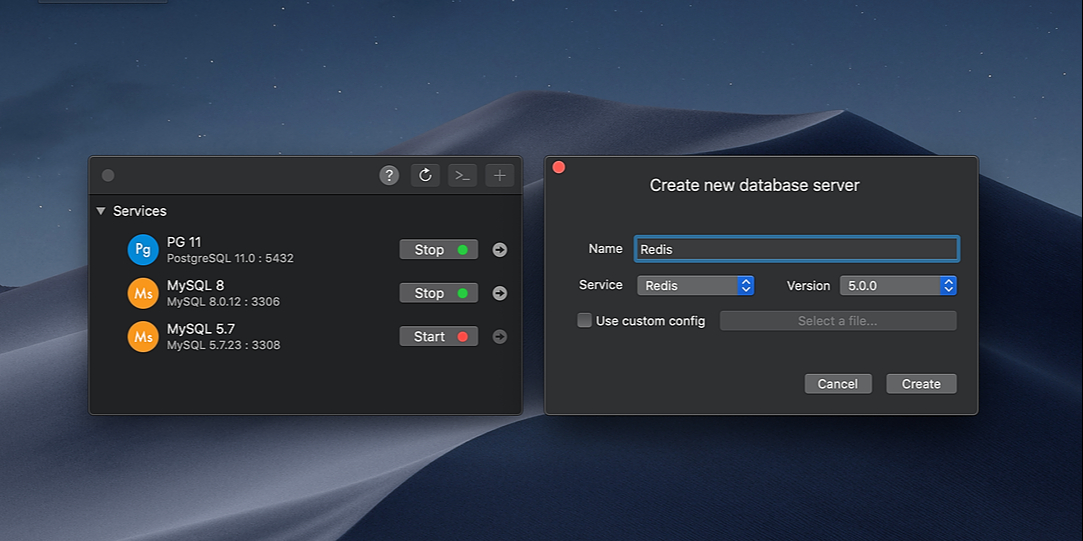
Docker might be an easy solution as an all-in-one tool for setting up a Local Development Environment. But on the other hand, it eats up a huge portion of your system resources to get up and running, and we hate it when our computer becomes lagging and clumsy.
In this article, we are going to implement caching in a node js
application using Redis, but, before we delve into the implementation
details, let’s explore what caching is and how it can help the
performance of our application.
Here I’m assuming you already have your basic Django project setup. And, already know what Celery is? if not, I’ll suggest getting a basic understanding of it here. So let’s just directly jump into the steps.
EchoVault's Pub/Sub implementation aims to be compatible with Redis clients. This article is a brief description of how EchoVault implements the Pub/Sub module.
Wondering which databases are trending in 2019? We asked hundreds of developers, engineers, software architects, dev teams, and IT leaders at DeveloperWeek to discover the current NoSQL vs. SQL usage, most popular databases, important metrics to track, and their most time-consuming database management tasks. Get the latest insights on MySQL, MongoDB, PostgreSQL, Redis, and many others to see which database management systems are most favored this year.
In this article, we are going to use Celery, RabbitMQ, and Redis to build a distributed Task queue. But what is a distributed task queue, and why would you buil
Want to create your very own digital auction? We'll show you how to build this application by guiding you through each step. Click here to get started now!
There are times when one as a Ruby on Rails developer wants to implement a real-time feature, like a chat application, and after digging a bit you find a framework's feature named ActionCable, sounds new and scary, right? Fear not, I'll try to explain it as simple as possible so that at the end of this article you'll feel comfortable with the subject.
Go emerged from Google out of a need to build highly performant applications using an easy-to-understand syntax. It's a statically typed, compiled language developed by some of the innovators of C, without the programming burden of manual memory management. Primarily, it was designed to take advantage of modern multicore CPUs and networked machines.
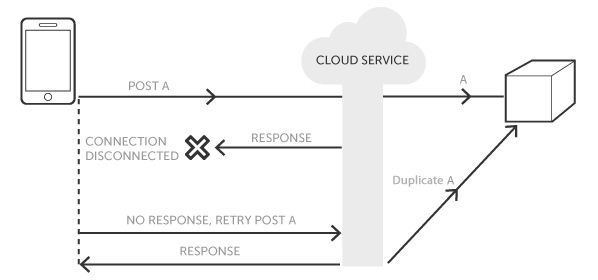
Idempotency is a strategy that makes sure an event that executed multiple times will give the same result. For example, GET method on the HTTP request. If you calling the endpoint with GET method will give you the same result. But POST method is not idempotent because every time you call an endpoint with POST method will create a new record on the database (the database state changes).
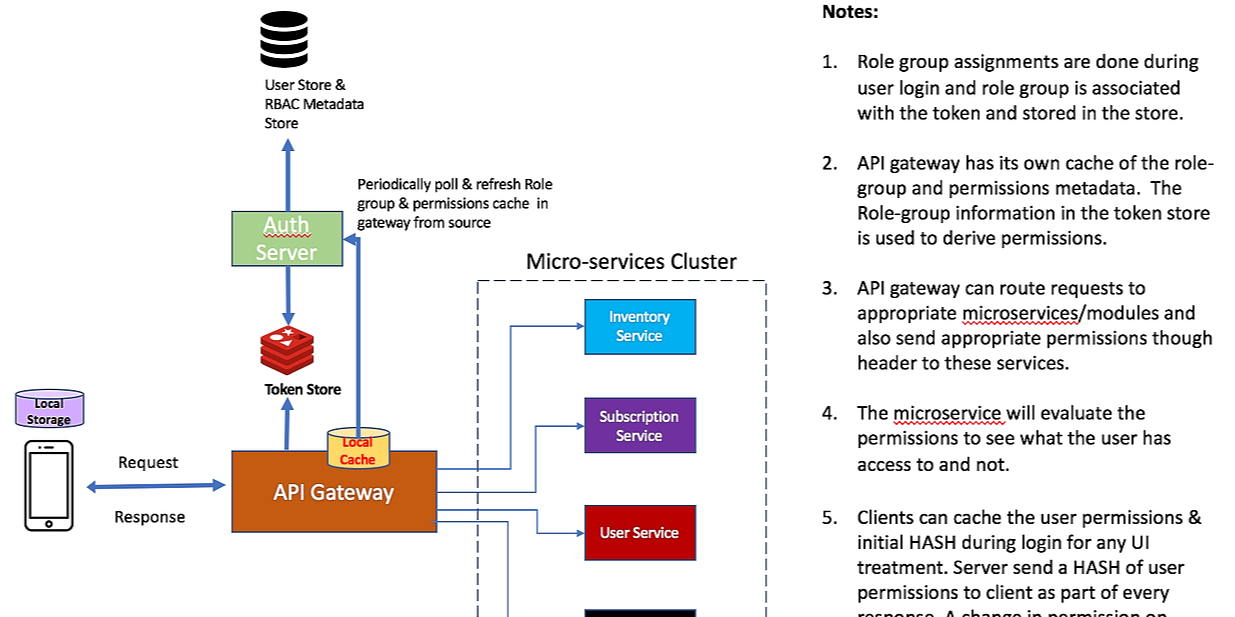
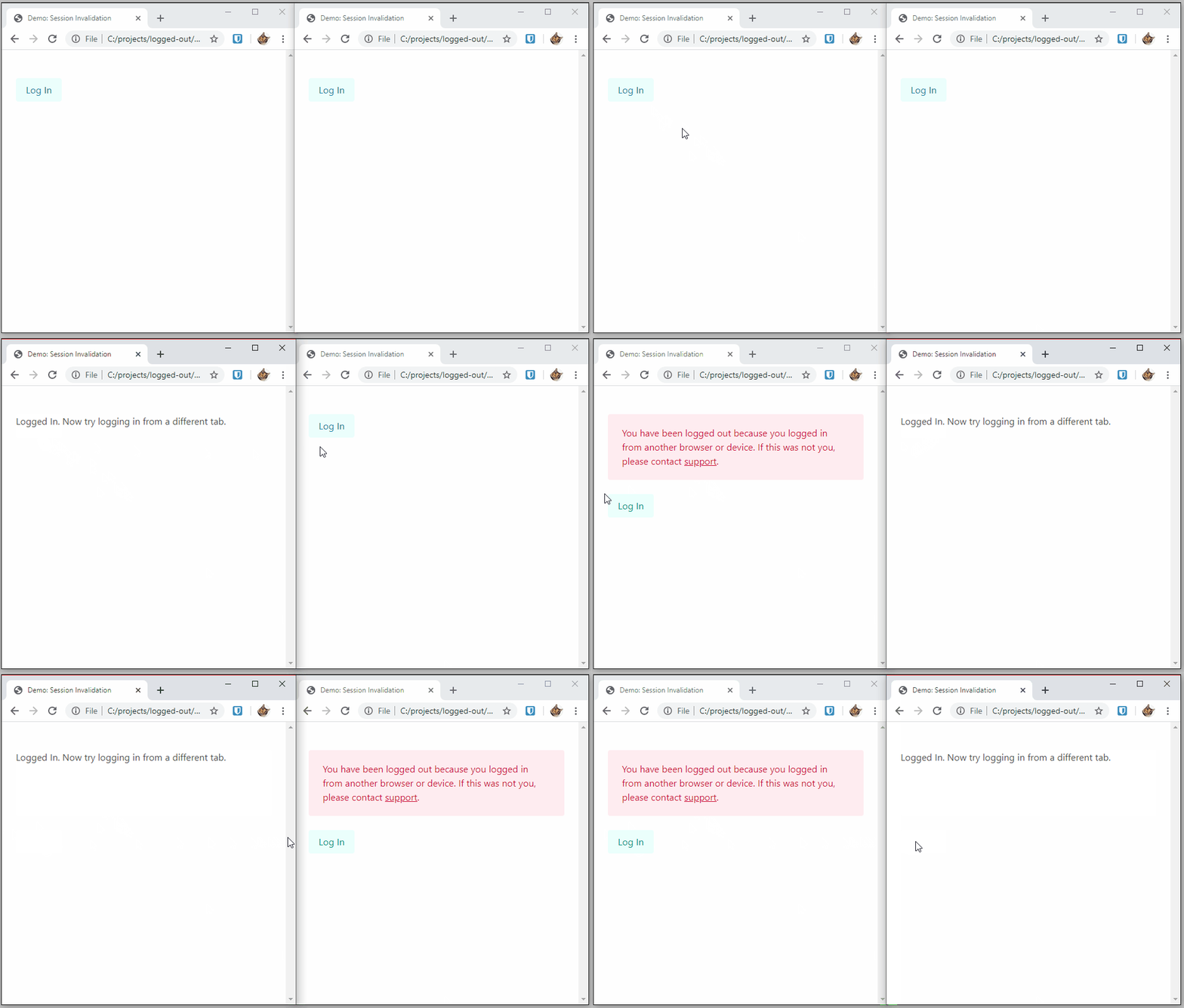
You know how you can sign-in to multiple devices on Google and sign-out from on one device through another, well, I tried to implement that using Redis
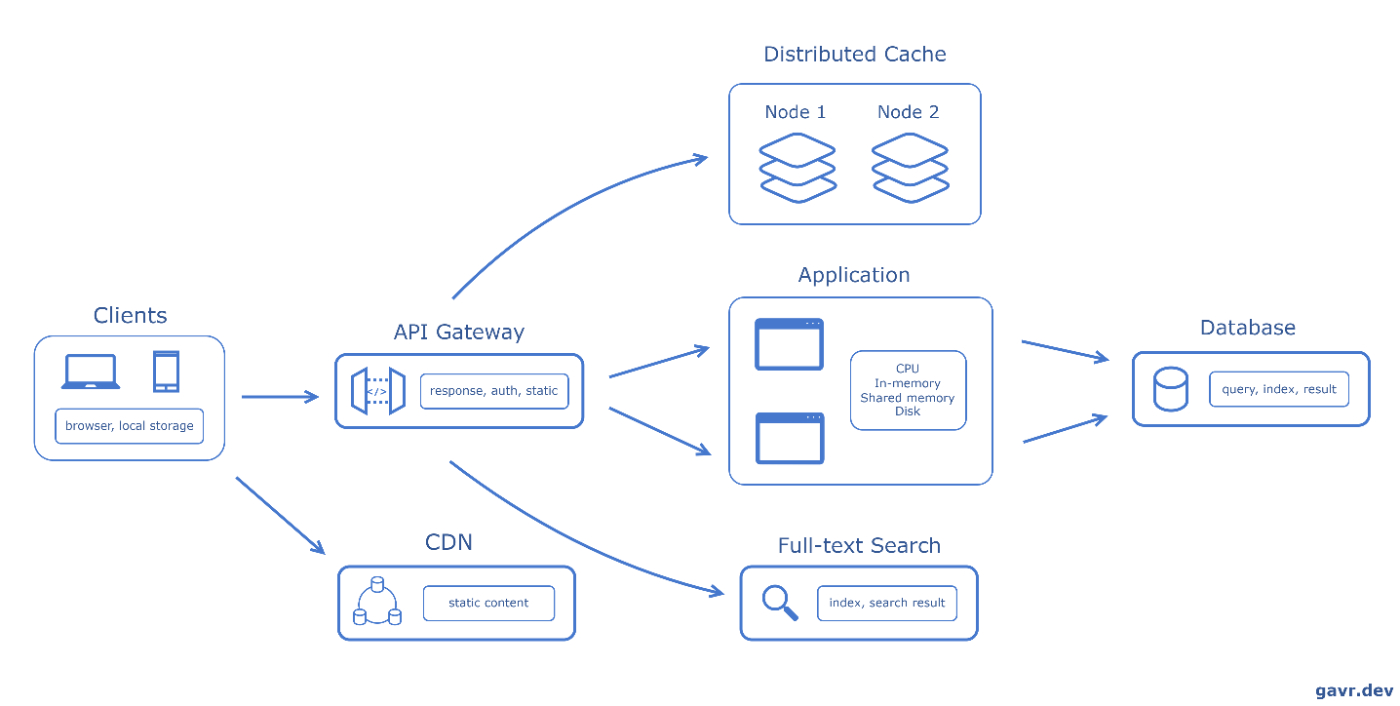
This article explores different caching strategies—such as in-memory, distributed, and hybrid approaches—for optimizing performance in microservices or monolith
Without a thorough understanding of Redis' data structures, commands, and how it works, we may not be able to fully leverage its performance capabilities.
Let's learn about Caches, Caching Operations, Cache Eviction Policies,
Implementation of Cache Eviction Policies, Distributed Caching
and Caching In Python
Learn how to improve the performance of your web application by caching API requests with Redis and Node.js. Reduce response time and increase efficiency by sto
In this tutorial we are going to expand our examples with deploying a more complex microservice. The idea is to make you more comfortable with the platform and to show you how you can leverage it for more advanced scenarios.
NoSQL got quite some hype a few years back. It was going to solve your scaling, uptime, and speed problems. There were trade-offs, of course, but, for a brief moment, seemingly everything we knew about storing and querying data was up for grabs.
System Center Orchestrator can automate reoccurring tasks related to support and management of the Exchange organization. In particular, it can be used to create a custom interface where support organization can request precise actions like message tracking logs and mailbox moves. This makes executing basic tasks easy as one does not need Exchange permissions or be forced to use tools like Exchange Management Console or Powershell.
Redis can cache many types of data and actions. The key is to identify parts of your app where speed matters most — and where data doesn’t change every second.
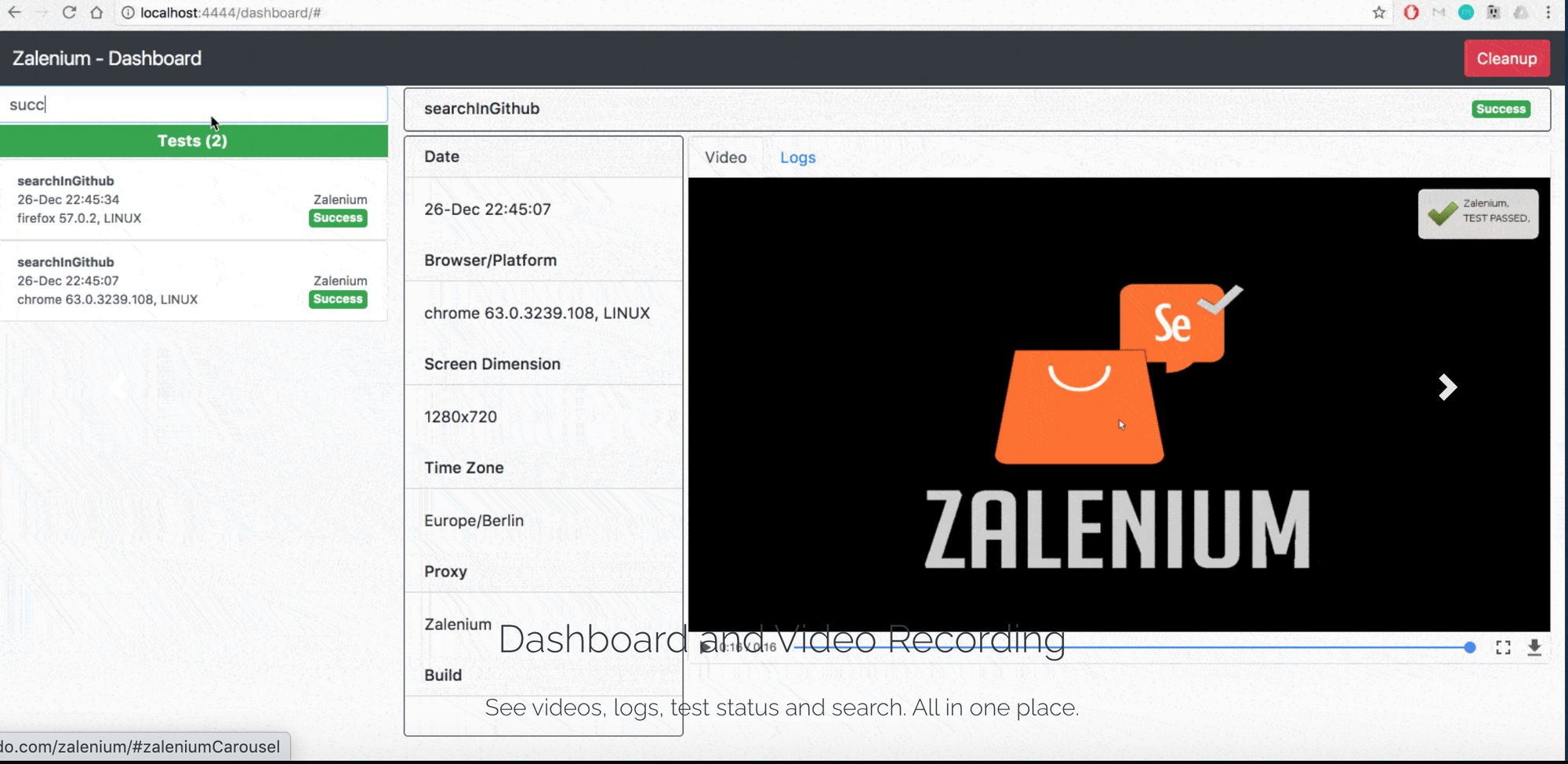
Do you run a lot of automation frameworks using Selenium but finding it difficult to scale with a Dockerized infra? Maybe our case study can be of help. Read on
Redis, short for Remote Dictionary Server, is a BSD-licensed, open-source in-memory key-value data structure store written in C language by Salvatore Sanfillipo and was first released on May 10, 2009. Depending on how it is configured, Redis can act like a database, a cache or a message broker. It’s important to note that Redis is a NoSQL database system. This implies that unlike SQL (Structured Query Language) driven database systems like MySQL, PostgreSQL, and Oracle, Redis does not store data in well-defined database schemas which constitute tables, rows, and columns. Instead, Redis stores data in data structures which makes it very flexible to use. In this blog, we outline the top Redis use cases by the different core data structure types.
Dive deep into the many layers of caching in modern systems from browser and CDN to app memory and database internals. Learn strategies, consistency models.
Build a scalable marketplace with Medusa JS: from tech stack choices to custom plugins, payments, messaging, and shipping for a global, production-ready MVP
Redis is a type of database and it can be added to your production level application to make it more performant. I will cover the basics of Redis and show a real world example of Redis.
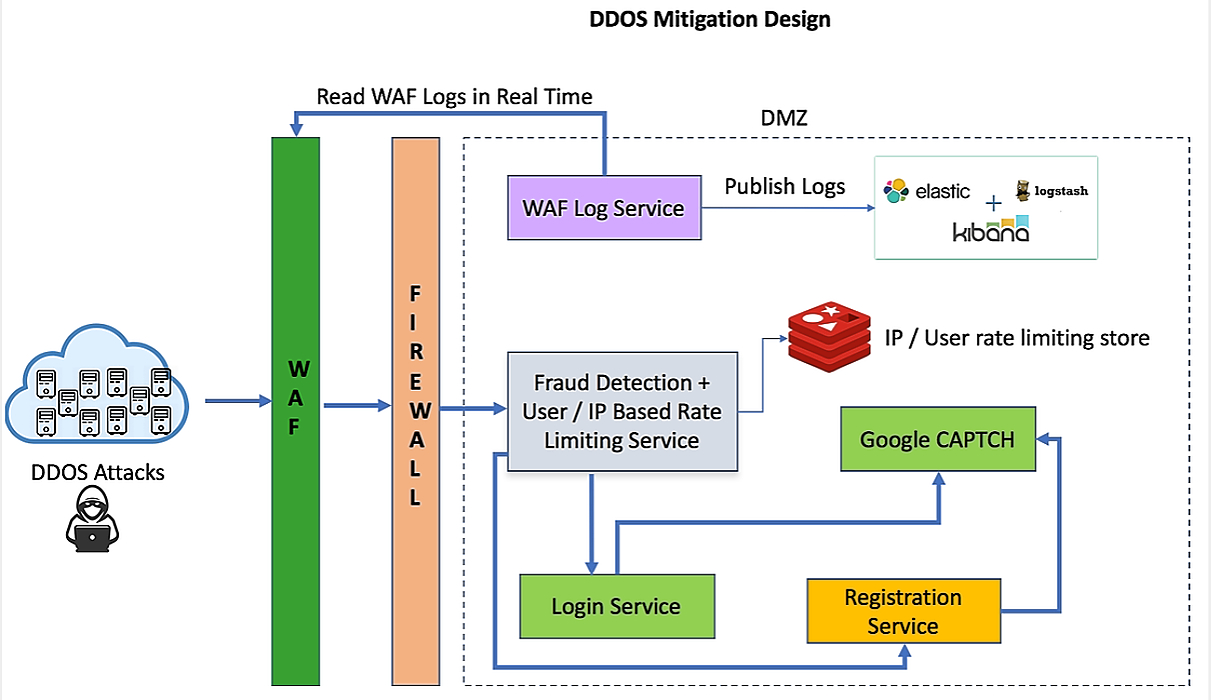
In the current age of big data and internet businesses it is a constant struggle for an organization to prevent data breaches and protect the data of their users. The current landscape of cyber security is still evolving and attempts are being made to use Artifical Intelligence to protect systems from attacks and data breaches.
Redis doesn’t track expirations with sorted lists, it uses randomness. Learn how its probabilistic key cleanup keeps speed, memory, and simplicity in balance.
How would we build an experience like the one above?
Demo Repo
Some applications need to limit users to a single client or browser instance. This post covers how to build, improve, and scale this feature. We begin with a simple web app with two API endpoints:
Dynamically extending cache expiration times for popular keys can boost efficiency and handle high traffic without requiring expensive tools or complex changes.
This graph-based approach transforms semantic caching from brute-force problem into an elegant graph traversal challenge, delivering performance & cost savings
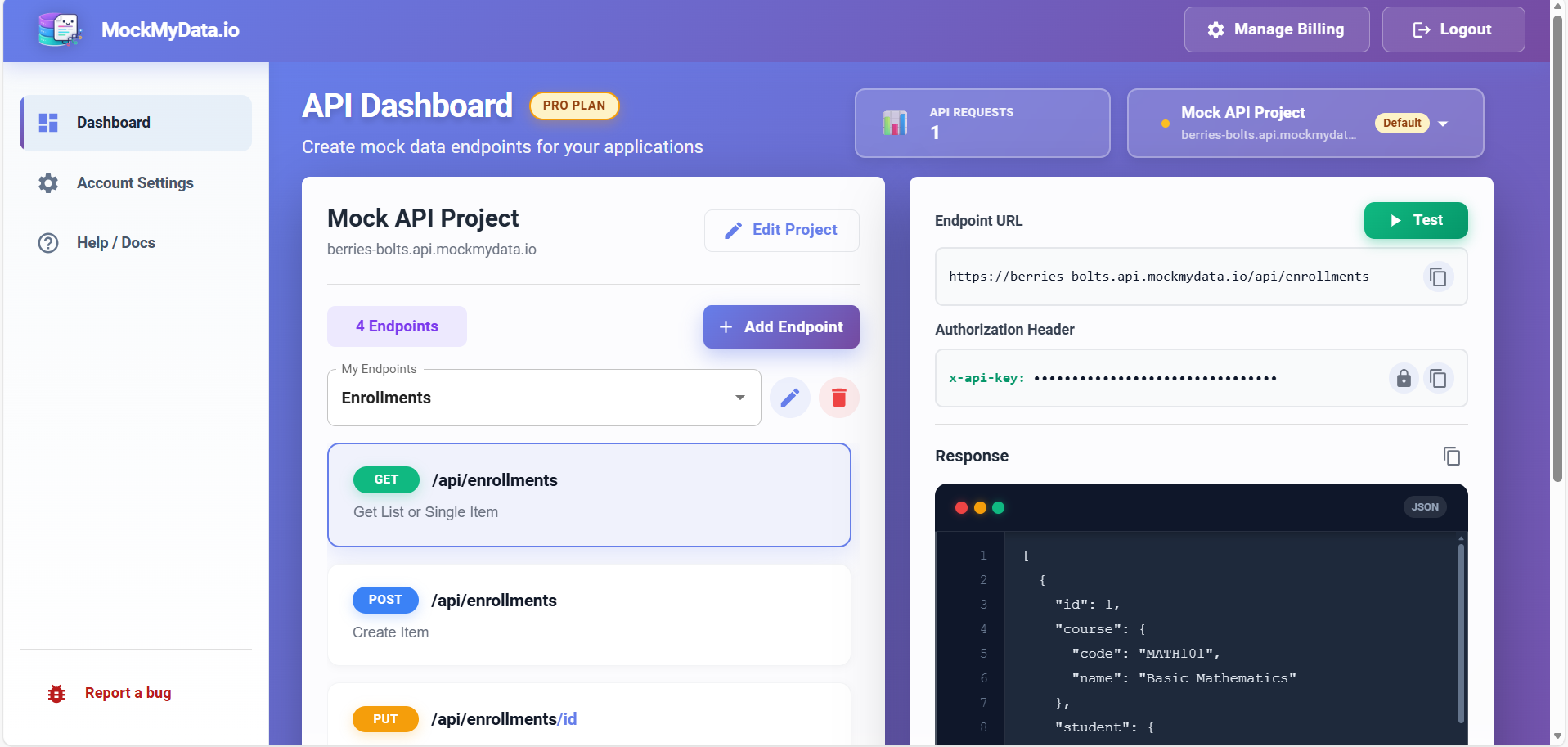
I built MockMyData.io in 10 weeks - a multi-tenant SaaS that generates mock REST APIs. Here's how I handled subdomains, rate limiting, and Redis caching.
Redis is a type of database that can be used to significantly improve your website's loading speed thanks to its design and its versatile selection of modules.