You signed in with another tab or window. Reload to refresh your session.You signed out in another tab or window. Reload to refresh your session.You switched accounts on another tab or window. Reload to refresh your session.Dismiss alert
Let's learn about Spring via these 61 free blog posts. They are ordered by HackerNoon reader engagement data. Visit the /Learn or LearnRepo.com to find the most read blog posts about any technology.
Spring is a popular open-source framework for building enterprise-level applications in Java. It matters for its comprehensive infrastructure support, simplifying complex application development and promoting modular, testable designs.
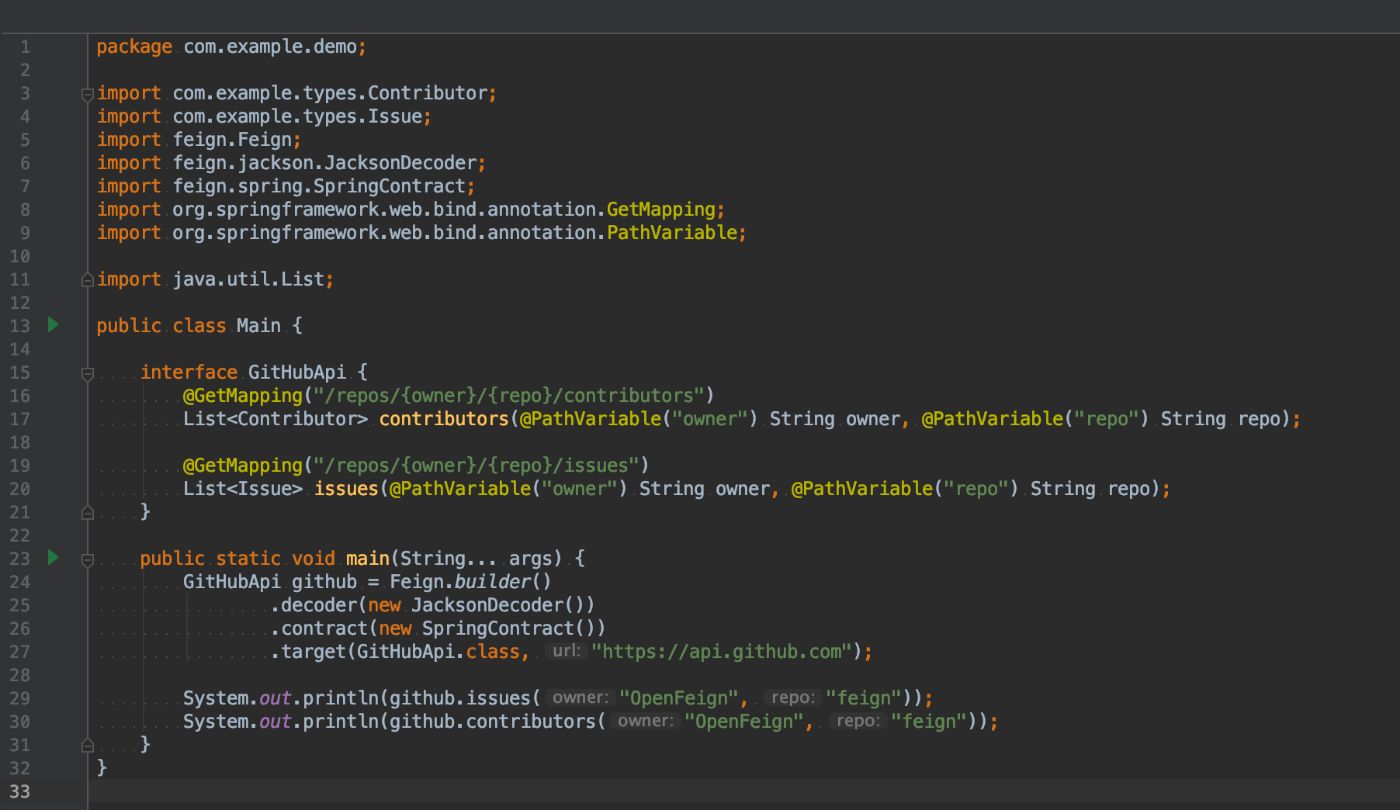
Feign is a declarative web service client. It makes writing web service clients easier. To use Feign, create an interface and annotate it. It has pluggable annotation support including Feign and JAX-RS annotations.
A little backstory on how this started. My team needed to save some on money on the infrastructure we were requesting and since most of the load for the application we wanted to build would be on the client-side rather than the service side. We decided to see if we could combine a Spring Application with a React app and serve up a single war file.
In this article, we will look at how to handle job failures in Quartz. We'll use an exponential random backoff policy for calculating the time of the next retry
In this article, I want to teach you how to connect Java Spring Boot 2 with Elasticsearch. We’ll learn how to create an API that’ll call Elasticsearch to produ
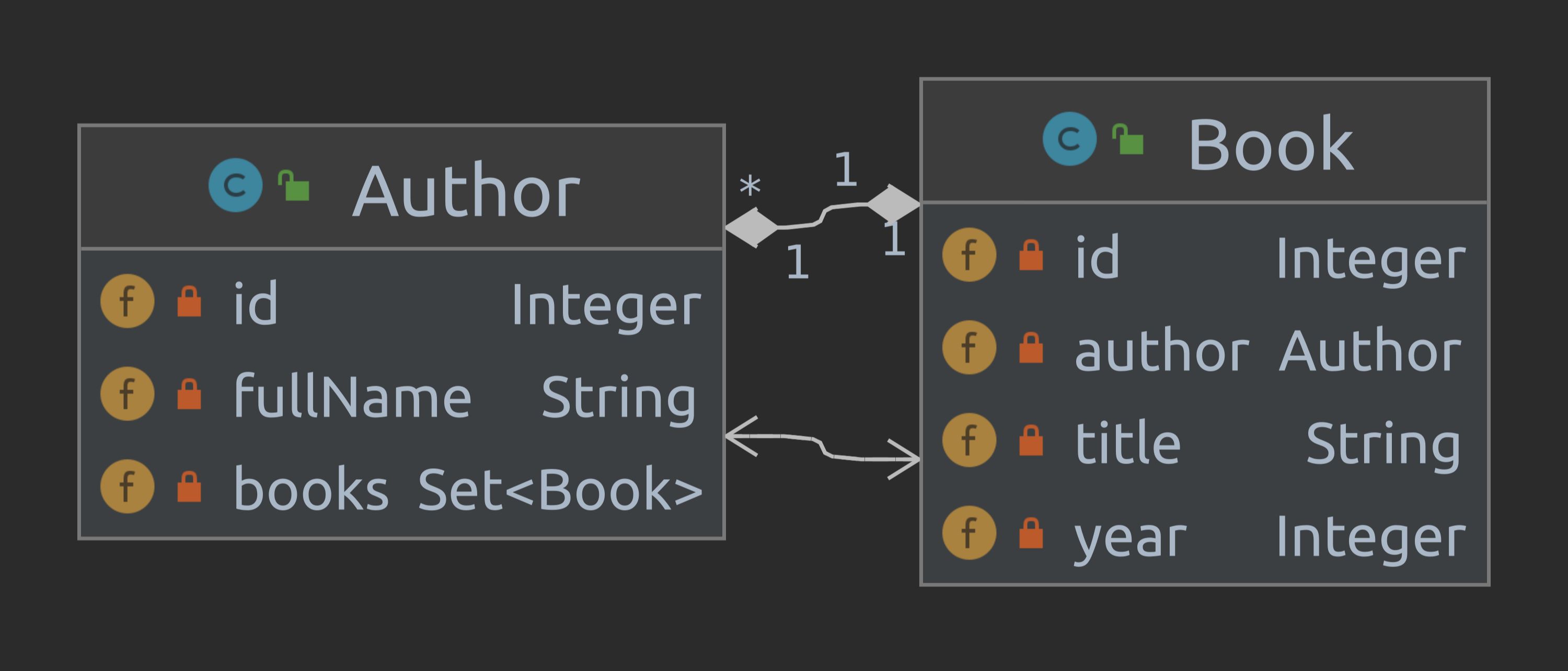
If you are creating a new Java project for your REST backend over a relational database, you will probably not even blink before saying: Hibernate. But why? Did you really give a good thought on how this tool actually makes your work easier (or harder)? Did you consider the accurate needs of your architecture and have a good reason to include or not include it?
It’s been around 6 months since we adopted Kotlin for our backend services at the company I currently work at. We’ve been migrating an existing java spring boot service to Kotlin.
Unlock superior data efficiency with PostgreSQL Upsert in Spring. Explore the integration, benefits, and how to overcome its limitations. Boost performance now!
Today, microservices architecture is a common approach to building a system. In this article, I will show you how to build microservices using Java and Spring.
Hibernate and the issue of duplicate entities, a well known problem. However do you know the origin of this behaviour? Let's dive under the hood of Hibernate!
In this article, I would like to tell you how I solved the following task, namely the generation of DTOs using the JSON documentation that springwolf generates.
There are a few dependencies and considerations one should account for when getting a system with REST services authenticated with an OAuth2 Client for Java
It's impossible to write OOP code with Spring. From its core it promotes the use of singletons and anemic data structures a.k.a. data "objects" a.k.a. DTO. This fuels procedural programming and kills OOP.
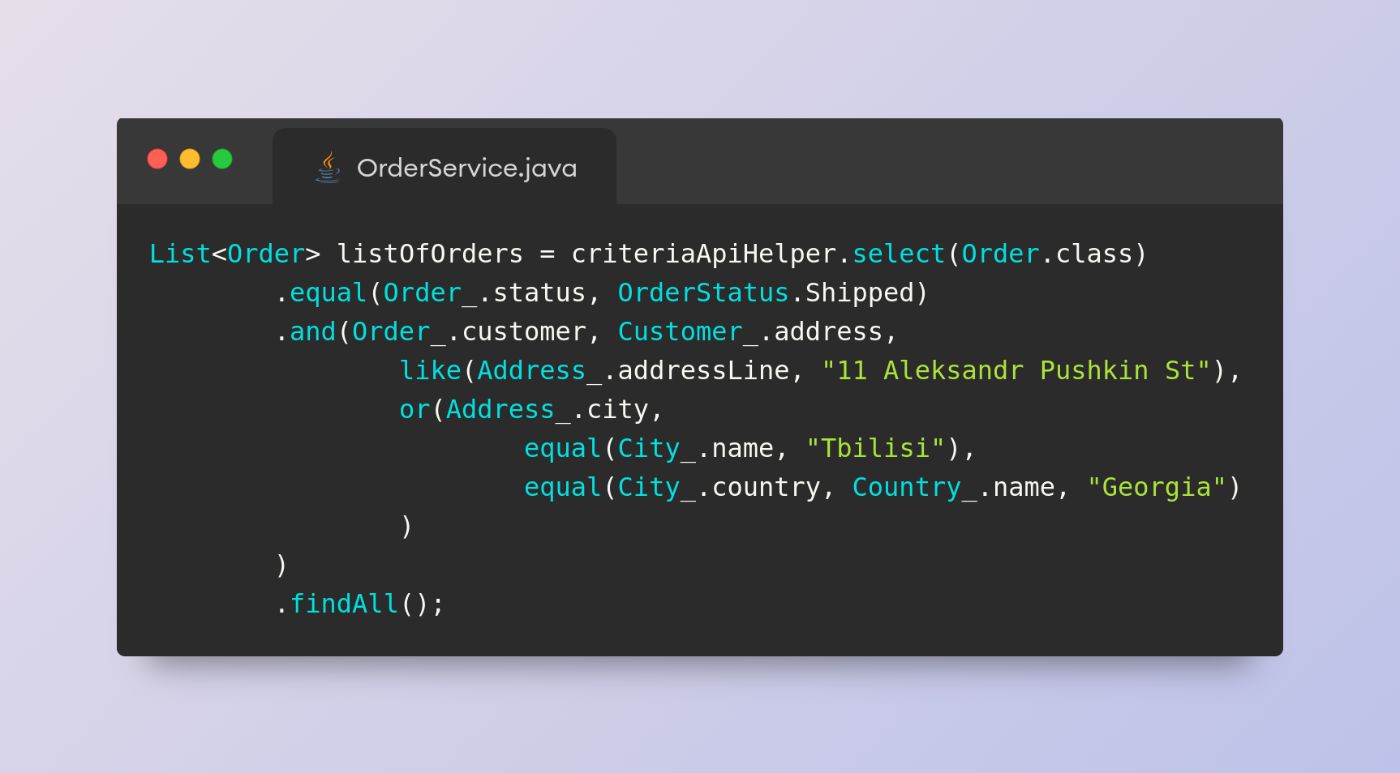
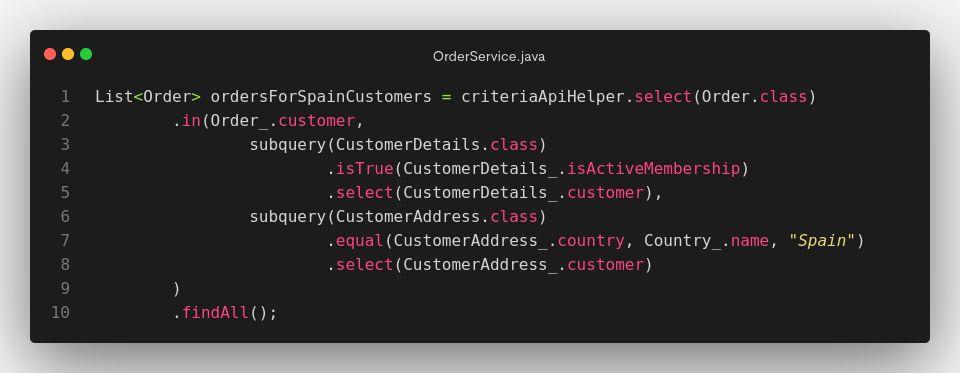
An extension for the Criteria API using Builder pattern and JPA Static Metamodel Generator to increase readability and reduce read complexity with explicitness
Launched in 1995, Java is being used by 134, 861 websites like ESPN, SnapDeal, Alibaba, etc. In its journey of 24 years, Java has proved itself to be the top general-purpose programming language for custom software development.
A practical example of the gains and pitfalls in migrating existing Sprint Boot logic to Vert.x with considerations to the experience and process involved.
An object that is instantiated, gathered, and otherwise managed by a Spring IoC container is called a bean.The configuration metadata that you provide to the co
An extension for the Criteria API using Builder pattern and JPA Static Metamodel Generator to reduce complexity with explicitness and to increase readability
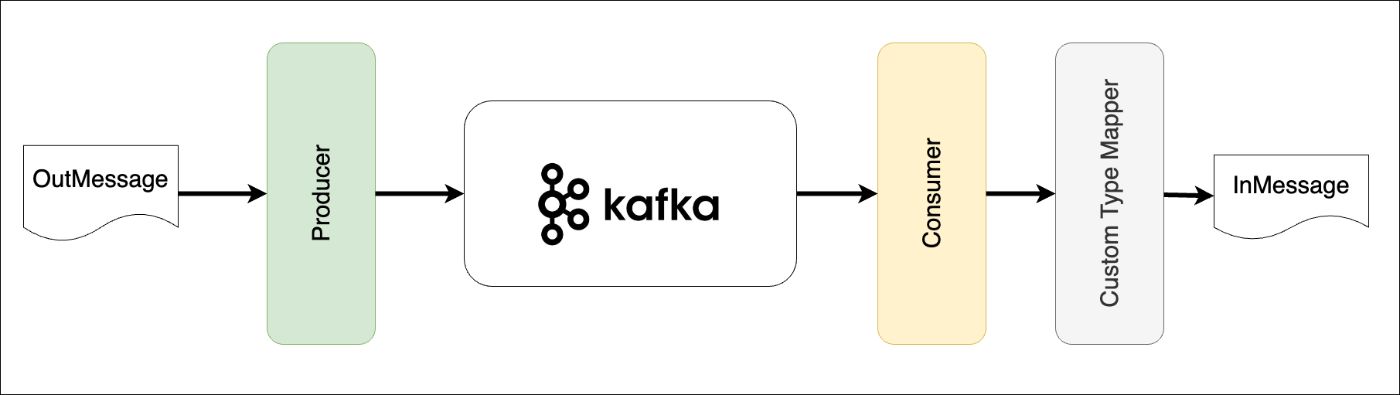
This article offers an approach to writing integration tests for Kafka-based applications that focuses on interaction specification, making tests more readable
Spring AI is a lightweight, developer-friendly framework from the Spring team that bridges the gap between modern AI tools and the Spring Boot ecosystem.
Open closed principle is the most simple one in the list of software design principles I understand. "Open for extension, close for modification" - the idea seems quite straightforward. Let's create an example about validation.
In one project, we got an application that contained half of the source code in Java, and the other half in Kotlin. In fact, I asked a question: "Why is it so?"
AOP is useful in tackling cross cutting concerns which are fully incorporated in the development of an application but cannot be attributed to a specific class.
Recently I had the need to change certain classes -from external dependencies- loaded on a Spring Boot application. All this happened in a very restrictive environment, where I was not allowed to use other libraries or tweak the JRE, it was only possible to modify the fat JAR and environment variables or system properties.
I was intrigued because, though I used Spring transactions a lot via the @Transactional annotation, I never thought about looking at their implementation.
A Spring bean. Sounds relatively harmless, doesn't it? What if I told you that this could be the source of many headaches in web servers, especially if you are