


This is a (WIP) Low-Latency Speech-To-Text Server in C++, using
already available Machine Learning Solutions such as whisper.cpp/faster-whisper with their CTranslate2 Engine
The Goal of this project is to enable Hebrew->Hebrew Translation, making EVERYTHING as fast as feasibly possible for local/Embedded use
The project has the same structure as my other project tree, except...
- Sandbox Mostly contains code for Work In Progress, mainly python code for benchmarking/testing new ideas
sttserv/is the server library/executable
-
CMake
-
Working compiler toolchain, preferably clang
Windows: You should use llvm
Linux:- installing-specific-llvm-version
- configuring-symlinks
- You Don't have to use LLVM, gcc works too
-
Python 3 installed
-
~6GiB of storage (At Most!) for the repository + local LLM's
For Running/Using the python Sandbox:
git clone https://github.com/inonitz/sttserv --branch dev desired_folder_path_from_cwd
cd desired_folder_path_from_cwd/sttserv
cd sandbox
./venv.sh # Setup Python Virtual Environment (Linux Shell)
.\venv.ps1 # Setup Python Virtual Environment (Windows powershell)
For Building the Server itself:
git clone --recurse-submodules https://github.com/inonitz/sttserv --branch dev desired_folder_path_from_cwd
cd desired_folder_path_from_cwd/sttservBecause This project is somewhat big and building manually is cumbersome,
I Wrote build scripts build.sh, build.ps1 for Linux & Windows Respectively
By Default, The project will try to build EVERYTHING - If you do not want that,
add the following flags to your cmake invocation (Or If Building with the scripts, disable in your platforms' Script):
-
Project Specific:
-DENABLE_SANITIZER_ADDRESS=OFF-DENABLE_SANITIZER_UNDEFINED=OFF-DENABLE_SANITIZER_MEMORY=OFF-DENABLE_LINK_TIME_OPTIMIZATION=OFF-DTREELIB_BUILD_TESTS=OFF
-
Dependencies:
-DCMAKE_C_COMPILER=clang-DCMAKE_CXX_COMPILER=clang++-DCMAKE_EXPORT_COMPILE_COMMANDS=1-DCMAKE_COLOR_DIAGNOSTICS=ON-DBUILD_GMOCK=OFF-DINSTALL_GTEST=OFF-DBENCHMARK_ENABLE_INSTALL=OFF-DBENCHMARK_INSTALL_DOCS=OFF-DBENCHMARK_INSTALL_TOOLS=OFF-DBENCHMARK_DOWNLOAD_DEPENDENCIES=OFF-DBENCHMARK_ENABLE_TESTING=OFF-DBENCHMARK_ENABLE_GTEST_TESTS=OFF-DBENCHMARK_USE_BUNDLED_GTEST=OFF
Windows:
.\build.ps1 -Help
.\build.ps1 -BuildType release -LinkType shared -Action configure
.\build.ps1 -BuildType release -LinkType shared -Action build
.\build.ps1 -BuildType release -LinkType shared -Action test/benchmark
Linux:
./build.sh --help
./build.sh release static configure
./build.sh release static build
./build.sh release static test/benchmarkIn your CMakeLists.txt:
add_subdirectory(your_directory/tree)Also, Don't forget to link to the library:
target_link_libraries(your_target_executable/library PRIVATE TREELIB::treelib)git submodule add https://github.com/inonitz/tree your_dependency_folder/tree
git submodule init
git submodule updateIn your CMakeLists.txt:
add_subdirectory(your_dependency_folder/tree)Also, Don't forget to link to the library:
target_link_libraries(your_target_executable/library PRIVATE TREELIB::treelib)- Optimize binaryTree::AVLDeleteIterative in AVLTreeGeneric.tpp, similarly to AVLInsertIterative in AVLTree.c
- Add Automatic Testing Matrix For architecture/OS/Build Type (Shared/Dynamic/Static, Debug/Release, ...)
- (involves CI/CD Pipelines which I'm not very familiar with/not interested in currently)
If you have a suggestion, please fork the repo and create a pull request. You can also simply open an issue with the tag "enhancement".
Distributed under the MIT License. See LICENSE file for more information.
The following benchmarks were tested on my i7-8750H Laptop with 16GBx2 2666Mhz DDR4 Ram
-
Search, Deletion & Insertion were Tested on 6 Different Data Structures
- std::set (clang-18)
- std::unordered_map (clang-18)
- C Implementation of an AVL Tree
- C++ Implementation Of an Iterative AVL Tree
- C++ Implementation Of a Recursive AVL Tree
- C++ Implementation Of a 'Flat' Iterative AVL Tree, specifically:
- Specialized Freelist Node-Allocator
- Reusing of freed nodes using a local Stack
- Metadata packing to 8 bytes, enabling a maximum of ~258 Million Elements
This was done to reduce memory footprint, memory chasing & improve
cache utilization
-
Each Data Structure was specialized to 3 Base Types
- u64 (trivial plain old data type)
- DummyRecord (Multiple Cache-Lines in Size, but still POD)
- std::string (Non-Trivial Type with complex construction, copying and destruction)
-
Benchmarking was done concurrently to save time (Approx ~5 Hours Serially)
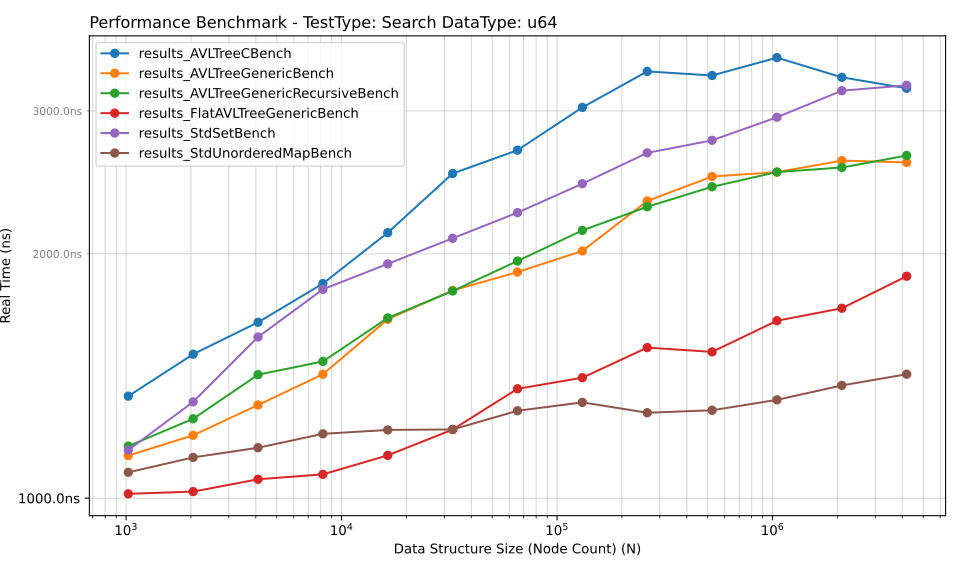
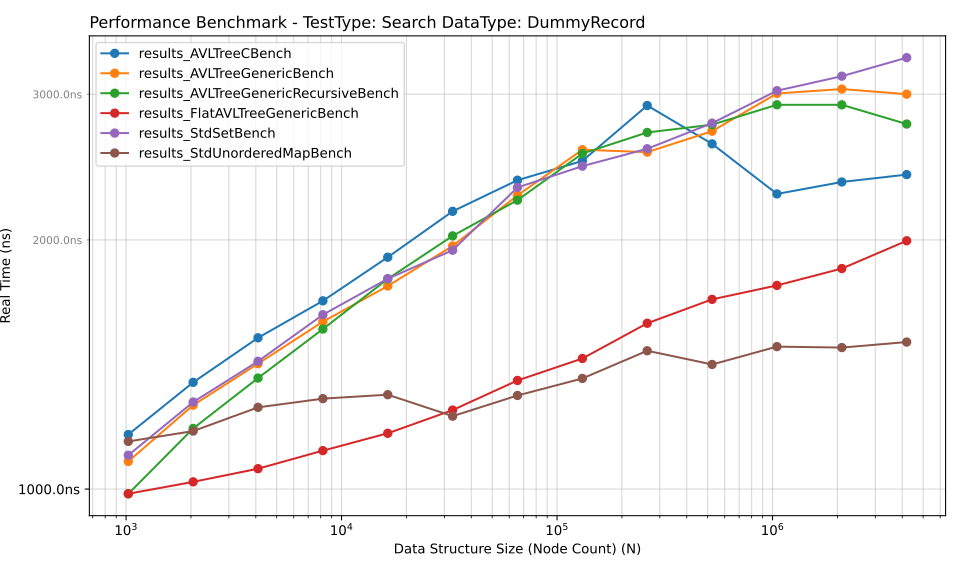
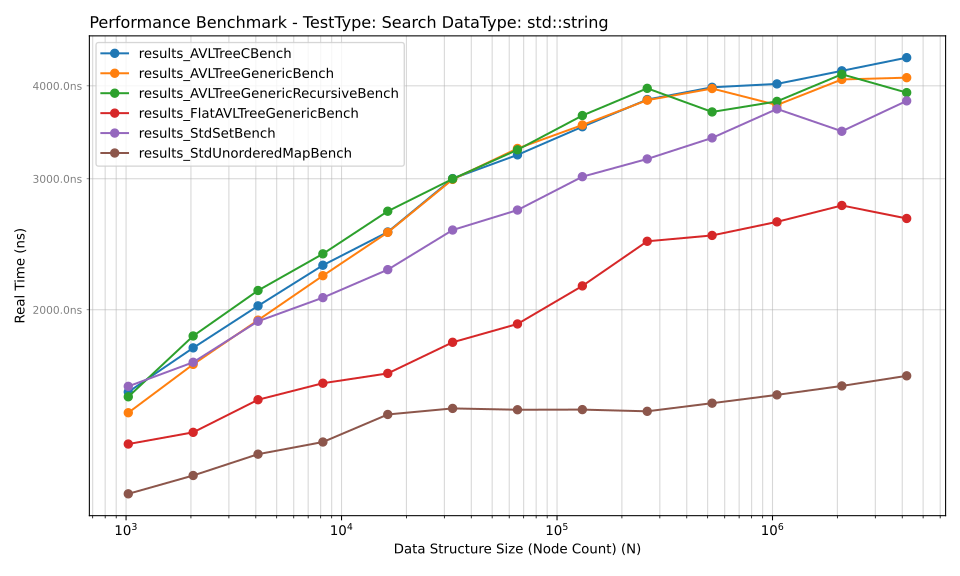
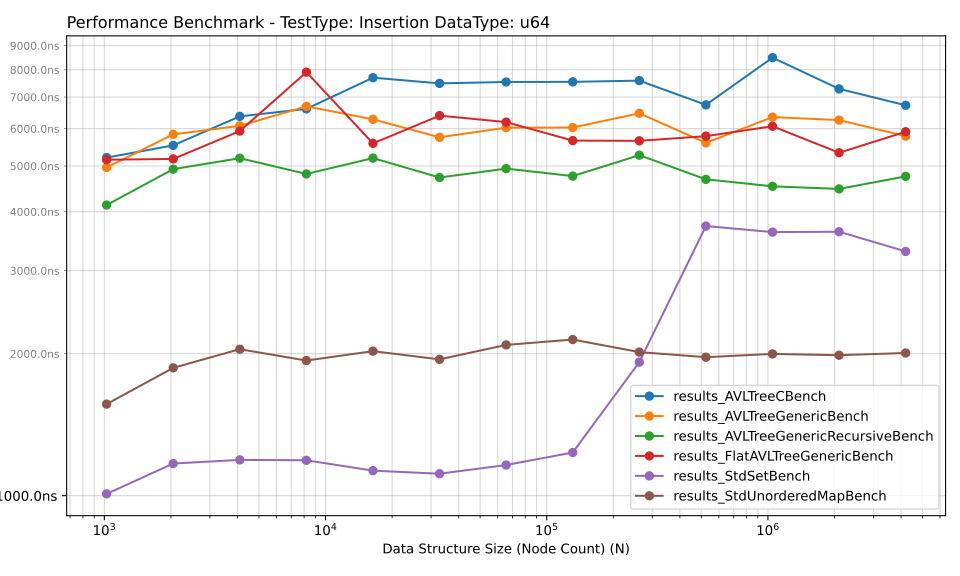
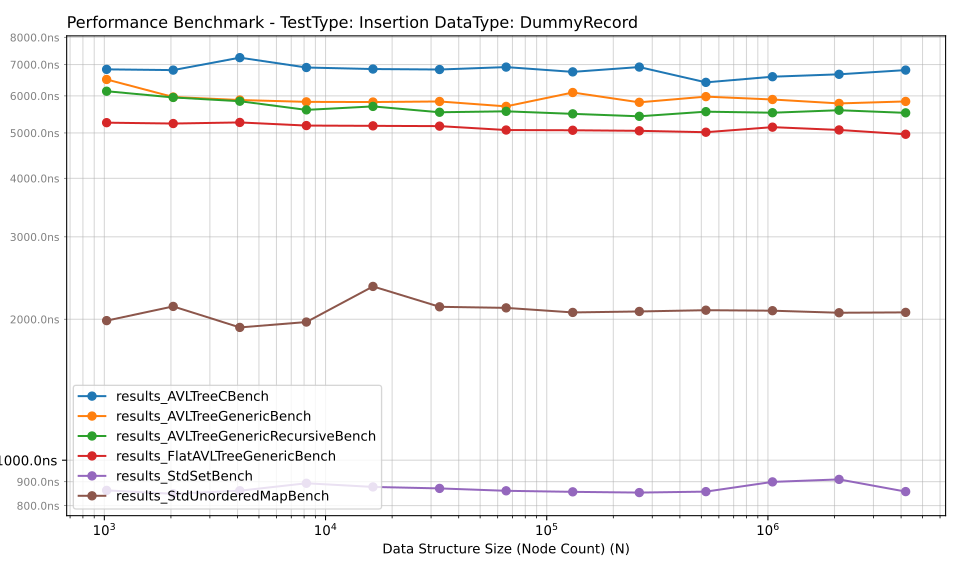
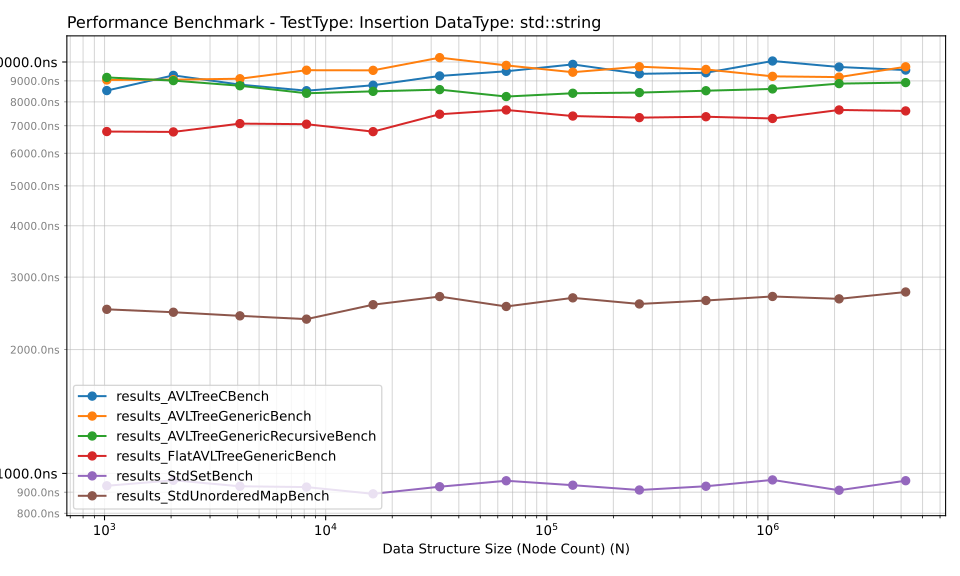
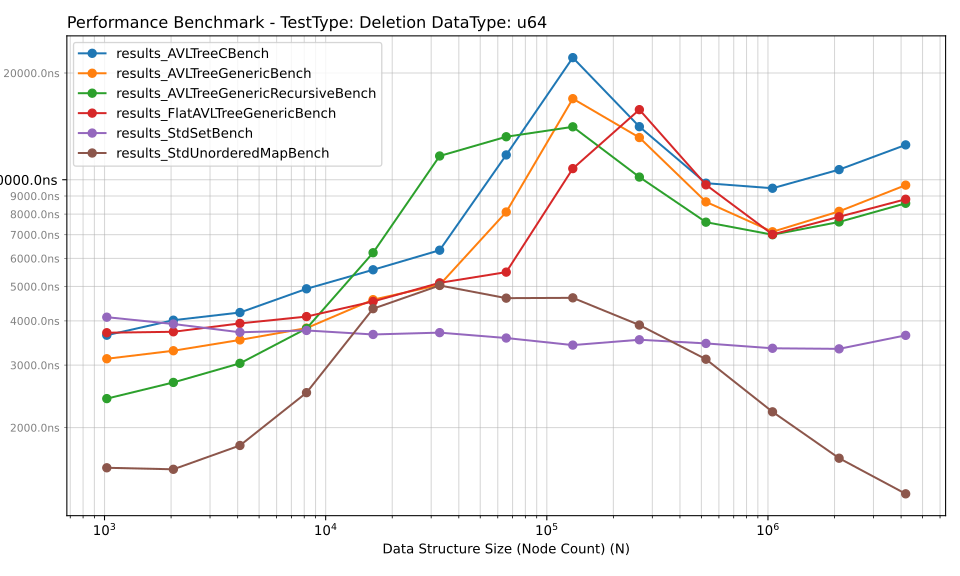
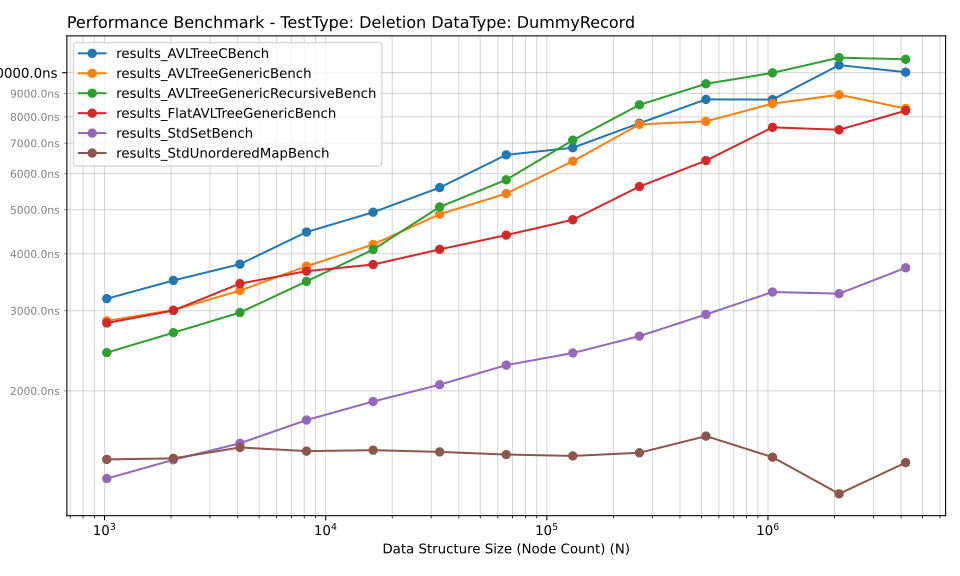
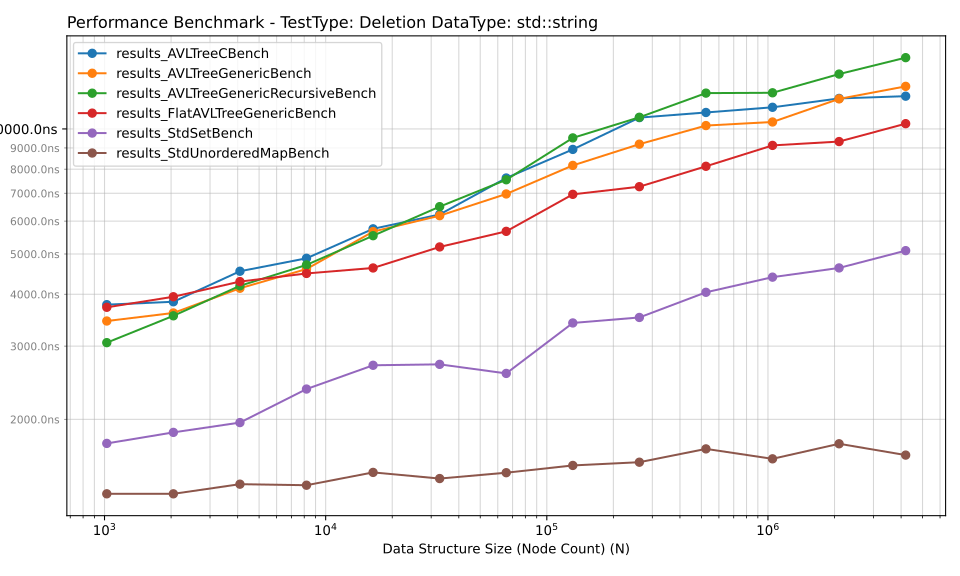
- Recursion is pretty good for small N, but gets out of hand pretty quickly
- Looking at the benchmarks, I can confidently assume that FlatAVLTree had way better cache utilization,
due to the spatial locality of the internal nodes being placed in a big buffer,
as compared with the usual implementation requiring pointer chasing and using malloc/free/new/delete - Premature Optimization is still the root of all evil, but indeed a very convenient learning tool
- Never assume anything until you benchmark it
- The Standard Library folks really do know what they're doing
- If you think a task will require an allocated Time N, it will probably take 2N, if not more
- Testing is required to ensure growing complexity in a system/project doesn't completely overwhelm and impede the rate of development,
more formally known as Lehmans' Law of Software Evolution (literally just found this out now lol)
- Modern CMake
- Best-README
- AVL Tree Playlist by William Fiset
- Jenny's Data Structures & Algorithm Course
- In particular, her videos regarding AVL Tree Rotations
- W3Schools AVL Trees
- Typed Tests (GoogleTest)
- GoogleBenchmark User Guide
- I found the following references most relevant:
- Setup & Teardown
- Templates
- Fixtures
- Custom Counters
- PauseTiming() & ResumeTiming()
- Tick Formatting in Matplotlib
- Axis Ticks in Matplotlib
- Pathlib Basic Usage